12 Bay Window Ideas That Turn an Awkward Nook Into Your Favorite Spot
A bay window is one of those features that looks effortless in a listing photo and oddly stubborn in real life. The angles don’t match standard furniture, curtains never quite sit right, and the little bump-out of floor space tends to collect things that have no other home. The fix isn’t another decorative cushion. It’s deciding what the bay should do for the room — then dressing it for that job.
Pick one function: a place to sit, a place to eat, a place to work, a place to grow things, or a place to simply enjoy the light. Once that decision is made, everything else — the bench depth, the curtain hardware, the lighting — falls into place. Here are twelve bay window ideas that give the nook a real purpose.
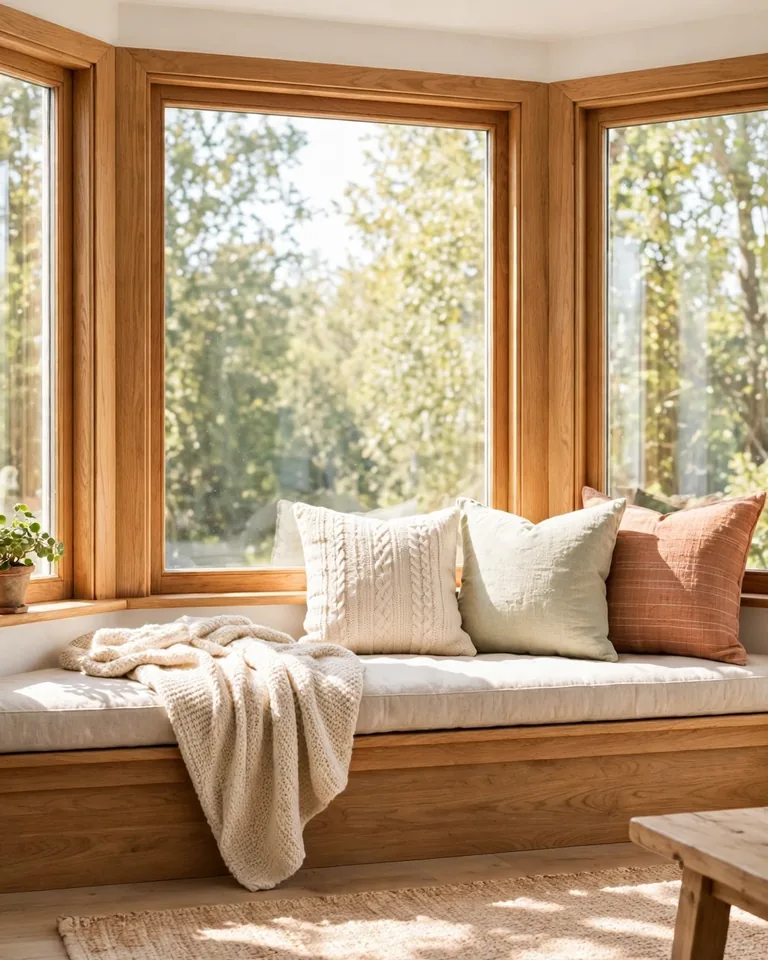
1. Build a Bench Seat With Hidden Storage

A built-in bench is the classic bay window answer because it solves the geometry problem permanently. The seat follows the three angles of the bay, so there are no awkward gaps behind furniture, and the interior of the bench becomes storage for blankets, board games, or seasonal decor.
For a comfortable sitting depth, aim for roughly 18 to 22 inches of seat depth and a seat height of about 18 inches — standard dining-seat height, which makes the bench double as overflow seating. A custom bench with a 2-inch foam cushion topped in a washable performance fabric holds up well in a sunny spot. If you’re hiring a carpenter, ask for soft-close hinges or pull-out drawers; hinged lids are cheaper, but drawers are far easier to use when the bench is loaded with cushions.
The reason a fitted bench beats loose furniture here is the same reason arranging furniture around tricky angles matters anywhere else: when the footprint is irregular, the biggest piece should follow the architecture instead of fighting it.
Tip: before building, check that drawers or lids can actually open — a radiator, vent, or nearby chair can quietly ruin the plan.
2. Make a Freestanding Reading Nook
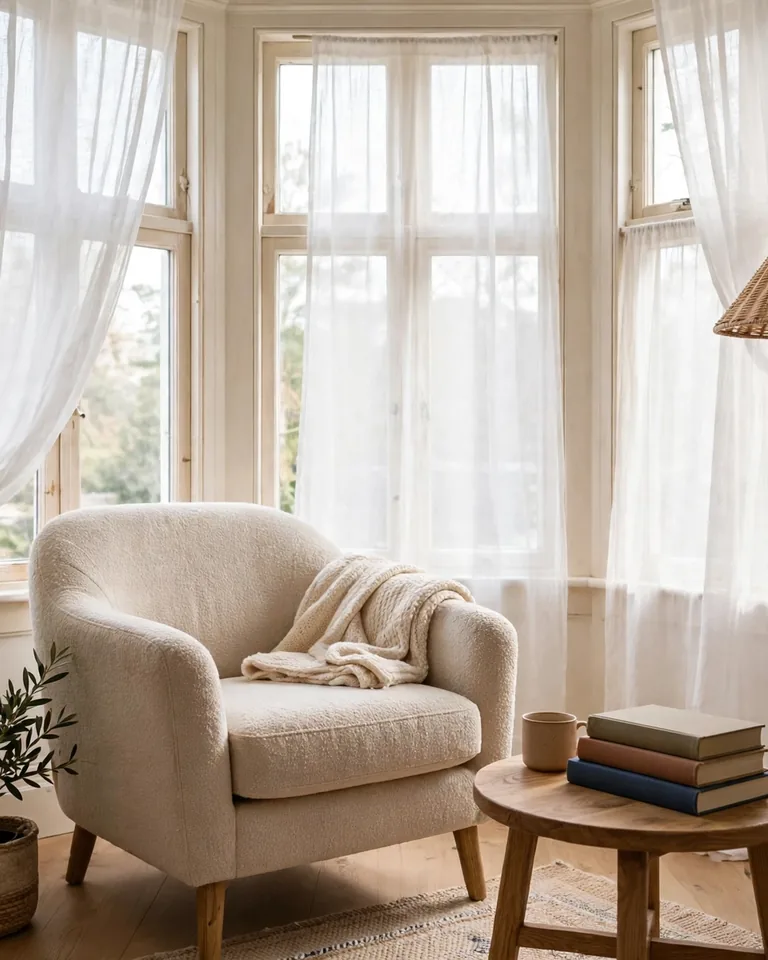
Not every bay window needs construction. A slim lounge chair angled toward the light, a small round side table for a book and a mug, and a floor lamp that moves when you do — that’s a complete reading nook, and it leaves the floor plan flexible.
This is the best option for renters or small rooms, where a bulky built-in would eat the whole footprint. Keep the chair’s depth in mind relative to the walking path through the room; a deep recliner shoved into a shallow bay blocks circulation and looks stranded. A medium-scale armchair or a chaise placed parallel to the center pane keeps the view open and the route through the room clear. Add a basket for throw blankets and a small bookshelf or book ledge within arm’s reach.
Tip: a movable floor lamp beats a hardwired sconce here — it makes the corner usable after sunset without committing to a layout.
3. Create a Breakfast Banquette

If your bay window sits in or near the kitchen, an L-shaped banquette turns it into the room’s most-used dining spot. The bench follows the two angled sides of the bay, a round pedestal table sits in front, and loose chairs fill the open side. It seats more people than the same footprint of individual chairs, which is why restaurants have used the trick forever.
Choose a round or oval table rather than a square one — no sharp corners to navigate around, and the central pedestal leaves legroom flexible. Pick upholstery that can survive crumbs and spills: a wipeable performance fabric or a dark patterned textile. Leave enough clearance behind loose chairs so people can sit down without scraping the bench, and keep the route back to the kitchen work area unobstructed.
Tip: a pendant light centered over the table visually zones the nook as a dining area, even in an open-plan room. For more kitchen window inspiration, see these kitchen window ideas that make the whole kitchen feel brighter.
4. Turn It Into a Home Office Desk

Bay windows offer the two things every home office wants: daylight and a view. A shallow desk fitted to the bay’s angles gives you a real workspace without sacrificing a whole room, and the natural light cuts down on the need for task lighting during the day.
The catch is glare. Position the monitor perpendicular to the brightest pane rather than facing it or backing it, and budget for an adjustable shade or blind you can lower on harsh afternoons. Keep the desk depth realistic — about 20 to 24 inches is enough for a monitor and keyboard — and put closed storage along the solid wall rather than in the bay, where it would block light and the walking path. Cable management matters here because the desk is visible from the room; a simple cable tray under the desktop keeps it tidy.
Tip: a chair that tucks fully under the desk lets the nook read as clean floor space when you’re off the clock.
5. Grow a Mini Indoor Garden

A bay window is a greenhouse with a view — light arrives from three directions, which most houseplants love. Arrange plants at different heights: taller specimens like a fiddle-leaf fig or olive tree in the corners, medium plants on the sill, and trailing pothos on a low stand in front.
Match the plant to the actual exposure, not the idea of it. A south-facing bay with harsh afternoon sun suits succulents, cacti, and Mediterranean herbs; a north-facing one is kinder to ferns, calatheas, and snake plants. Use saucers or waterproof mats under every pot, and leave yourself a working gap — watering, pruning, and cleaning glass all need elbow room. Keep the center of the bay relatively open so the view stays part of the composition.
Tip: group plants in odd numbers and vary pot materials (terracotta, ceramic, woven baskets) so the collection looks curated rather than accumulated. If you love greenery elsewhere too, these greenery bedroom ideas show how to carry plants through the rest of the house.
6. Add a Bedroom Daybed

A bedroom bay window becomes a second destination — not just a brighter patch of floor — with a low daybed fitted into the alcove. By day it’s a reading spot or a place to lay out clothes; in a pinch it sleeps a guest. Closed drawers underneath hide spare bedding and out-of-season clothes.
Keep the daybed lower than the window sill so daylight flows over it and the furniture doesn’t fight the architecture. Relaxed linen in a neutral tone keeps it from reading as a second bed competing with the main one, and a small wall-mounted reading light makes the spot useful at night without cluttering the sill. Measure the bay’s width carefully — daybeds come in twin and narrower “day” sizes, and an inch too wide means it won’t slide in.
Tip: textured throw pillows in two sizes (a larger lumbar plus a small square) make the daybed look styled rather than makeshift.

7. Layer Curtains Over Shades

Bay windows look unfinished without window treatments, but a single layer rarely does both jobs — privacy and softness. The combination that works: an adjustable shade or blind on each individual pane for light control, with full curtains framing the bay for texture and height.
Hang the curtain rod or track high and wide — close to the ceiling and extending past the bay’s outer edges — so open curtains clear the glass completely and the window looks larger. For a bay with a window seat, sill-length curtains or shades are more practical than floor-length panels, which will puddle on the bench. Roman shades in a natural linen give a tailored look; sheers soften the light without losing the view.
Tip: measure each of the bay’s sections separately and use a bendable bay track or an angled rod so the curtains glide around the corners. For the full treatment guide — hardware, headings, and measuring — see these bay window curtain ideas. And if you’d rather skip curtains entirely, these ways to cover windows without curtains still give you privacy.
8. Build a Kids’ Play and Reading Corner

A bay window in a family room or kids’ bedroom makes a natural play zone: the light keeps it cheerful during the day, and it’s slightly set apart from the main room, which helps contain the chaos. A low bench with a washable cushion gives kids a reading spot; closed bins underneath swallow toys at cleanup time.
Keep storage mostly closed — open shelves of bright plastic quickly take over the whole view. A narrow book ledge on one angled wall keeps favorite books visible and reachable without a full bookcase, and a soft, washable rug defines the zone and protects the floor. Choose durable, wipeable fabrics, round off accessible corners, and anchor any tall furniture to the wall.
Tip: keep everything low enough that kids can reach it themselves — independence is the difference between a play corner that gets used and one that doesn’t.
9. Claim a Hobby or Craft Corner
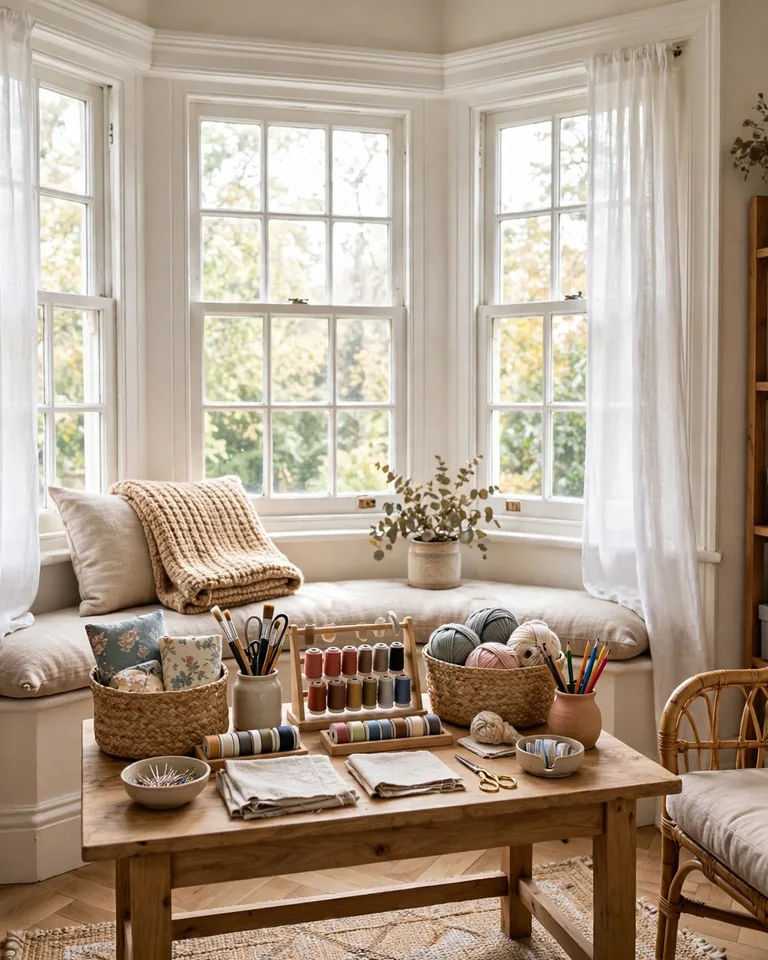
Without a dedicated hobby room, a bay window alcove is the next best thing: the daylight is excellent for detail work, and the nook’s separation from the main room means a half-finished project doesn’t dominate the living space. A small table against the center pane works for sewing, drawing, scrapbooking, or puzzling.
Choose a table with built-in cubbies, drawers, or shelves so supplies stay sorted and the area doesn’t sprawl. A comfortable chair matters more than it seems — hobby sessions run long. If the craft involves an iron, a glue gun, or anything heat-producing, keep it well clear of curtains and choose a heat-resistant mat for the work surface.
Tip: a rolling cart parked beside the table adds flexible storage that can be wheeled away when the nook needs to host guests.
10. Give Your Pet the Sunny Perch

Cats claimed bay windows long before interior designers did — the raised sill, the sun, the street theater. Instead of fighting it, give them a proper perch: a thick washable cushion or a low pet bed fitted to the sill, kept clear of fragile decor.
Choose a south- or west-facing bay if you have the choice; that’s where the afternoon sun lands. Keep pet-toxic plants (lilies, sago palms, pothos) out of the same bay, and use cordless shades or secured cords since the sill is now prime napping territory. A washable cover is non-negotiable — fur and sunlight are a package deal. Dogs appreciate the same setup at floor level: a cushioned bed tucked under the window gives them the view without the climb.
Tip: place the bed slightly off-center so there’s still sill space for a plant or lantern on the other side — the nook stays styled, not surrendered.
11. Set Up a Two-Person Coffee Spot
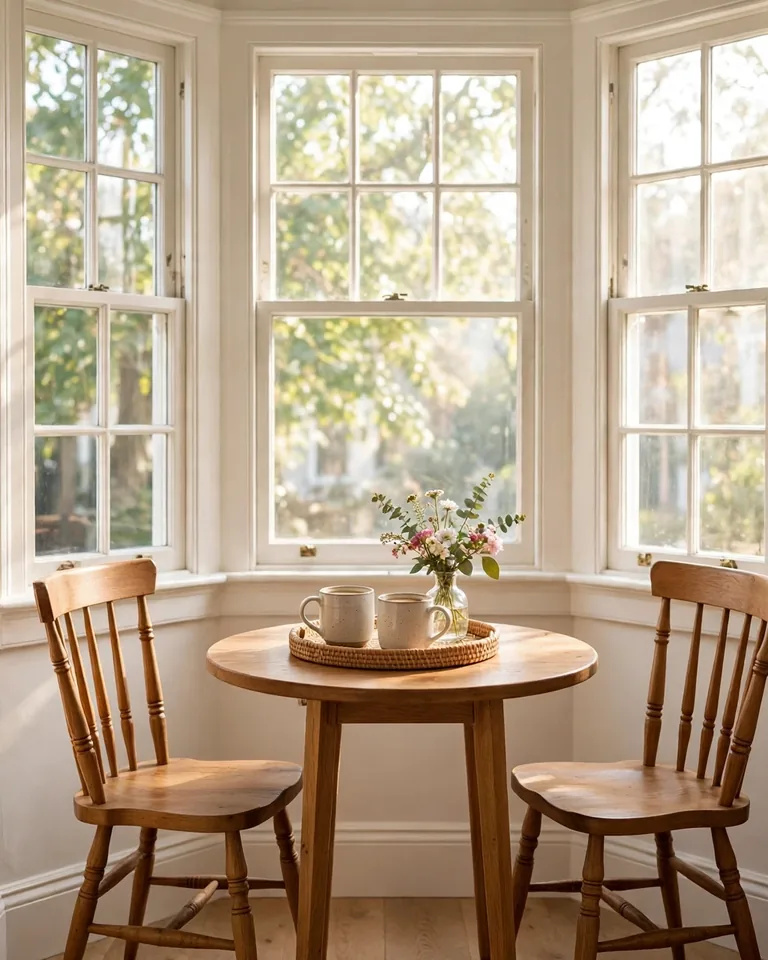
A small bistro table and two chairs turn a bay window into the household’s favorite morning ritual: coffee with a view, no restaurant required. It works in kitchens, living rooms, and even large bedrooms, and it needs barely more floor space than the table itself.
Scale the furniture to the bay — a 24- to 30-inch round table suits most residential bays, and chairs should tuck in fully so the arrangement doesn’t block the room’s traffic. Let the room’s existing style guide the set: cafe-style metal chairs and a marble-look top for a classic kitchen, upholstered slipper chairs for a softer living-room feel. A small tray on the table corrals mugs and a bud vase so the surface stays clear.
Tip: this is one of the easiest bay ideas to try before committing — borrow a small table for a week and see if the ritual sticks.
12. Dress the Alcove With an Accent Wall
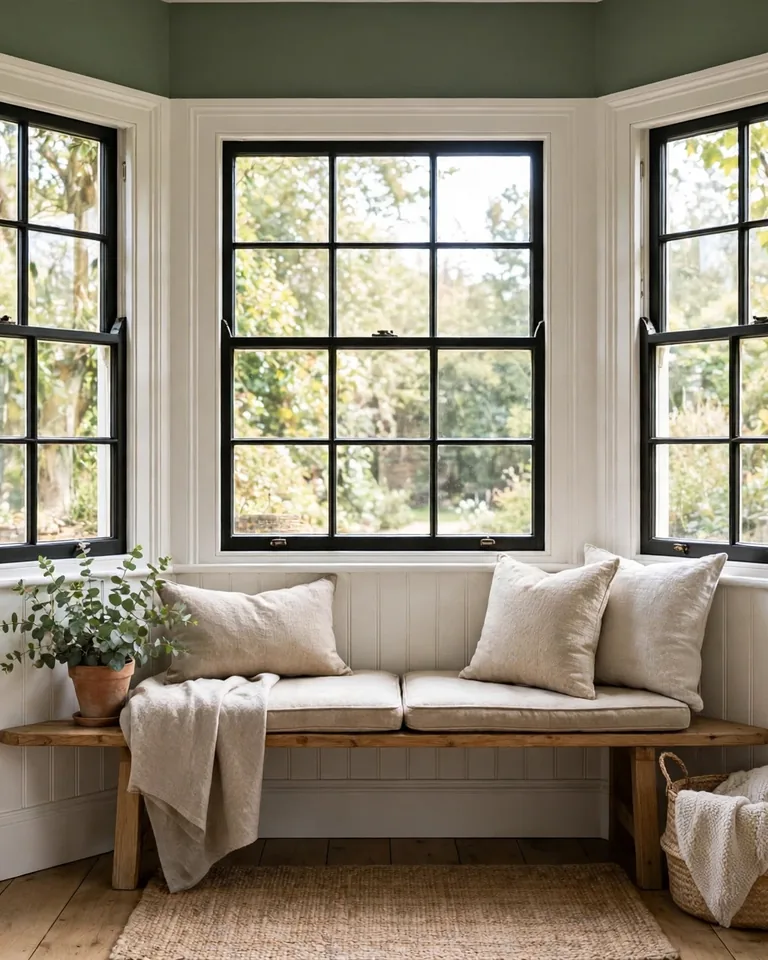
Sometimes the bay doesn’t need more furniture — it needs more architecture. Painting the alcove a deeper tone, wallpapering the angled walls, or adding beadboard or shiplap panels gives the bump-out a finished, intentional look even when it’s mostly empty.
Beadboard or shiplap suits cottage and farmhouse rooms; paint it white or a soft color to keep the light bouncing. A bold wallpaper on the angled walls makes a striking backdrop for a simple bench or a single chair — choose a pattern with a clear color story and keep surrounding furniture quiet so the alcove is the statement. If you paint, carry the color onto the window trim for a cohesive, built-in feel rather than stopping at the drywall edge.
Tip: sample the paint or wallpaper in the bay itself before committing — the multi-directional light in a bay can shift colors noticeably through the day.

How to Choose the Right Idea for Your Bay Window
Start with the room, not the Pinterest board. A bay in the kitchen wants a breakfast spot or a coffee table; a bedroom bay wants a daybed or reading chair; a living-room bay can carry a bench, a desk, or a plant collection. Then measure: note the bay’s depth, the sill height, and how much floor space sits in front of it before you buy or build anything.
Finally, decide on the light-and-privacy question early. If the bay faces the street, plan layered treatments — shades for privacy plus curtains for softness — before you arrange furniture around bare glass. The furniture you choose should answer to the bay’s best feature, which is always the same: generous, beautiful daylight.
FAQs
How do you hang curtains on a bay window?
Measure each section of the bay separately, then use hardware that follows the angles — a bendable bay curtain track or an angled bay rod — so panels glide around the corners. Hang the track high, close to the ceiling, and wide enough that open curtains clear the glass completely. For bays with a window seat, pair sill-length curtains or shades on the windows with full-length panels only at the outer ends.
What is the best curtain option for a small bay window?
For a narrow or shallow bay, Roman shades or roller blinds on each pane are usually the tidiest choice — they give privacy and light control without the bulk of curtains. If you want softness, add slim side panels purely as framing; a hand-bendable track keeps the hardware in proportion to a small bay.
Can you put curtains and blinds on a bay window at the same time?
Yes, and it’s one of the most practical combinations. Fit a blind or shade to each individual pane to handle privacy and glare, then hang curtains around the whole bay for texture, color, and height. The two layers do different jobs, so you can lower the blinds without losing the softness of the curtains.
Should bay window curtains go to the floor?
Floor-length curtains make the bay feel taller and more formal, and they suit bays without seating. If the bay has a built-in bench, a radiator, or a deep sill you use, sill-length treatments are the practical choice — full-length panels will bunch on the seat. A common compromise is blinds on the windows plus floor-length curtains at the bay’s outer ends.
How can I add storage to a bay window seat?
Build the bench as a hollow box rather than a solid one, then choose your access: hinged lids are the cheapest, pull-out drawers are the easiest to use under a loaded cushion, and open cubbies with baskets suit items you grab daily. Before finalizing, check that lids or drawers can fully open without hitting radiators, vents, or nearby furniture.
What can you put in a bay window besides seating?
Plenty: a desk for a home office, a dining or bistro table, a plant collection, a craft table, a pet bed, a piano in a music room, or low built-in cabinets for storage. If the bay is small, keep it minimal — a single sculptural chair or a styled sill often looks better than furniture squeezed into every inch.