How to Brighten a Dark Room: 15 Fixes That Actually Work
A dark room usually isn’t dark because it’s hopeless — it’s dark because light is being blocked, swallowed, or dumped in the wrong places. The fix rarely starts with buying lamps. It starts with the light path: what’s coming in, what it hits, and how it moves around.
The 80/20 rule: clear the window, lighten the biggest surfaces (walls, ceiling, floor), add light at more than one height, and bounce what light you have with mirrors and reflective finishes. Those four moves deliver most of the brightness. The 14 fixes below are ordered from free to moderate so you can start today with what you already own.
1. Clear the window before anything else
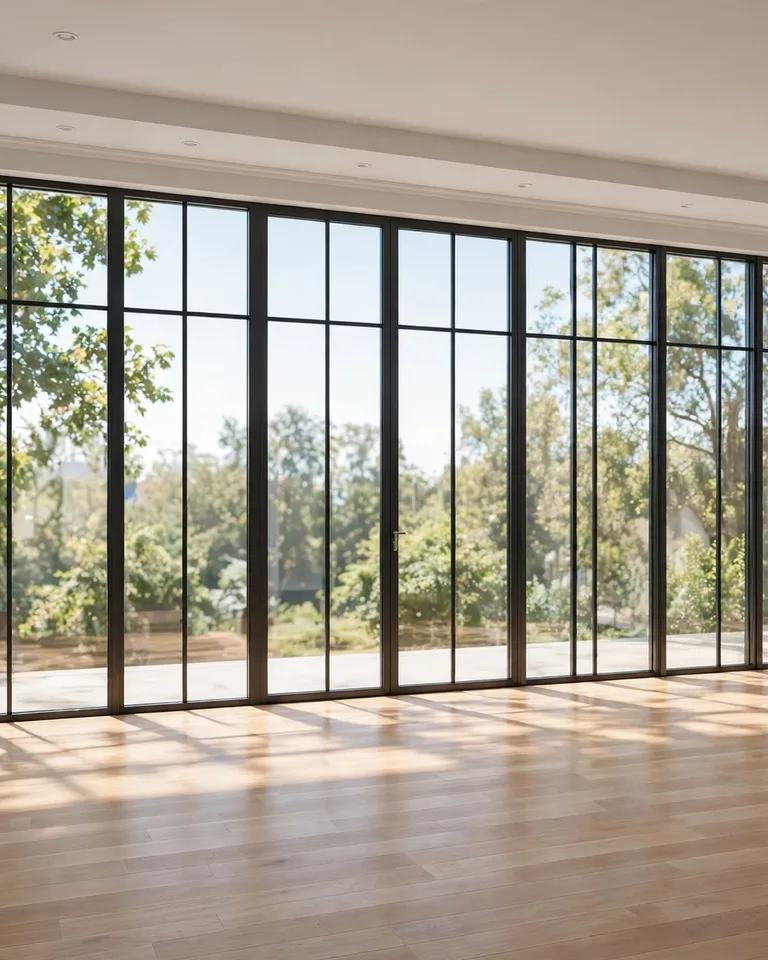
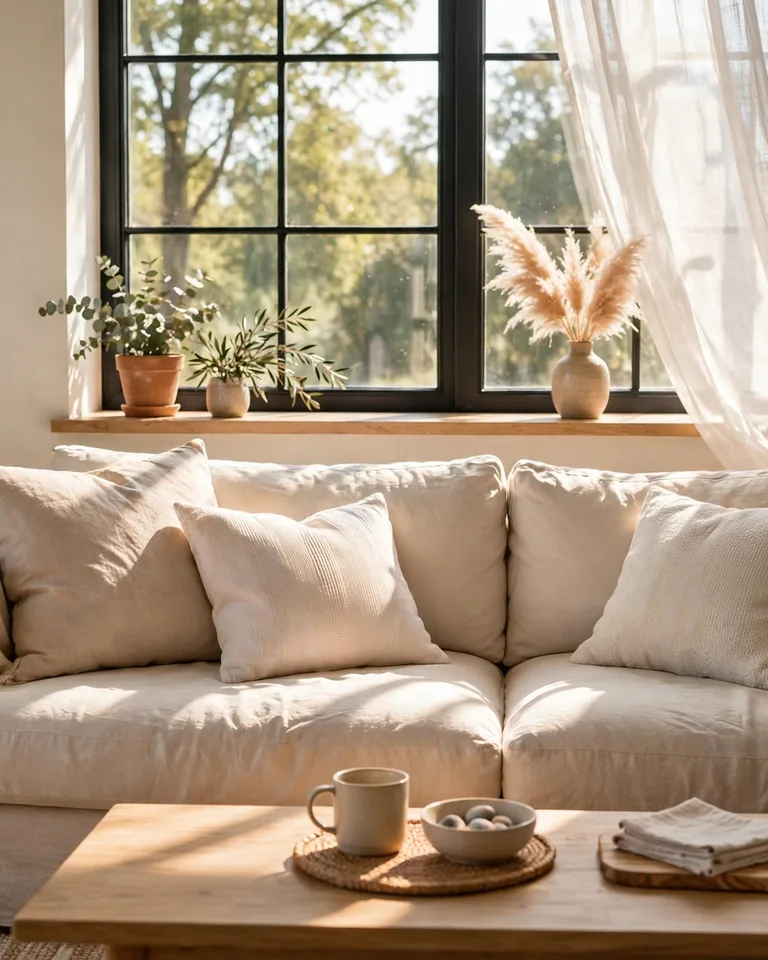
The brightest part of any room is its window, and it’s also the easiest place to lose light. Tall furniture parked beside the glass, clutter stacked on the sill, and curtains that still cover a third of the glass when open all throttle daylight before it ever enters the room.
What it is: a window-zone reset. Pull tall bookcases, wardrobes, and bulky chairs away from the glass, strip the sill to one or two low items, and check that curtains pull fully clear of the frame.
Why it works: daylight is directional. Anything between the window and the room’s center casts a shadow across exactly the area you want brightest. Clearing the path often adds more usable light than a new fixture.
Tip: stand in the room’s darkest corner at midday and look toward the window — anything dark and tall in that sightline is stealing light. If you have a bay window, these bay window curtain ideas keep the frame clear while still dressing it up.
2. Swap heavy curtains for sheers and hang rods high and wide

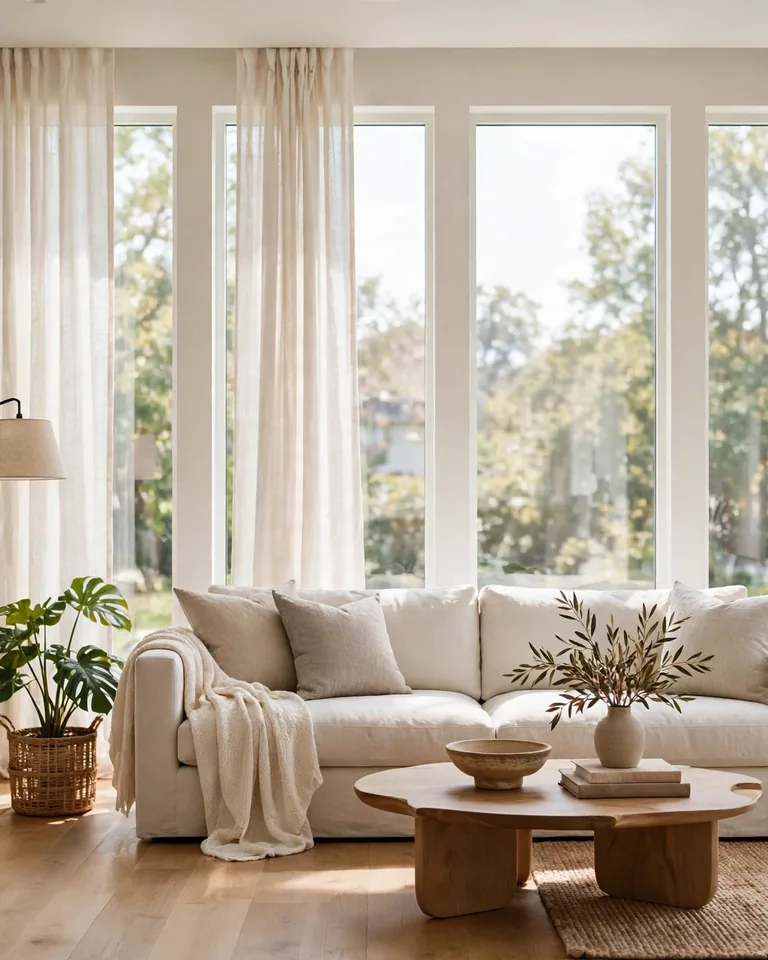
Heavy drapes make a decent window behave like a basement window — and they keep doing it even when open, because stacked fabric still covers the glass edges. Sheer or lightweight panels soften the view without swallowing daylight.
What it is: replace opaque curtains with white or ivory sheers, or with natural woven shades; mount the rod at least 4–6 inches above the frame and extend it 8–12 inches past each side so open panels never cover the glass.
Why it works: raising and widening the rod exposes the full window, which reads as a bigger, brighter light source. Sheers diffuse glare so you can keep them drawn for privacy in daylight.
Tip: if privacy is the concern, look into top-down/bottom-up shades or window film so the upper half of the glass stays open. There are also genuinely good ways to cover windows without curtains that keep light pouring in.
3. Paint walls a warm, light-reflecting shade — not necessarily white

Here’s a trap many people fall into: they paint a dark room stark white and it goes flat and gray. In weak light, cool whites and blue-grays read gloomy because there’s no warm daylight to balance them.
What it is: choose a light color with a warm undertone — warm off-white, soft ivory, pale sand, creamy greige, or a muted warm beige. These reflect roughly 70–85% of light (paint brands list this as LRV, light reflectance value) while looking alive under dim conditions.
Why it works: walls are the largest surface in the room. A light, warm tone bounces both daylight and lamplight instead of absorbing it, and the warmth compensates for the cool, flat quality of low natural light.
Tip: paint test swatches on the actual wall and check them morning, afternoon, and at night — undertones shift dramatically in dark rooms. Cool grays almost always look worse at night than on the paint chip.
4. Give the ceiling a clean, brighter finish
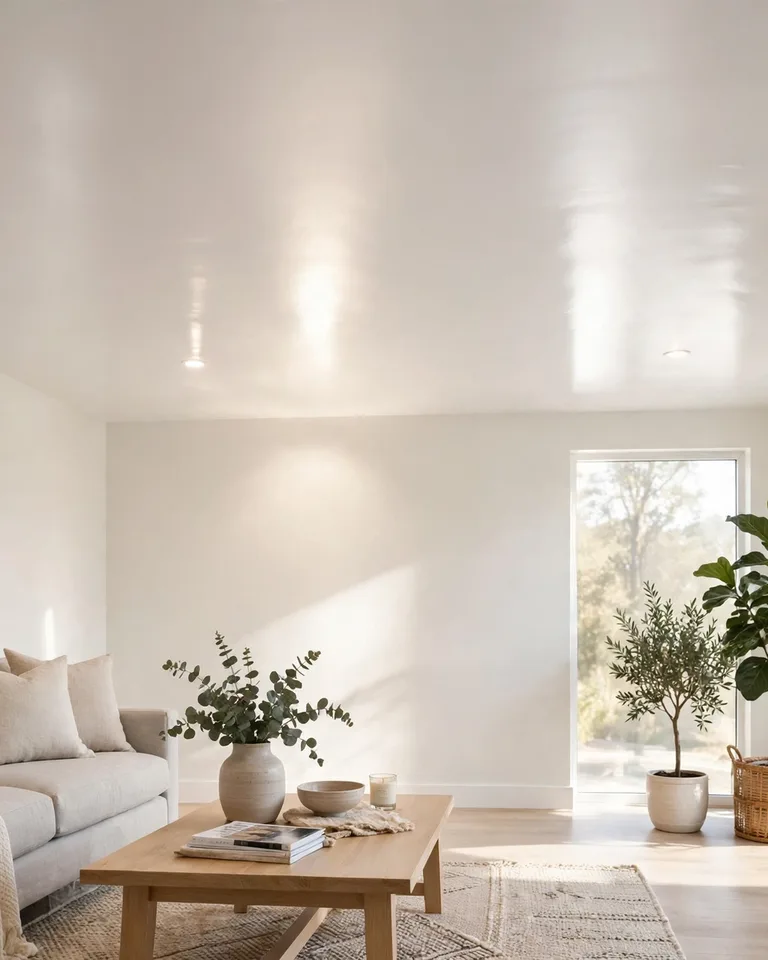
The ceiling is the most ignored surface in brightness planning, and dingy or dark ceilings undo half the work happening on the walls. Since nothing above eye level draws attention, a clean ceiling visually lifts the whole room.
What it is: paint the ceiling a half-shade lighter than the walls (or plain ceiling white), and refresh stained, yellowed paint — cooking residue and age yellow faster than people realize.
Why it works: overhead light bounces downward off the ceiling. A brighter ceiling returns more of that light into the room instead of absorbing it, and lighter ceilings make the room feel taller.
Tip: if your ceiling is damaged rather than just dull, these ways to cover an ugly ceiling keep the surface light instead of adding a heavy coffered or beamed look.
5. Match the paint finish to the light level

The same color in flat vs. satin can behave like two different paints in a dark room. Flat/matte absorbs light; eggshell and satin reflect a little of it back.
What it is: use eggshell or satin on walls in dim rooms, and reserve a soft gloss for trim, doors, and moldings. Keep high-gloss off large wall areas in low light — it creates glare spots instead of even brightness.
Why it works: in a bright room, matte’s even look wins. In a dark room, a slight sheen returns precious light back into the space without the mirror-like reflections of gloss.
Tip: freshly painted satin trim around windows and doors also frames the light source in something bright — a cheap trick that reads as deliberate design.
6. Place a mirror across from the strongest light source
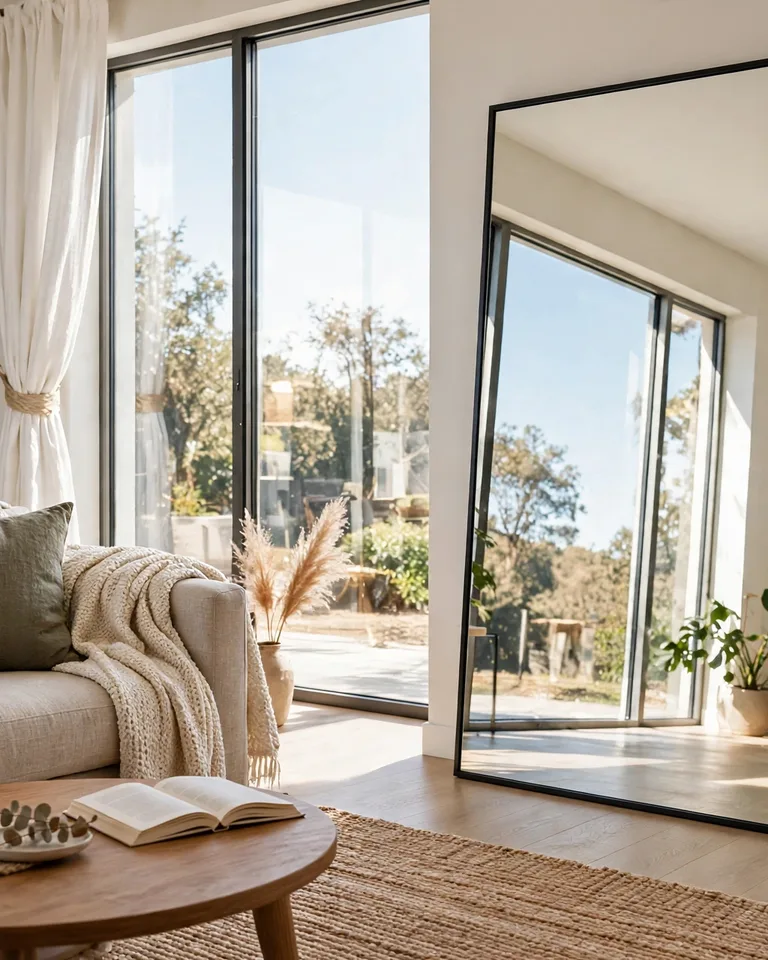
One large mirror, correctly placed, does more than a gallery wall of small ones. Size and placement are everything.
What it is: hang or lean your largest mirror directly opposite a window or lamp so it catches the strongest light and throws it deeper into the room. In windowless rooms, place it beside or behind a lamp.
Why it works: mirrors don’t create light — they relocate it. A mirror opposite the window effectively doubles your light source and pushes illumination into corners daylight never reaches.
Tip: check what the mirror will double: aim it at the window, a lamp, or a clean light wall — never at a cluttered shelf or blank wall, or it will just double the clutter.
7. Layer ambient, task, and accent lighting
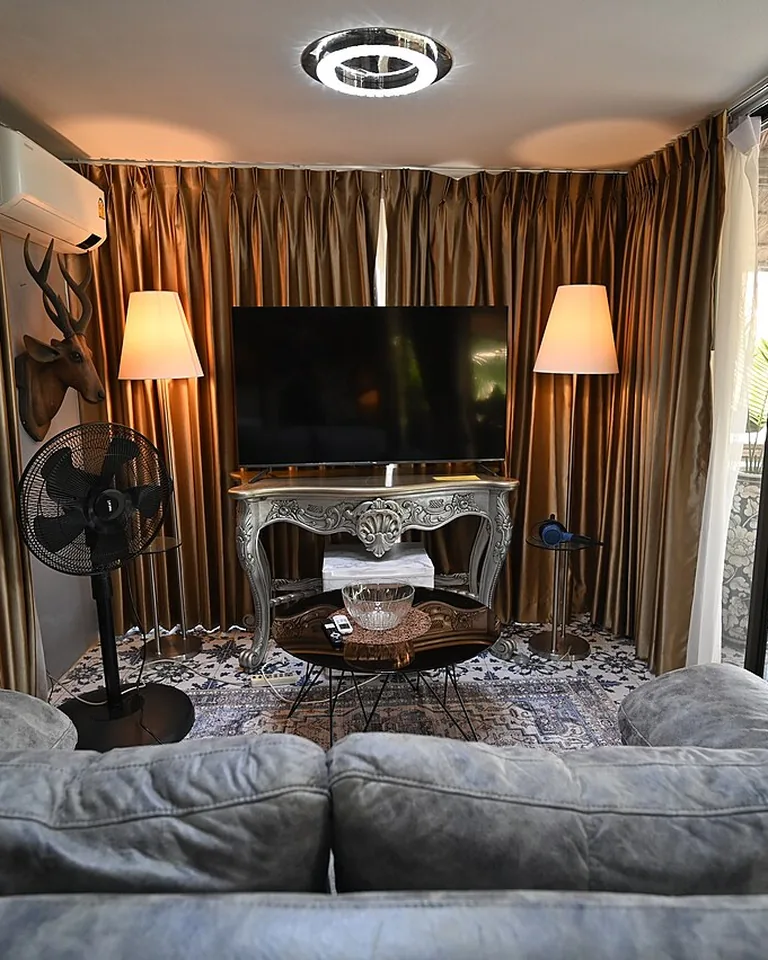
A single ceiling fixture in the middle of a dark room is less a lighting plan and more an interrogation lamp. Even the darkest room feels brighter when light comes from several heights.
What it is: build three layers. Ambient sets the base (ceiling light, large floor lamp). Task lights the spots you actually use (reading chair, desk, bedside). Accent fills shadowy corners (wall sconces, LED strips, a small lamp on a shelf).
Why it works: multiple sources eliminate the harsh center-bright, corners-dark contrast that makes a room feel gloomy. Three modest sources beat one powerful bulb for perceived brightness.
Tip: use the same bulb color temperature (see below) across all layers so the room feels intentional instead of a mix of yellow and blue.
8. Upgrade the bulbs with the numbers that actually matter
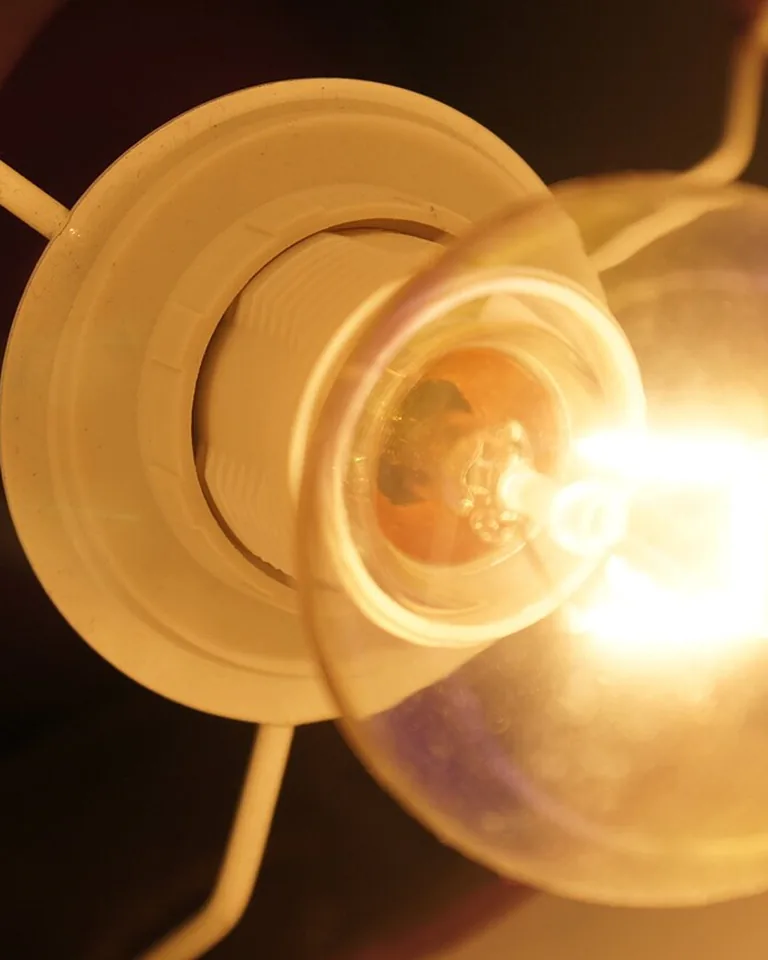
Bulbs are the cheapest brightness upgrade in the house, but the packaging jargon stops most people. Two numbers matter: color temperature (Kelvin) and brightness (lumens).
What it is: choose LEDs in the 3000–4000K range for living spaces (clean white without looking cold) or 4000–5000K for a daylight feel in work areas; aim for 1500–3000 total lumens in a small room, more in larger ones; look for CRI 90+ if colors look dull.
Why it works: dim, warm-yellow bulbs (2700K and below) read cozy but dark. Raising Kelvin and total lumens adds perceived daylight without changing a single fixture. High-CRI bulbs make colors render accurately, which reads as “brighter” to the eye.
Tip: put the room on a dimmer if possible. Bright light for tasks, lower light for evenings — control matters as much as output.
9. Aim a floor lamp at the wall instead of into the room
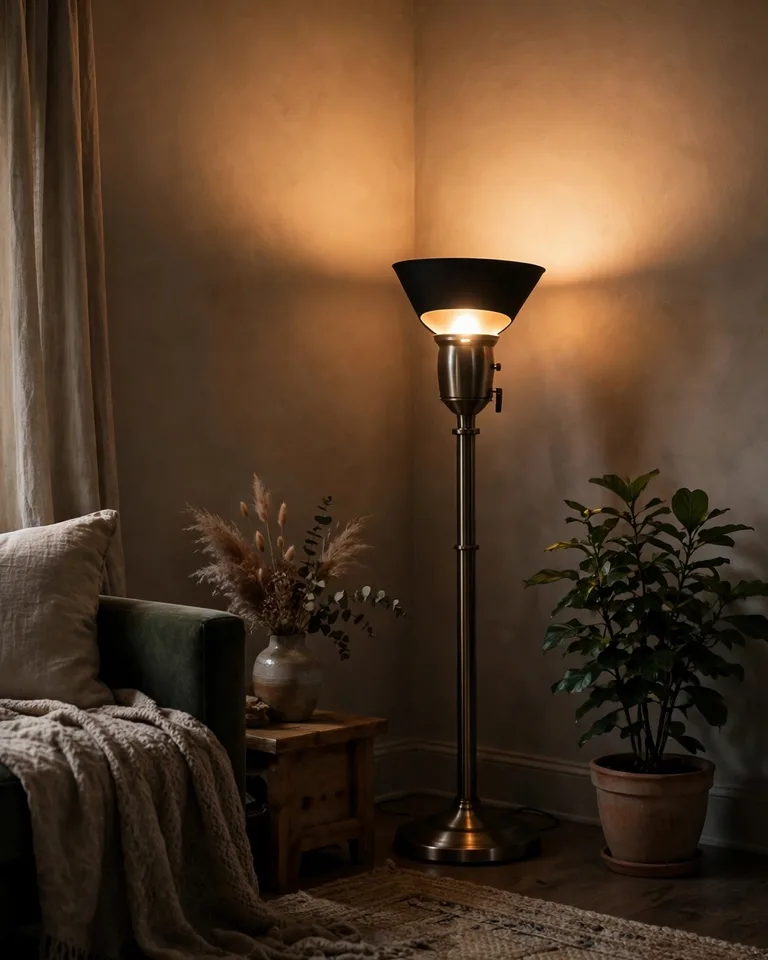
Direct light aimed at seating creates glare and sharp shadows. Bounced light spreads softly and fills the whole corner.
What it is: place a torchiere or adjustable floor lamp a couple of feet from a dark wall and angle the shade upward or toward the wall so the light washes across it and reflects back.
Why it works: the wall becomes a large, soft secondary light source instead of a dark surface absorbing a harsh beam. This one move can rescue a windowless corner for the price of one lamp.
Tip: torchiere-style uplights are the cheapest version of this trick and also wash the ceiling, compounding the bounce effect.
10. Swap heavy, bulky furniture for leggy, lighter silhouettes

A solid block of furniture sitting flush on the floor reads as one big dark mass — especially dark leather or espresso wood in a dim room. You don’t have to replace everything; start with the largest dark piece.
What it is: choose pieces with visible legs — sofas raised off the floor, open-leg chairs, consoles with space underneath — and lighter upholstery or slipcovers where the budget allows.
Why it works: visible floor beneath furniture breaks up visual mass, lets light travel under and around pieces, and makes the room read larger. Lighter fabrics reflect rather than absorb ambient light.
Tip: in a narrow living room, furniture placement matters as much as furniture choice — these tips for arranging furniture in a long narrow living room keep sightlines open so light reaches the far end.
11. Lay a light, low-pile rug over dark floors
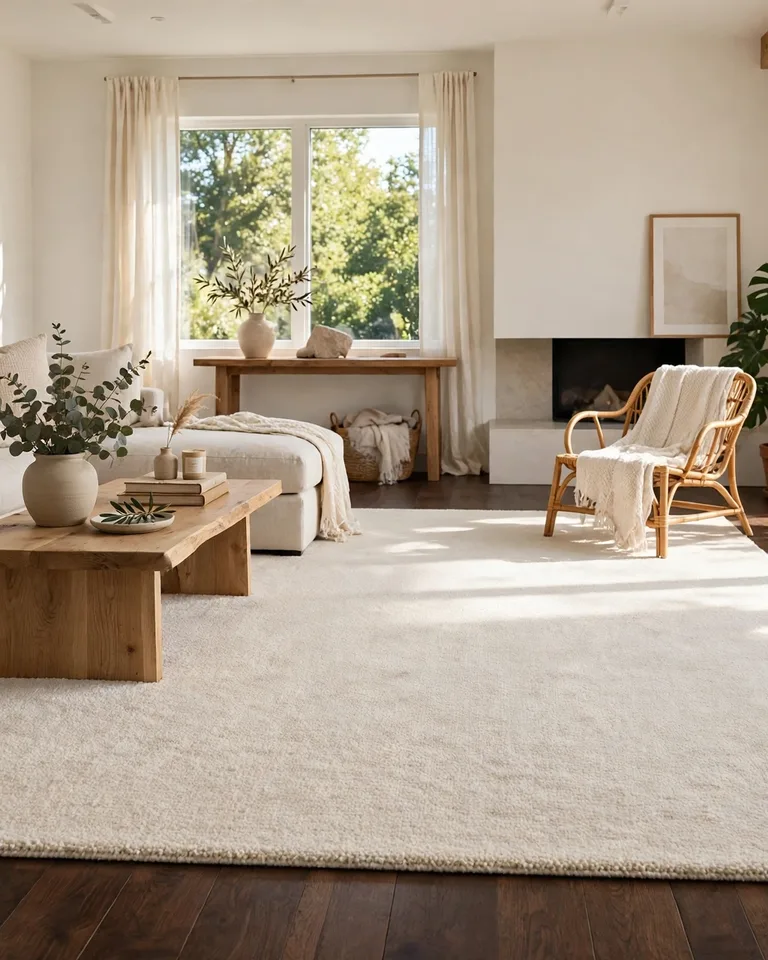
Dark floors drag the whole room down visually. A pale rug lifts the floor plane and bounces light upward — the one surface most brightening guides forget.
What it is: cover the main floor area with a rug in cream, oat, light beige, or soft natural fiber; choose a flat-weave or low-pile construction over deep shag.
Why it works: high-pile rugs trap tiny shadows in their fibers. A low-pile, light-toned rug reflects both natural and artificial light upward, effectively adding a second “ceiling bounce” from below.
Tip: go as large as the room allows — a too-small rug floating in dark flooring reads as an island; a large one resets the whole floor tone.
12. Add glass, metal, and gloss finishes that bounce light

You don’t need a lot of shine — a few well-placed reflective finishes scatter light in ways matte surfaces can’t.
What it is: work in glass-top tables, acrylic or lucite accents, brass or champagne-gold frames and hardware, glazed ceramics, and polished stone or lacquered surfaces.
Why it works: these materials reflect ambient light in multiple directions, creating sparkle points that register as brightness even when the room’s overall light level is modest.
Tip: one strong reflective focal point (a brass-framed mirror, a glass coffee table) beats a dozen small shiny accessories scattered around.
13. Repeat one light tone across the biggest surfaces
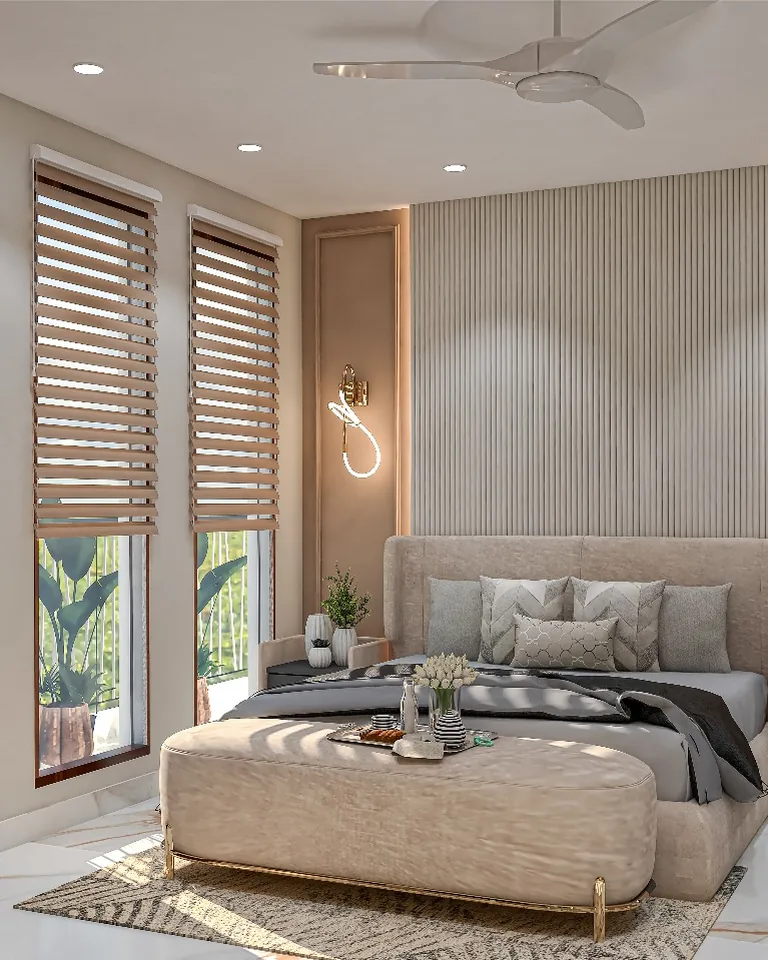
One pale cushion can’t rescue a room covered in dark visual weight. Brightness reads as a composition, not an accessory.
What it is: pick one light neutral — soft ivory, warm cream, pale oatmeal — and repeat it across the curtains, the rug, the sofa or slipcover, and the bedding or throws. Same family, not necessarily the same fabric.
Why it works: a continuous light base reads as one brighter room. Scattered, unrelated pale items read as decoration floating on top of darkness — they never change the room’s underlying tone.
Tip: if the kitchen is the dark room, this principle stacks nicely with good daylight — pair it with these kitchen window ideas to make the whole space feel brighter.
14. Edit ruthlessly: declutter the surfaces
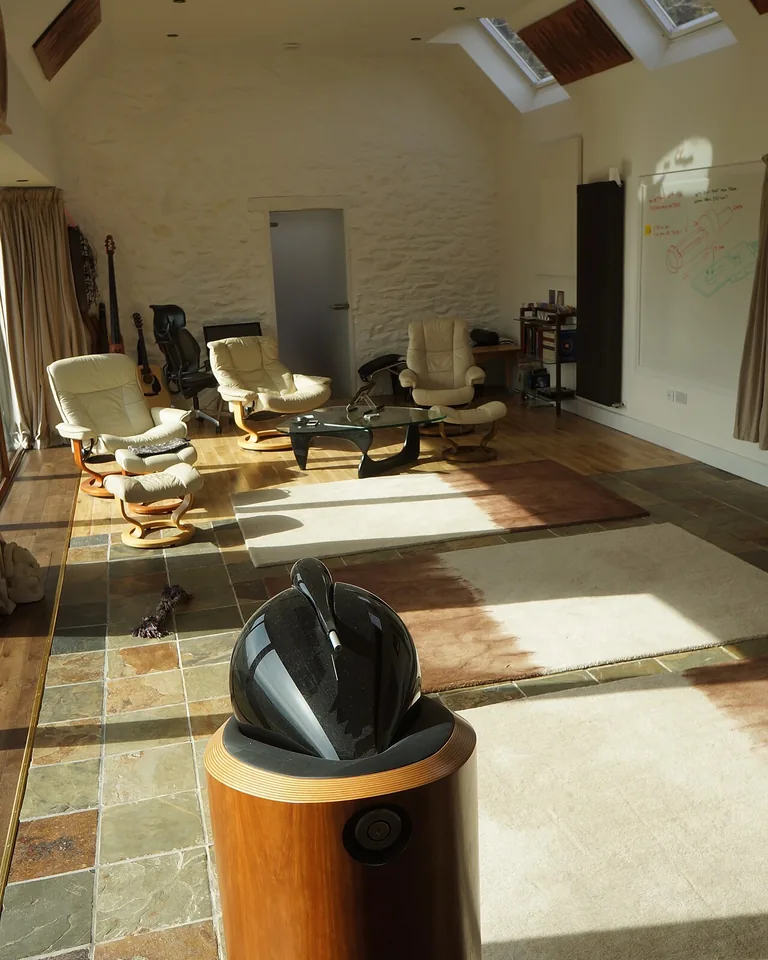
Every object on a counter, shelf, or table casts a small shadow. In a bright room that’s invisible; in a dark room, hundreds of micro-shadows add up to visible gloom.
What it is: an edit-heavy pass. Remove half the small decor from open shelves and surfaces, keep pathways 30–36 inches clear, and pull furniture a few inches off the walls so light can travel behind and around it.
Why it works: fewer objects mean fewer shadows and more open sightlines — light physically travels further through the room. A calm, edited room also feels brighter because the eye isn’t working through visual noise.
Tip: do this before buying anything. It’s free, takes an afternoon, and often changes the room more than a new lamp would.
15. Add living greenery near the light
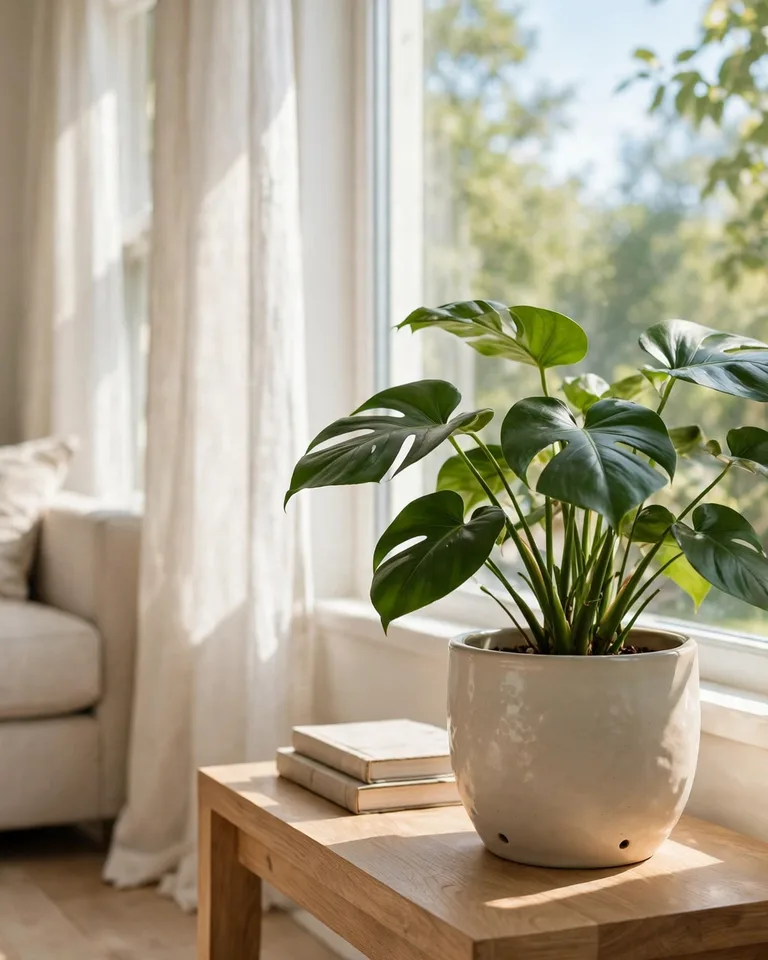
Plants don’t brighten a room by reflecting much light — they brighten it by giving the eye something alive and layered to look at, which keeps a pale room from feeling flat or sterile.
What it is: one or two medium plants in light-toned planters, placed near the window or under a lamp. Choose varieties that tolerate your actual light level — snake plants and pothos handle dim rooms; fiddle-leaf figs do not.
Why it works: after you’ve lightened walls, rug, and curtains, an all-neutral room can feel washed out. Greenery adds depth and contrast without absorbing the light you’ve worked to gain, and a pale planter reflects a little extra light at the sill.
Tip: avoid cramming five plants onto the sill — they block the very window you’re trying to clear. One statement plant near the light beats a crowded sill.

Frequently asked questions
How do I brighten a room that has no windows?
Layer three types of artificial light — ceiling, uplight floor lamp, and task lamps — in the 3000–4000K range, add a large mirror beside a lamp, and keep walls, ceiling, and rug pale. Hidden LED strips behind furniture also create a soft halo that mimics ambient daylight.
What bulb color works best in a dark room?
For living spaces, soft-white LEDs around 3000–3500K keep the room bright without feeling clinical. Choose 4000–5000K for a daylight feel in offices or work zones. More important than either number: raise total lumens and keep every bulb in the room at the same color temperature.
Are white walls always the best choice for a dark room?
Not always. Stark white can look flat or gray in weak light. Warm off-whites, pale greige, and soft warm beiges reflect almost as much light while looking richer. In north-facing or very dim rooms, a warm undertone usually beats pure white.
Can I keep my dark furniture in a dark room?
Yes, if you balance it. Keep walls, ceiling, and rug light, lighten the furniture’s silhouette where you can (slipcovers, visible legs), and make sure the room has layered lighting. One dark anchor piece in a brightened room looks intentional — a room full of dark blocks looks like a cave.
Will adding mirrors make a dark room look cluttered?
No — mirrors usually do the opposite by opening up visual space. The catch: a mirror doubles whatever it faces, so aim it at the window, a lamp, or a clean light wall rather than a crowded shelf or messy corner.
Do a 2-minute brightness audit tonight
Walk the room after dark with this checklist and fix the easiest failures first:
- Is the window fully exposed — glass, sill, and surroundings?
- Is the ceiling lighter than the walls and free of dingy stains?
- Are all bulbs the same color temperature, and bright enough (check the lumens)?
- Do you have at least three light sources at different heights?
- Is the largest mirror facing a light source?
- Are curtains, rug, and upholstery working in the same light family?
- Is anything tall blocking the window or the walkway light path?
Most dark rooms fail three or more of these — and the fixes start with rearranging what you already own.