Bay Window Curtains: 11 Ideas That Make the Whole Room Feel Finished
A bay window only looks finished when the curtains follow the window’s actual shape. The best bay window curtains depend on three things: the type of bay you have (angled, curved bow, or square box bay), what sits underneath it (a window seat, a radiator, or clear floor), and whether you need light control, privacy, or both. For most angled bays, floor-length panels on a rod or track that bends around the corners give the most polished result; for bays with seating or radiators underneath, Roman shades fitted to each pane work better.
This guide covers 11 distinct bay window curtain ideas for every situation — from curved bow windows that need a ceiling track to cottage kitchens that call for washable café curtains. Each idea below works as a standalone treatment, so pick the one that matches your window’s shape and how you actually use the room.

Floor-Length Panels on an Angled Bay Rod
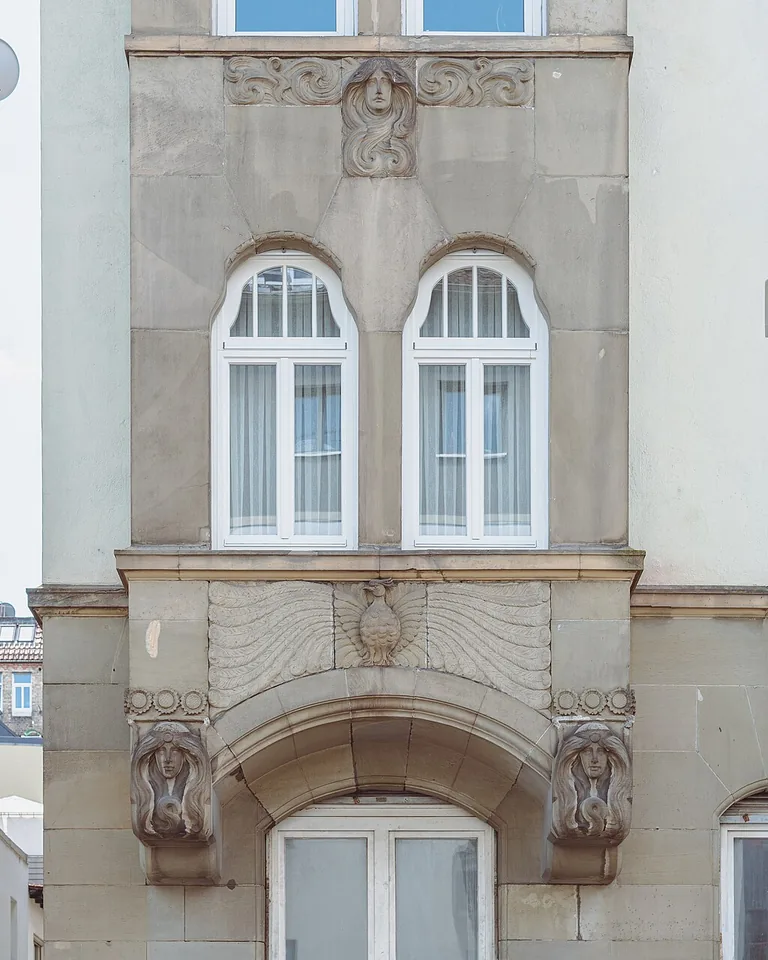
The classic, most reliable approach: an angled bay window rod (or three short rods joined with corner connectors) that follows each section of the window, carrying full-length drapery panels. Mount the hardware 4 to 6 inches above the window frame and extend it past the outer corners so open panels stack clear of the glass. This gives you the traditional gathered-drape look while respecting the bay’s geometry.
Cost/difficulty: Moderate — bay rod sets run higher than straight rods because of the corner hardware. Pro tip: Buy panels 1.5 to 2 times the width of each section for proper fullness; skimpy panels are the fastest way to make a bay look unfinished.
Sheer Voile Layered Over Blackout Panels
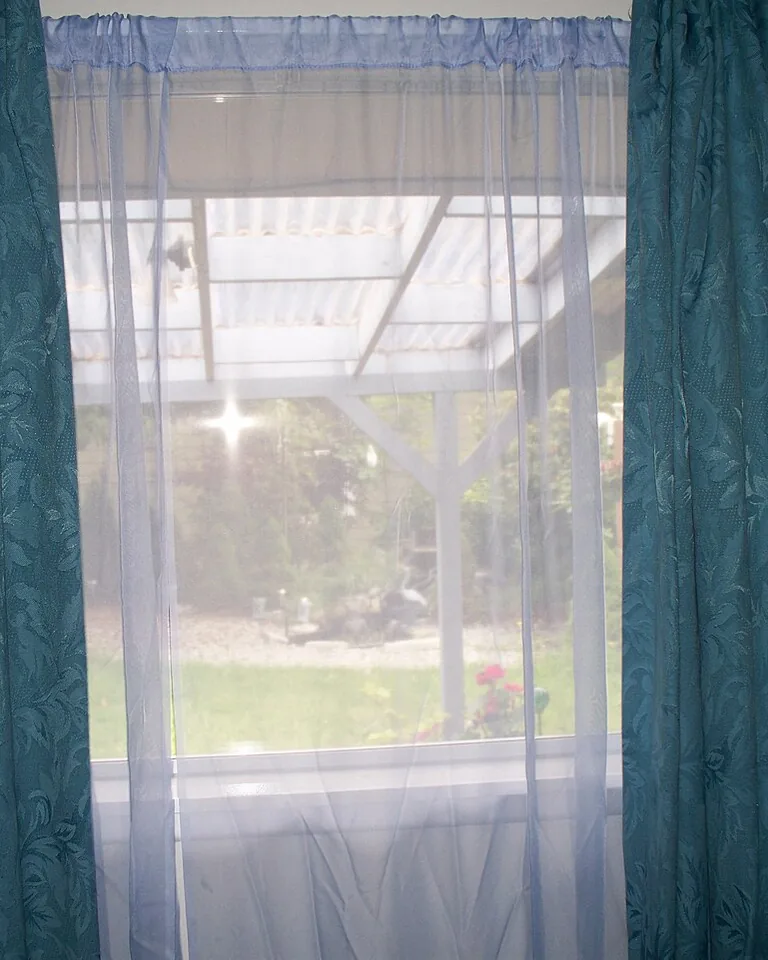
Two layers on a double rod or track solve the day-versus-night problem bay windows are famous for. Lightweight white voile stays closed during the day for filtered light and privacy, while heavier blackout panels pull shut at night. The layered look also adds depth, which matters because a bay’s angles can look flat and hard without soft fabric.
Cost/difficulty: Moderate to higher — double hardware plus two sets of panels. Pro tip: Keep the sheer layer close to the glass and the blackout layer in front; reverse it and the sheers billow into the room awkwardly.
Roman Shades Fitted to Each Pane

When furniture sits close to the glass or a radiator runs underneath, long curtains become a hazard. Individual Roman shades fitted inside each window frame give a tailored, architectural finish that follows the bay’s angles exactly. They stack into a neat header when raised and can be lowered one at a time to control glare.
Cost/difficulty: Moderate; measuring must be exact since each pane differs. Pro tip: Measure every section separately — frame depth, handles, and crank space vary across panes, and one oversized shade forced across incompatible sections looks worse than none.
Café Curtains for a Cottage Kitchen Bay
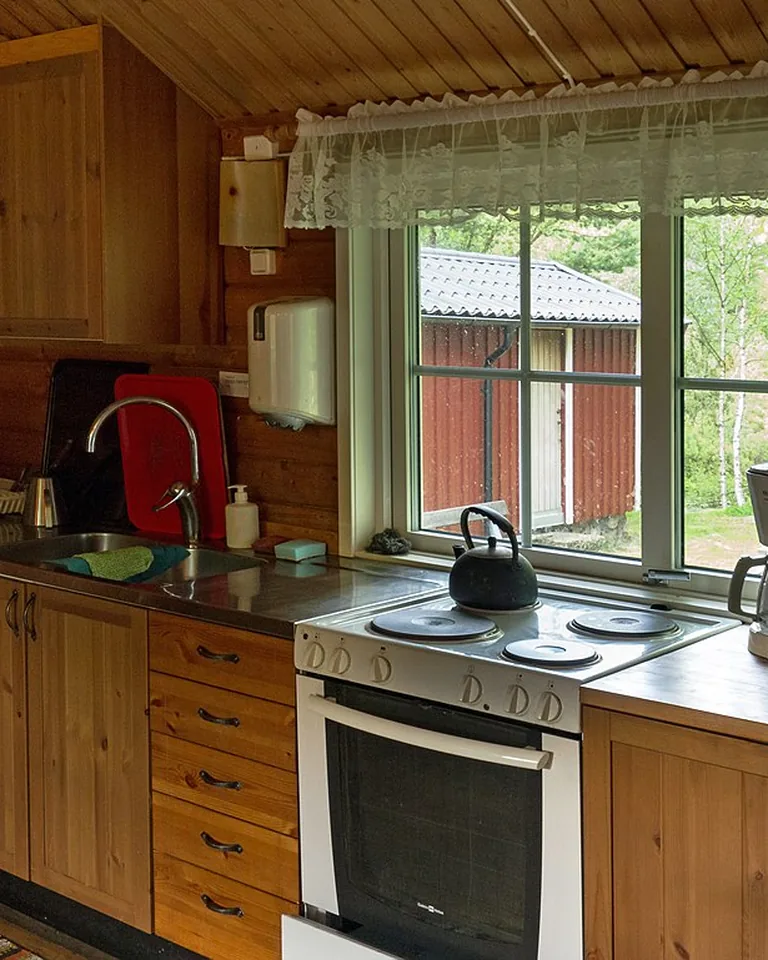
Short café curtains covering only the lower half of each pane are made for kitchen bays: they block the sightline at eye level while the open upper glass keeps the daylight and the view. A simple cotton or cotton blend handles cooking splashes and goes straight in the washing machine. Mount them on tension rods or short café rods inside each frame.
Cost/difficulty: Low — the most budget-friendly option on this list. Pro tip: Hang them just above the halfway point and keep the hem clear of faucets and hot surfaces; soggy fabric above a sink is a look nobody wants.
Curved Ceiling Track for a Bow Window
A curved bow window shouldn’t be dressed as three rectangles. A continuous curved track mounted to the ceiling lets a single sweep of lightweight fabric follow the window’s rounded outline, creating a soft, unbroken line that respects the architecture. Sheers or light cotton work best since heavy fabric can overwhelm the curve.
Cost/difficulty: Moderate to higher; hand-bendable tracks are sold in lengths you shape on site. Pro tip: Before ordering, check the curve’s radius and confirm what you’re mounting into — the track needs solid ceiling support, not just drywall.
Linen Side Panels Framing a Built-In Window Seat

A built-in window seat already gives the bay a purpose; linen side panels at the outer edges finish it. Bay windows also give houseplants the bright light they crave — greenery bedroom ideas show which plants thrive near glass. Keep the panels stationary (mounted on decorative rods at the bay’s outermost corners) rather than functional, so the seat stays usable and the cushions stay clear. The natural texture of linen pairs well with wood bench seats and woven cushions.
Cost/difficulty: Moderate — two panels and decorative hardware only. Pro tip: Position the panels so their inner edges stack just outside the usable bench width; fabric bunching behind seat cushions ruins both the look and the seat.
Cellular (Honeycomb) Shades for Insulation
Bay windows are heat-loss culprits thanks to all that glass. Cellular shades trap air in their honeycomb cells, adding a real insulation layer to each pane while keeping a clean, unobtrusive profile that follows the bay’s angles. Top-down/bottom-up versions are especially useful — lower them from the top for daylight while keeping street-level privacy.
Cost/difficulty: Moderate. Pro tip: Single-cell shades insulate less than double-cell; if winter drafts are the actual problem, the double-cell version earns its price.
Velvet Panels for a Cozy, Dramatic Bay
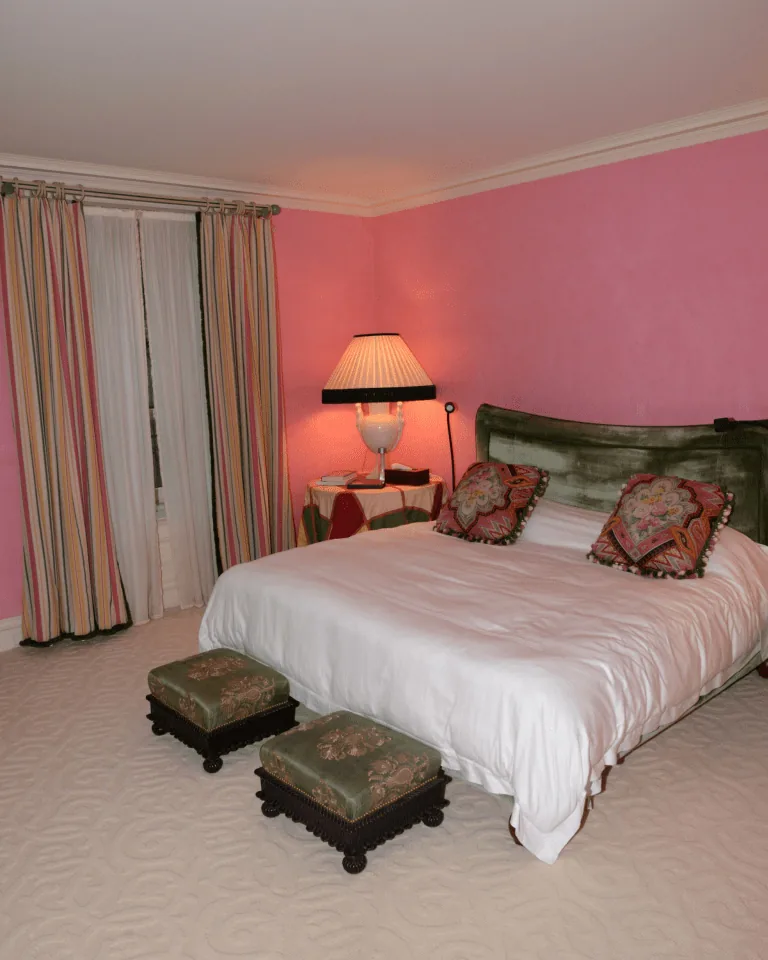
In a room with enough visual weight — a library, a moody living room, a dining space — heavy velvet panels turn the bay into an event. The fabric’s depth makes the window feel intentional and grand, and it blocks light and sound better than most alternatives. This look needs a sturdy angled rod or a ceiling-mounted track rated for the weight.
Cost/difficulty: Higher — both the fabric and the reinforced hardware cost more. Pro tip: Keep the room’s other surfaces lighter; dark velvet in an already-dark room can make the window feel smaller instead of dramatic.
Woven Roman Shades Plus Stationary Side Panels

This combination covers every base: woven wood or textured Roman shades handle light and privacy on each pane, while stationary side panels at the outer edges add the softness and framing that shades alone can’t deliver. It’s a practical fit for dining rooms and living rooms where you want control during the day and polish in the evening.
Cost/difficulty: Higher — two treatments in one. Pro tip: Match the shade and panel tones so they read as one treatment, not two strangers sharing a window.
Sill-Length Panels Above a Radiator

Long curtains draped over a radiator waste heat and risk scorching the fabric. When a radiator or low bookcase runs under the bay, end the panels at the sill — or a few inches below it — so heat circulates freely. This still gives you the gathered-curtain look and privacy, just tailored to the real furniture below.
Cost/difficulty: Low to moderate. Pro tip: Leave at least 2 to 3 inches of clearance between the curtain hem and the radiator top; fabric that rests on hot metal is a genuine safety issue, not just a style one.
Tonal Panels Color-Matched to the Walls

Painted in the same tone as the walls, curtain panels visually merge with the room and let the bay’s architecture do the talking — a color-drenching approach that makes small rooms feel larger and calm. It works best with simple weaves like linen or cotton twill where the texture, not the pattern, carries the interest. Add a contrasting trim or edging on the leading edge if you want a hint of detail.
Cost/difficulty: Moderate. Pro tip: Take a paint chip to the fabric store rather than guessing from memory; tones that look identical at home can clash in the store’s light.

Getting the Hardware and Measurements Right
Two decisions determine whether bay window curtains look professional or improvised: the hardware and the measuring. For hardware, you have three real options. A bay window curtain rod uses angled corner pieces to follow the window’s shape — the most familiar look. A flexible curved track (wall- or ceiling-mounted) creates a smooth, continuous line and lets curtains glide around corners without catching — the best choice for bow windows and heavier fabrics. Separate rods per section work for a more traditional or rental-friendly look, with each pane treated almost independently.
For measuring, measure each window section individually, not just the total span. Add overhang on the outer sections so open curtains can stack off the glass, and hang the hardware high — near the ceiling or 4 to 6 inches above the frame — with panels that reach the floor unless something underneath (a seat, a radiator) says otherwise. As a rough guide, most standard three-section bays need two to four panels total: a pair at the outer edges, plus one per corner section if you want full coverage.

Bay Window Curtain FAQs
How do you hang curtains in a bay window?
Measure each section of the bay separately, then use hardware that follows the angles — either a bay window rod with angled corner pieces or a flexible curved track. Hang the hardware high and wide, and use floor-length panels for the most elegant result unless seating or a radiator underneath calls for shorter treatments.
What is the best curtain rod for a bay window?
A dedicated bay window rod with angled connectors, or a flexible curtain track that can be shaped to 90°, 135°, or a custom curve. Track systems give the smoothest operation and the cleanest look; corner-connected rods give a more traditional, decorative result.
Should bay window curtains be floor-length?
Floor-length looks best in most cases because it visually raises the ceiling and frames the bay elegantly. The exceptions: when a window seat or radiator sits underneath — then use sill-length panels or Roman shades fitted to each pane instead.
Are Roman shades suitable for bay windows?
Yes — they’re one of the most practical choices. Roman shades fitted to individual panes follow the bay’s angles exactly, avoid tangling with furniture or radiators below, and give precise light control per section. They work especially well in small bays, kitchens, and breakfast nooks.
How many curtain panels do you need for a bay window?
Usually two to four: a pair of panels at the outer edges, plus panels at the corners or one per section if the bay is wide or you want full-closure coverage. The right number depends on the number of window sections and whether you want the curtains to actually close or just frame the bay decoratively.