How to Make a Dining Room Look Formal: 12 Ideas That Work in Any Home
A formal dining room is not about expensive furniture or a room nobody is allowed to use. It comes down to a handful of deliberate choices: a strong light fixture, seating with real presence, a table that anchors the room, and surfaces that look edited rather than crowded. Get those right and even a modest dining room reads as refined.
The fastest way to make a dining room look formal is to work in layers. Start with the biggest visual anchors — lighting, table, and chairs — then add structure to the walls and windows, and finish with the tabletop details guests actually notice. The 12 ideas below follow that order, so you can stop after three changes or work through all of them.
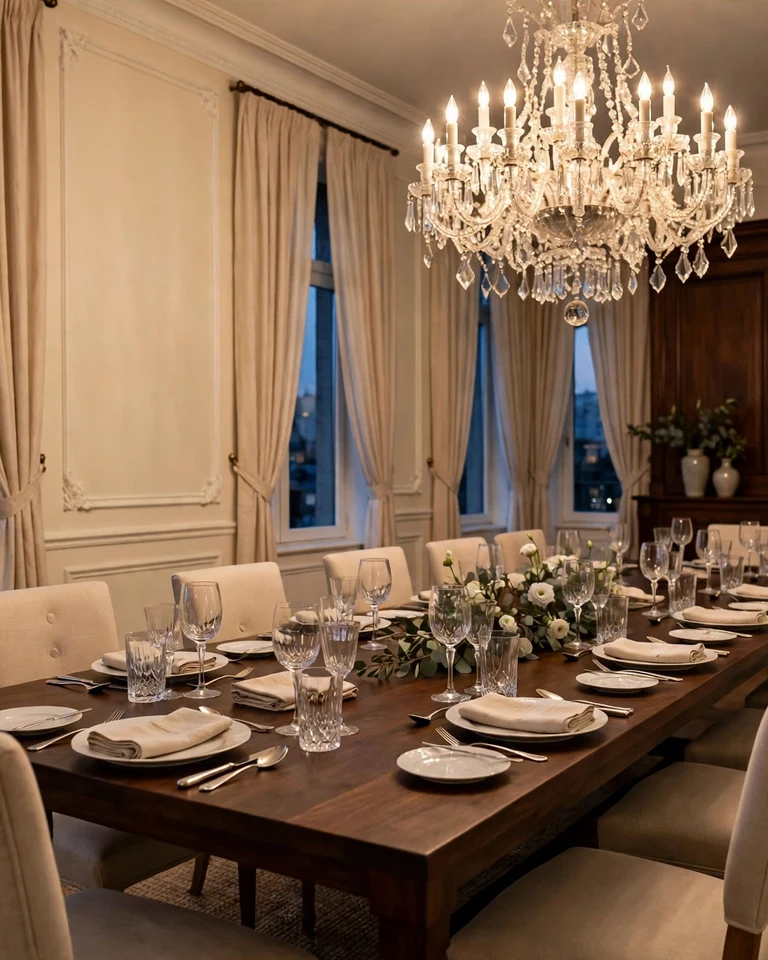
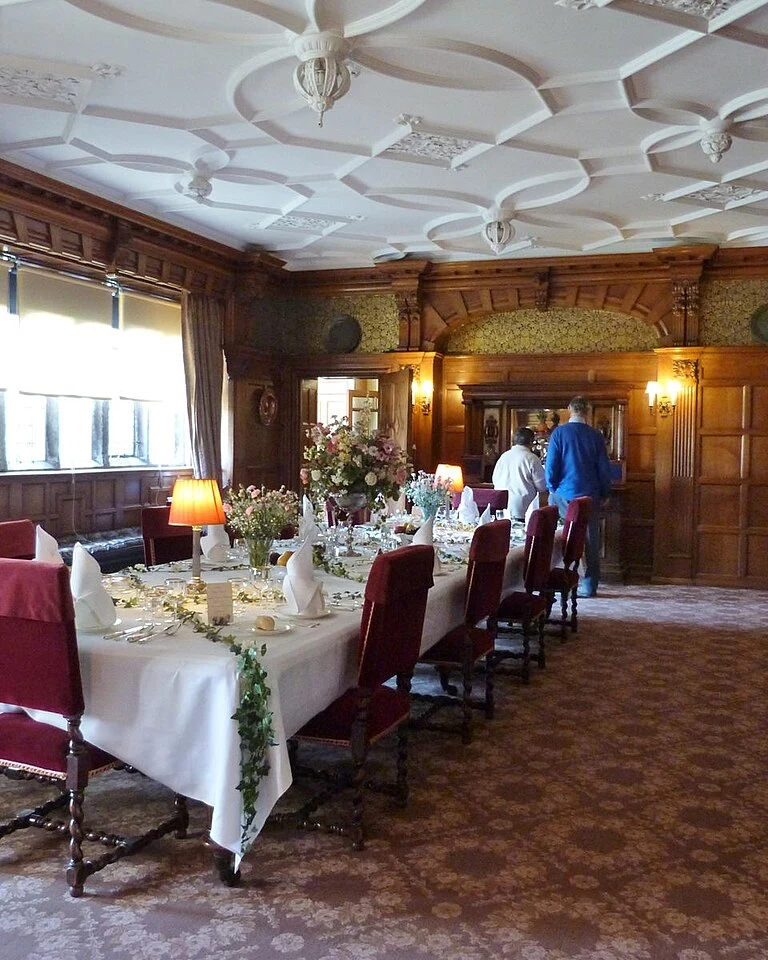
Before you buy anything, decide on one design direction and one restrained color palette. Formal rooms almost always repeat a few colors — a neutral base, one wood tone, and one metal finish — instead of introducing something new with every purchase. That repetition is what makes a room feel planned rather than assembled.
1. Hang a Chandelier That Matches the Table’s Scale
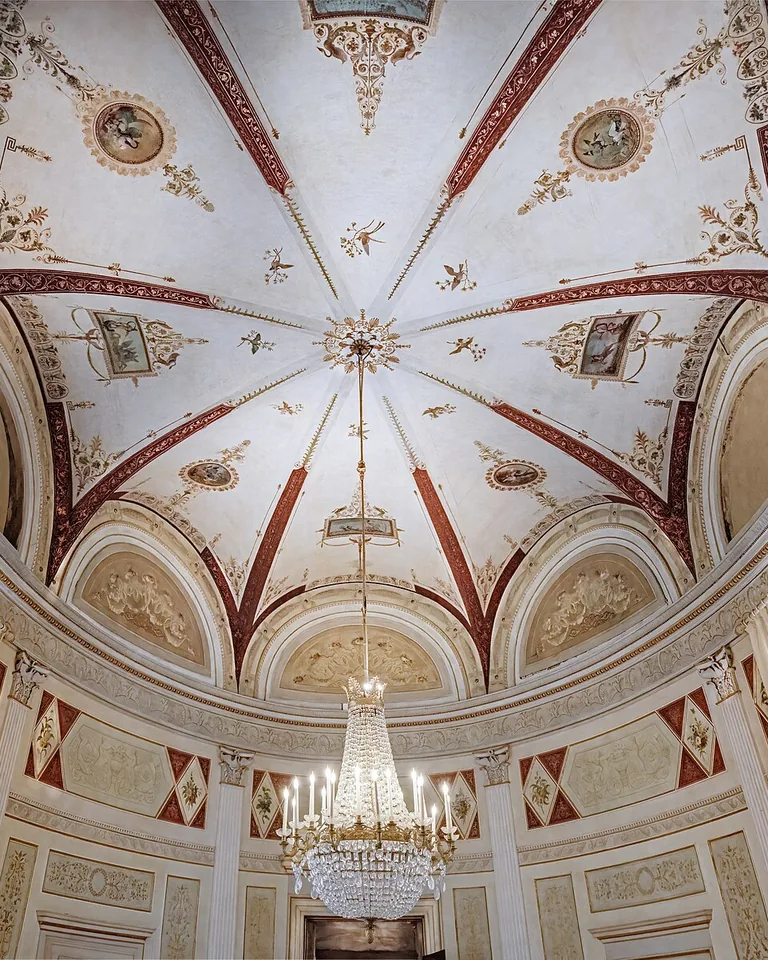
Nothing signals “formal dining room” faster than a proper chandelier centered over the table. The key is scale: a fixture that is too small looks timid above a substantial table, while one that is too large overwhelms the room. As a rule of thumb, the chandelier’s diameter should be about one-half to two-thirds the width of the table, hung 30 to 36 inches above the tabletop so it lights the meal without blocking faces.
Tip: Put the chandelier on a dimmer. Bright overhead light feels like a cafeteria; dimmed, warm light instantly feels like a dinner party.
2. Upgrade to Upholstered Chairs With Real Presence
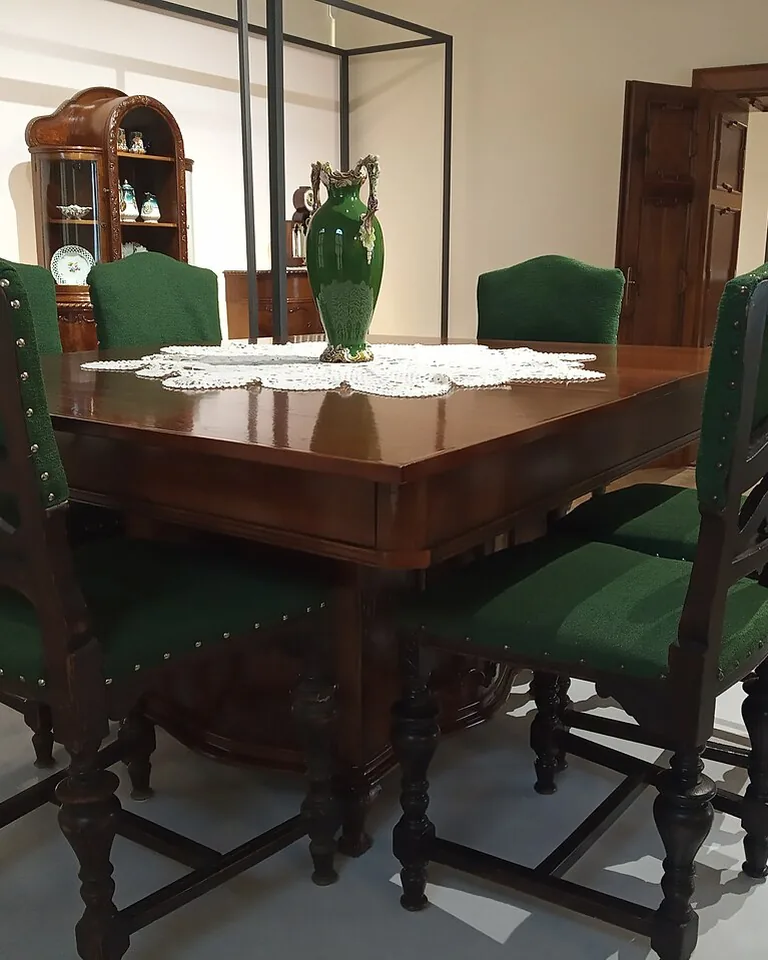
Chairs reveal a room’s level of formality more honestly than almost anything else. Lightweight, mismatched, or visibly flimsy chairs make even a beautiful table feel casual. Upholstered chairs — linen for a relaxed formal look, velvet or a textured weave for something richer — add visual weight and, just as importantly, comfort that keeps guests at the table longer.
Tip: If a full set is out of budget, upgrade just the two host chairs at the ends of the table and keep the side chairs simple and matching. The contrast looks intentional, not incomplete.
3. Let a Substantial Table Anchor the Room
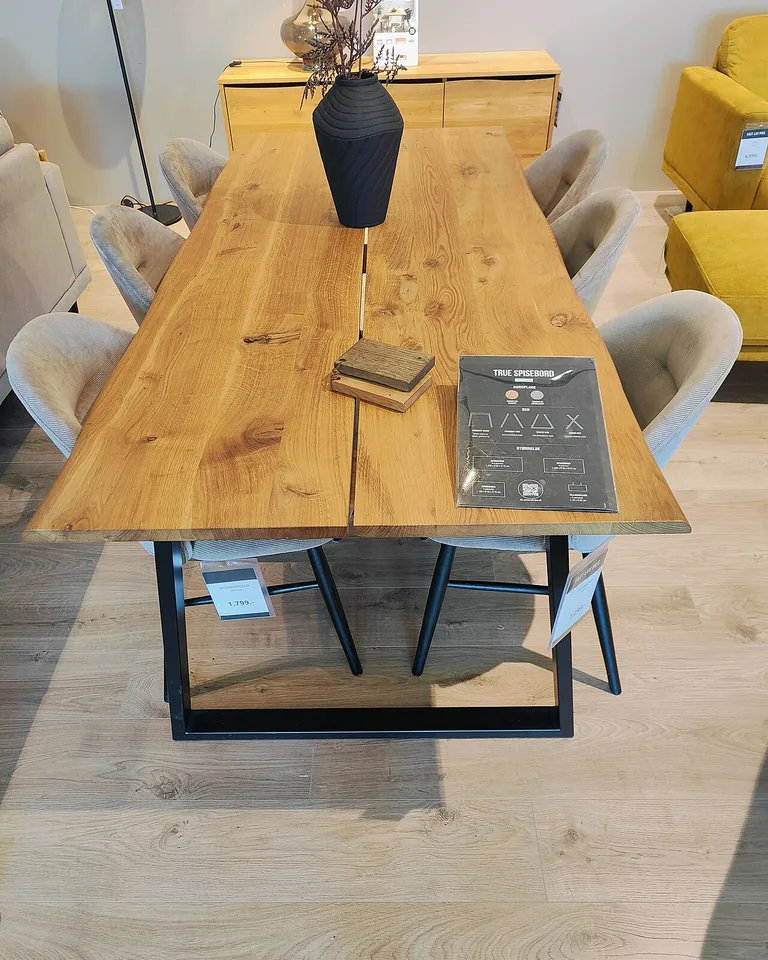
A formal dining room needs a table that looks like it belongs there permanently, not one that could be folded away. Solid wood in walnut, cherry, or mahogany is the classic choice, but a clean-lined modern table in stone or dark veneer works just as well. What matters most is proportion: leave at least 36 inches of clearance around the table so chairs can pull out and people can move comfortably.
Tip: An extension-leaf table is the practical formal choice — it stays compact for weeknights and seats a crowd for holidays. If your room is long and narrow, arranging furniture in a long, narrow room follows the same anchor-and-clearance logic.
4. Add Wall Molding for Instant Architecture
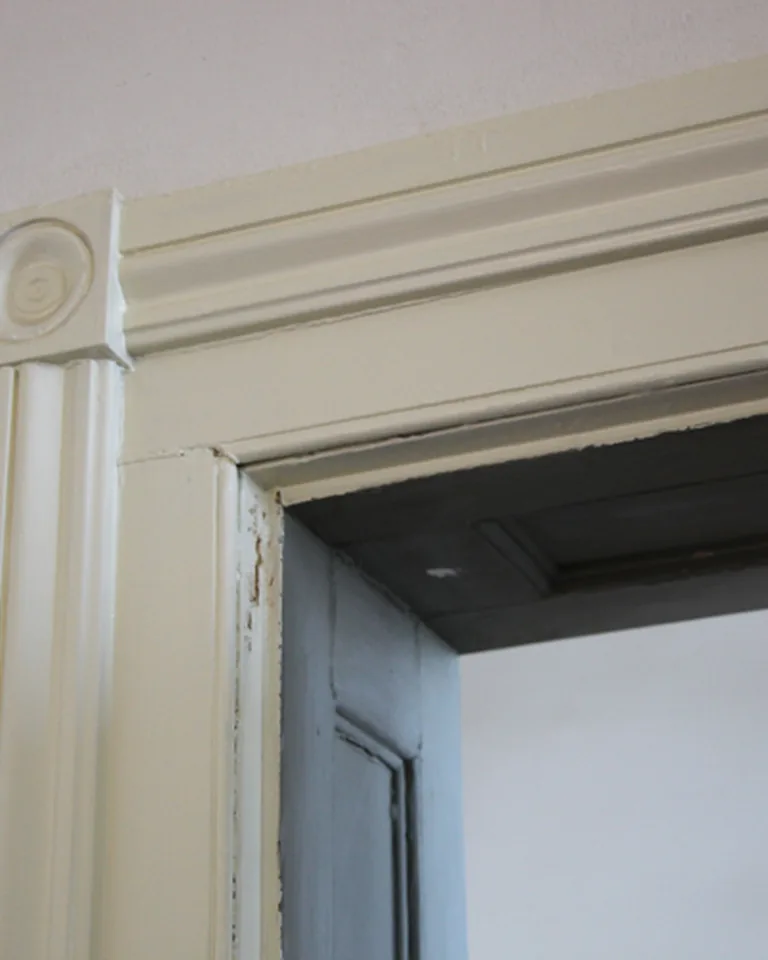
Flat, bare walls are one of the biggest reasons a dining room feels ordinary. Simple picture-frame molding, a chair rail with wainscoting, or beefier crown molding adds the kind of architectural detail that makes a room feel finished and expensive — often for far less than new furniture. Paint the molding the same color as the wall for a subtle, modern effect, or use a crisp contrasting trim for a traditional look.
Tip: Start with one wall — the one guests see first when they walk in — if you want to test the look before committing to the whole room.
5. Paint the Walls a Deeper, Richer Color
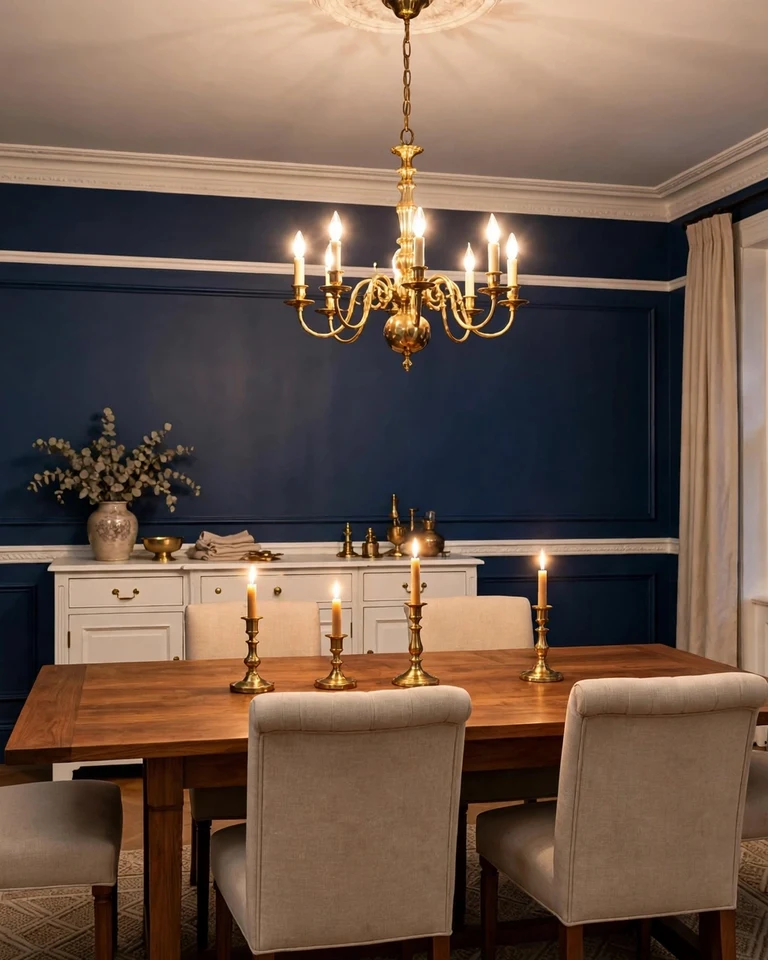
Pale, builder-grade walls rarely read as formal. A deeper color — navy, forest green, charcoal, or even a warm burgundy — wraps the room in atmosphere and makes wood tones, brass, and candlelight stand out. Deep colors work best when the trim stays light and the lighting is warm, so the room feels intimate rather than dark.
Tip: Worried a dark color will shrink the room? Paint just the wall behind the sideboard or the main focal wall, and keep the other walls a soft neutral. You get the drama without closing the room in — and if the room is short on daylight, these fixes for a dark room pair well with a bold paint choice.
6. Dress the Windows Floor to Ceiling
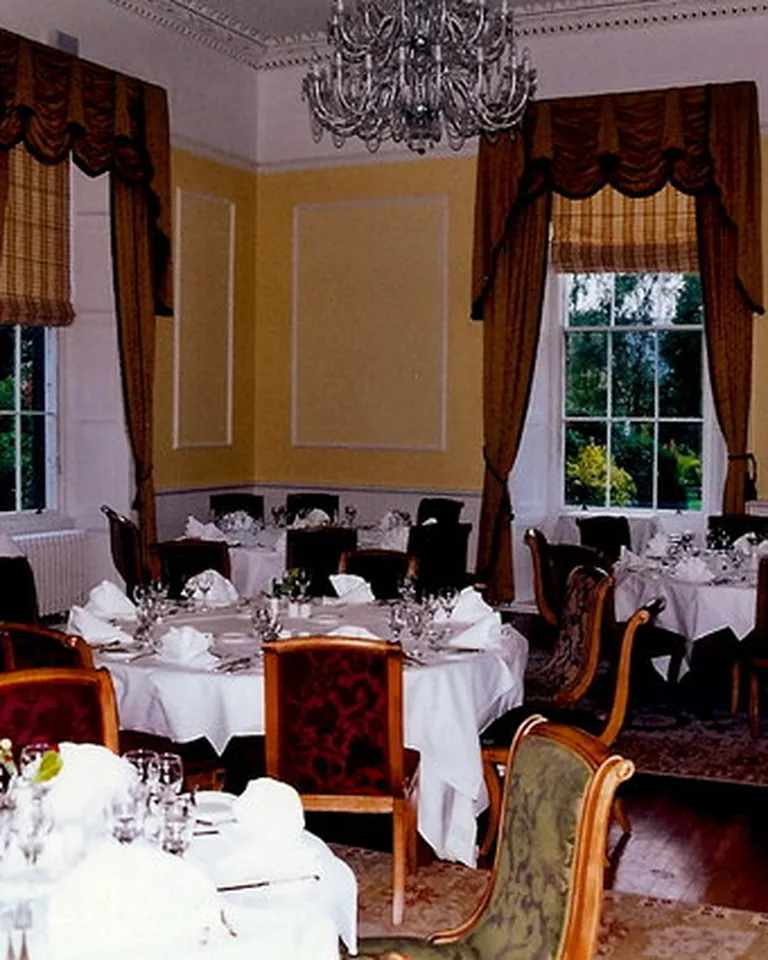
Short, stiff curtain panels that stop at the windowsill are a classic casual-room giveaway. Mount the rod several inches above the window frame and wider than the window itself, then hang floor-length panels in linen, velvet, or a lined cotton. The longer vertical line makes the walls look taller and the whole room more finished.
Tip: Repeat the drapery fabric’s tone somewhere else — chair upholstery, a table runner, or the rug — so the windows feel connected to the rest of the room. For more window ideas, see these window treatment ideas that make any room look finished.
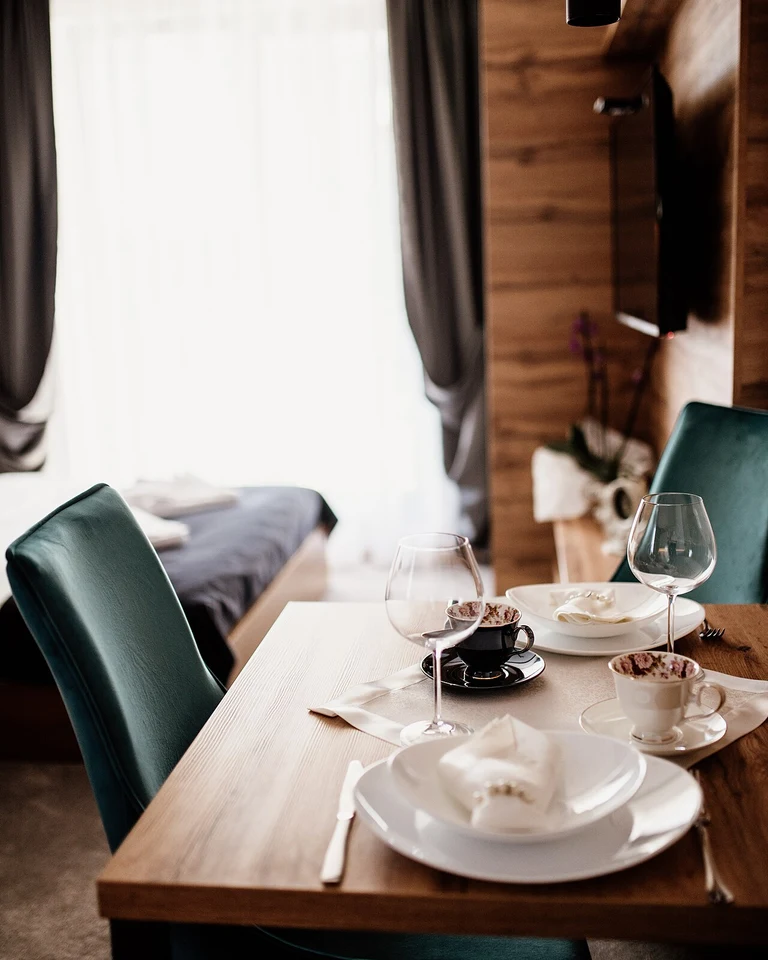
7. Size the Rug So Chairs Stay on It
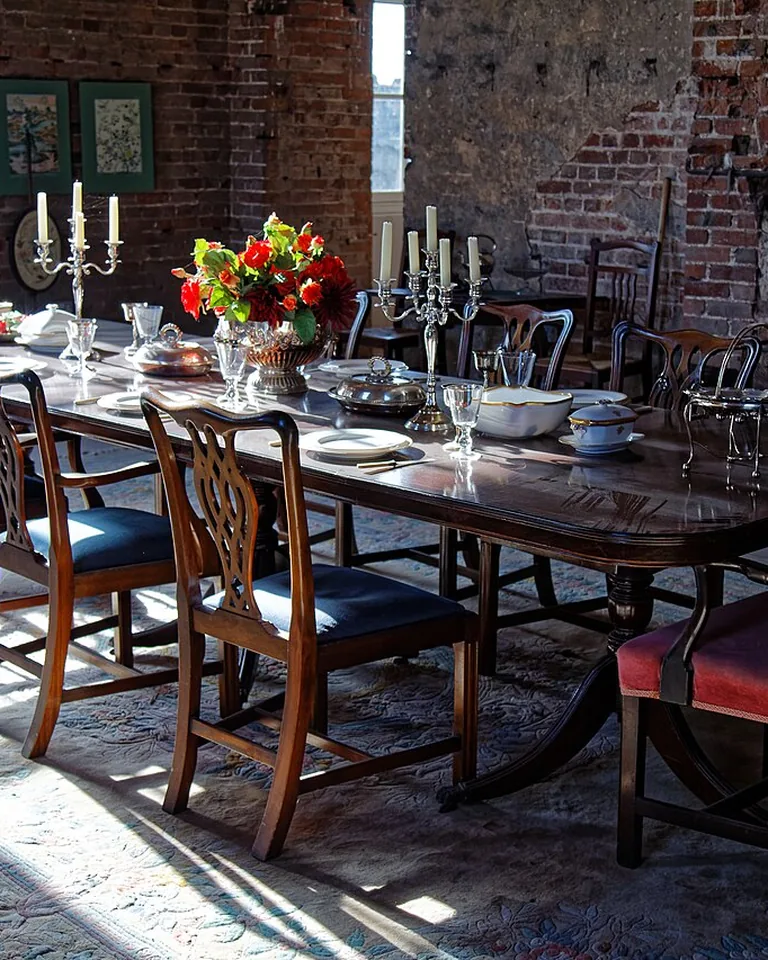
An undersized rug is one of the most common dining room mistakes, and it is instantly visible: chair legs slide off the edge every time someone sits down. A formal dining room rug should extend at least 24 inches beyond the table on all sides, so chairs remain on the rug even when pulled out. A low-pile rug in a neutral tone or subtle pattern keeps the look refined and is much easier to clean than deep pile.
Tip: Measure with the chairs pulled out, not pushed in. If the rug only fits the table, it is too small.
8. Ground the Room With a Sideboard or Buffet
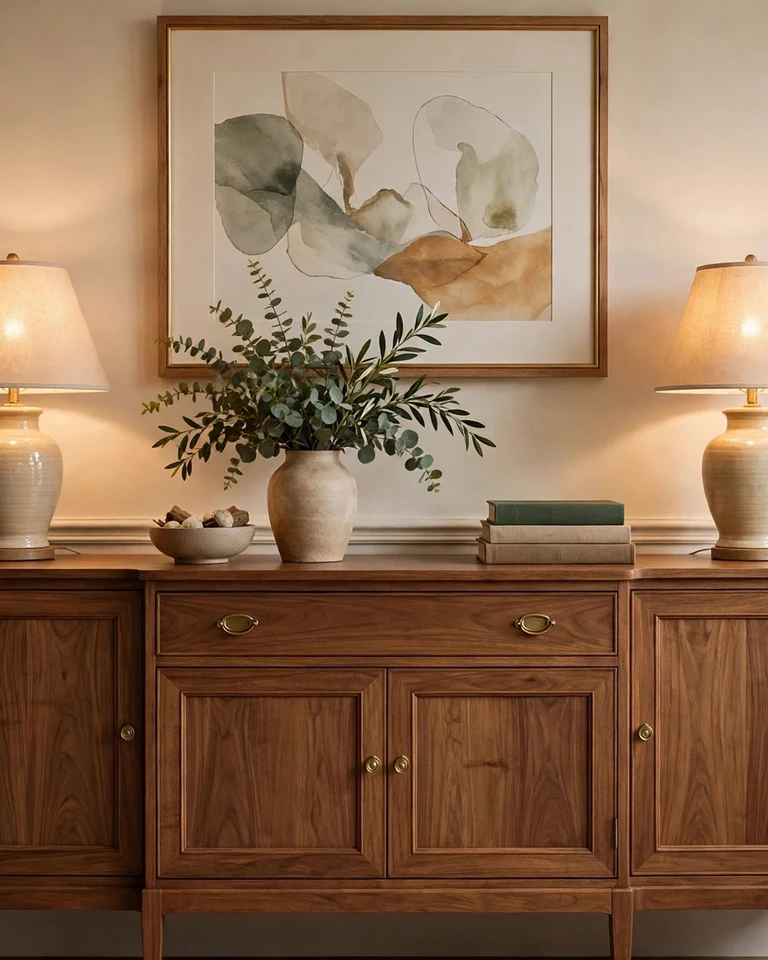
A sideboard does two jobs at once: it gives the room a second substantial piece of furniture to balance the table, and it hides everything that makes a dining room look cluttered — extra linens, serving pieces, candles, and board games. Place it against the longest uninterrupted wall, keep its top styled with just a few pieces, and let closed storage do the rest.
Tip: Style the top in three heights — a lamp or tall vase, a medium piece like a stack of books or a small plant, and one low object — instead of lining up a dozen small items.
9. Create Symmetry With Pairs
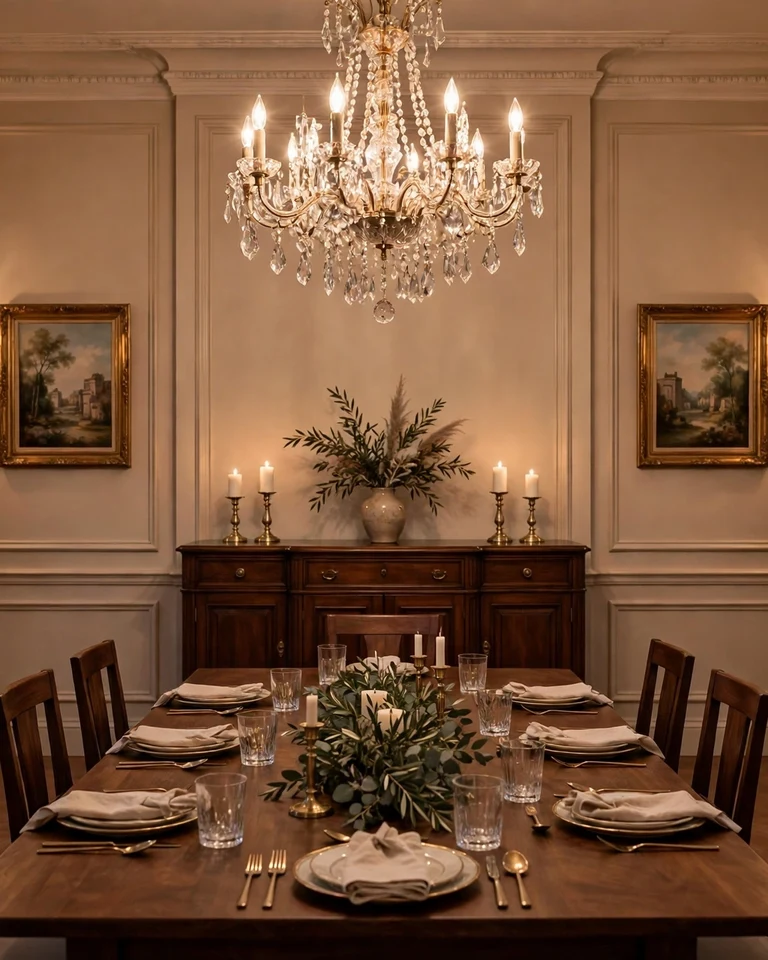
Symmetry is the quiet engine of formality. Matching lamps on a sideboard, a pair of sconces flanking a mirror, or identical artwork on either side of a window all tell the eye that the room was arranged on purpose. You do not need a perfectly mirrored room — just one or two clear pairs to give the space a sense of order.
Tip: If your room is asymmetrical by necessity (a doorway on one side, for example), create a pair on the main focal wall only and let the rest of the room stay relaxed.
10. Hang a Mirror Where It Reflects Something Good
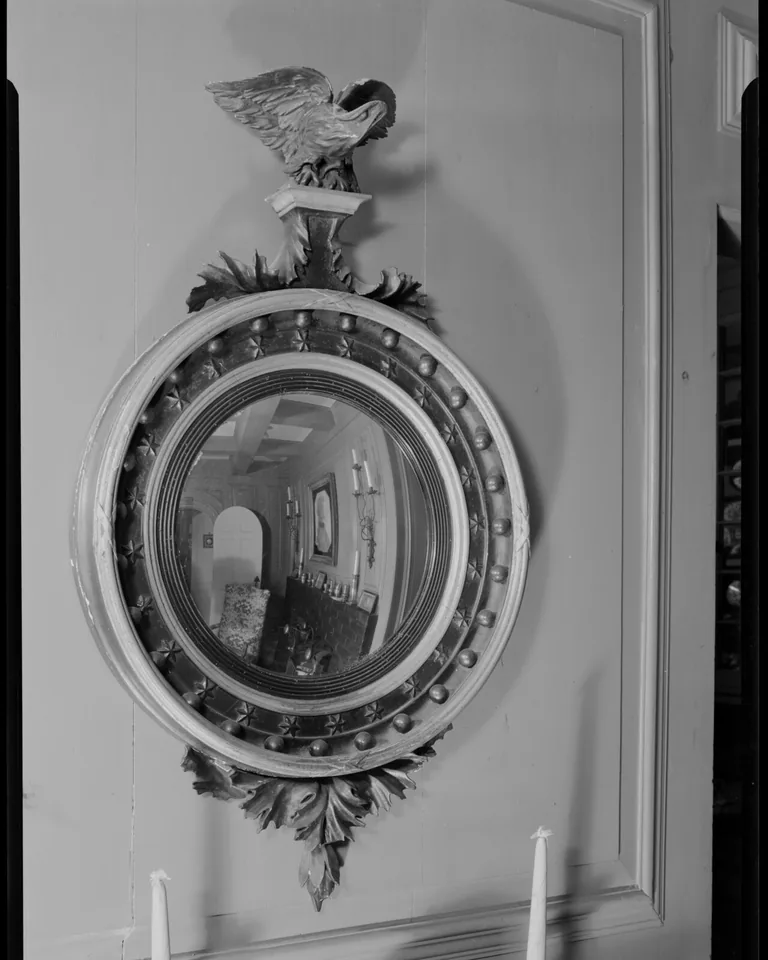
A large mirror above the sideboard or on the main wall bounces light around the room and makes it feel larger — but only if it reflects something worth seeing. Position it so it catches the chandelier, a window, or a strong piece of artwork. A mirror facing a blank wall just doubles the blank wall, and one facing clutter doubles the clutter.
Tip: A gilt or dark-wood frame leans traditional; a slim brass or black frame keeps the same trick feeling modern.
11. Layer the Table Setting Like an Occasion
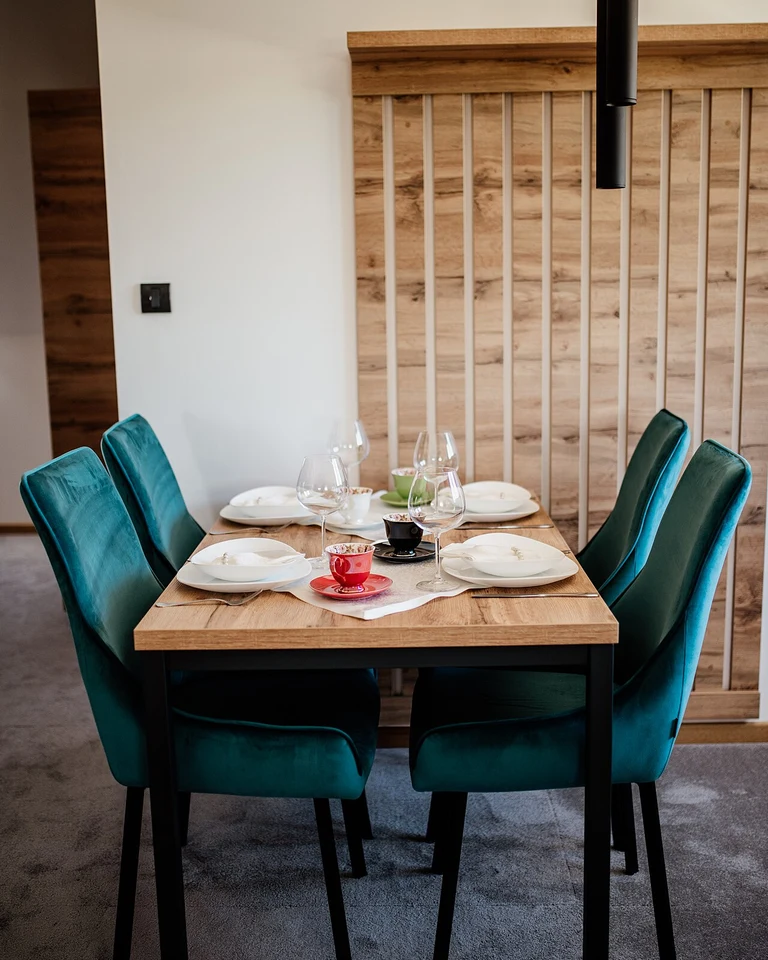
You do not need fine china to set a formal table — you need consistency. Layer each place setting in the same order: charger or placemat, dinner plate, salad plate or bowl, aligned cutlery, a cloth napkin, and matching glassware. Repetition across every seat is what reads as formal, even if the pieces themselves are simple and affordable.
Tip: Keep the everyday plates in the kitchen and reserve one coordinated set for the dining room. The table will look dressed even on an ordinary Tuesday — and when a holiday comes, these modern Thanksgiving tablescape ideas build on exactly this layered foundation.
12. Finish With One Low Centerpiece
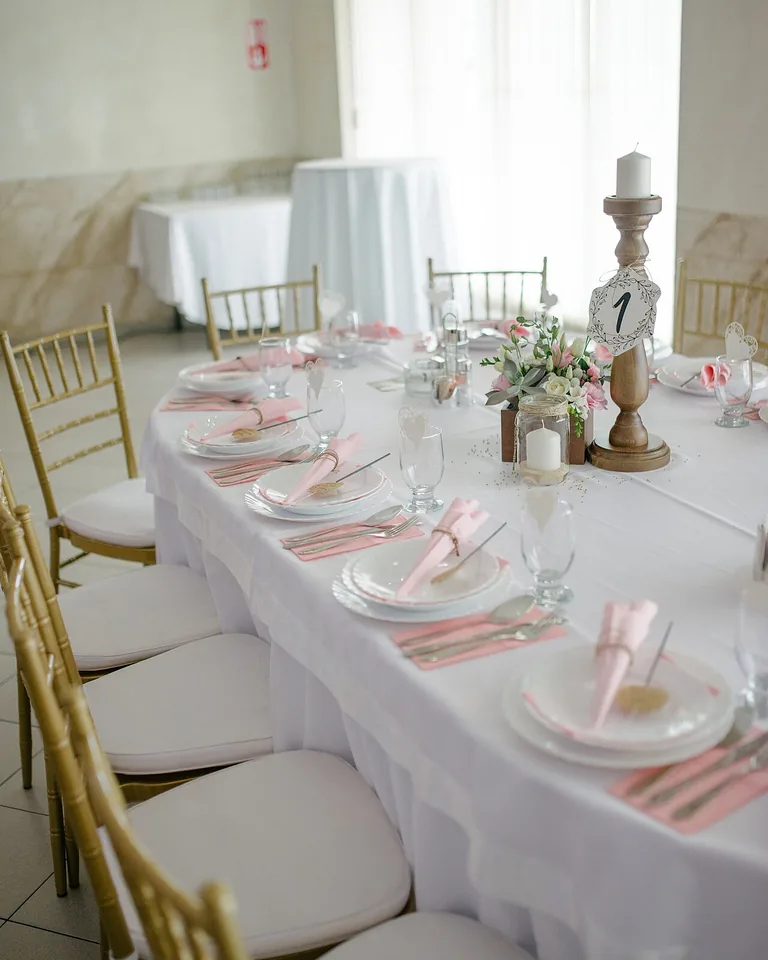
One substantial centerpiece beats a parade of small objects every time. A low bowl of greenery, a stone vessel with branches, or a simple floral arrangement anchors the table without blocking conversation across it. Keep the rest of the tabletop quiet — a runner, the place settings, and the centerpiece are enough.
Tip: Check the height from a seated position, not standing. If you have to lean around it to see the person opposite you, it is too tall.
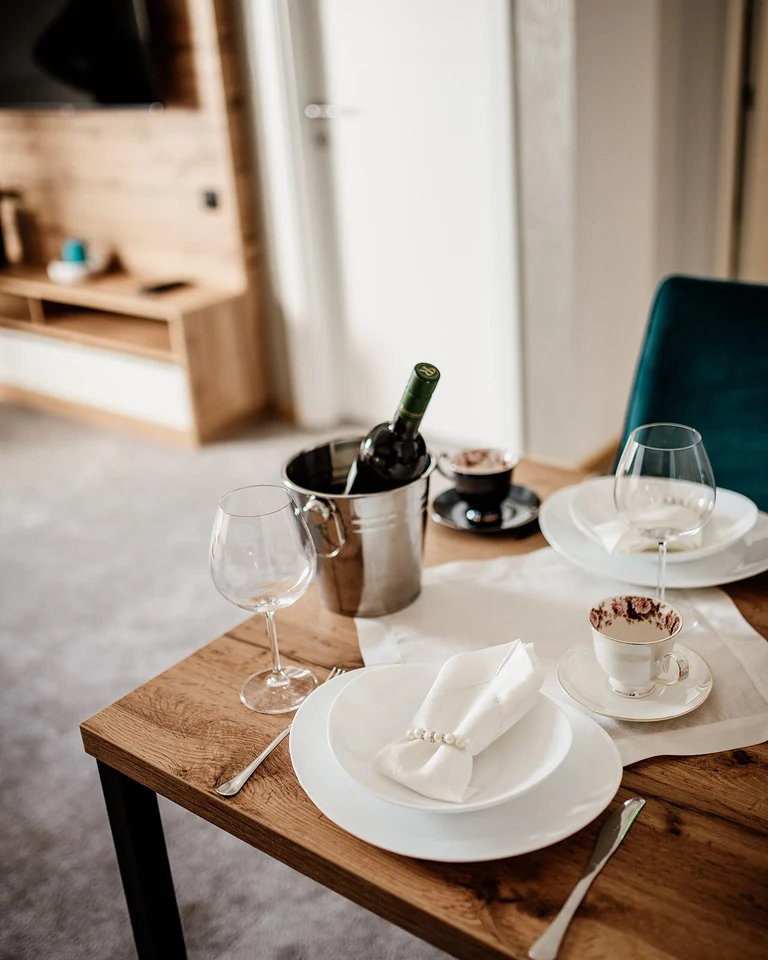
Formality, in the end, is less about what you spend and more about what you edit. Clear the clutter, give the big pieces room to breathe, repeat a few colors and finishes, and light the room warmly. Do that, and an ordinary dining room starts feeling like a place worth dressing up for — without becoming a room nobody uses.
Frequently Asked Questions
How can I make a formal dining room feel modern and not stuffy?
Keep the classic bones — a good table, a strong light fixture, a restrained palette — but relax the details. Choose upholstered chairs in a modern fabric, hang contemporary artwork, and use a dimmer so the lighting can shift from bright to intimate. Comfort and personality keep formality from feeling like a museum.
What size chandelier should I hang over my dining table?
Aim for a fixture whose diameter is about one-half to two-thirds the width of your table, hung 30 to 36 inches above the tabletop. For a long rectangular table, a linear chandelier or a row of pendants often fits the shape better than a single round fixture.
What colors work best in a formal dining room?
Timeless neutrals — ivory, cream, soft gray — with one deeper accent work in almost any home. Deep blue, emerald green, burgundy, and charcoal add drama and pair beautifully with wood tones and brass or gold finishes. Keep the palette tight: one base color, one wood tone, one metal.
Can I mix modern and traditional elements in a formal dining room?
Yes, and the mix often looks better than a strictly period room. The trick is consistency in finish or color: pair a traditional wood table with modern chairs in a matching wood tone, or a classic chandelier with clean-lined, contemporary art. One unifying thread keeps the mix feeling deliberate.
How can I make a small formal dining room look larger?
Use a large mirror to reflect light, choose lighter paint colors, and pick slim-profile chairs that do not visually crowd the table. Keep the rug generously sized but low-pile, and avoid filling every surface — in a small room, a few strong pieces read as more formal than a lot of small ones.