12 Small Balcony Color Palette Ideas That Make Tiny Outdoor Spaces Look Bigger
On a small balcony, color is not decoration. It is the whole room. The floor, the railing, the walls, the chair, the pots, and the plants all sit within arm’s reach of each other, so every shade you add either works with the rest or fights it. The palettes that make tiny outdoor spaces look better all follow the same discipline: one dominant color, one supporting color, and one small accent — roughly 60-30-10 — with nothing competing for attention.
That rule is the shortcut to every idea below. Pick a palette, give the biggest surfaces to the quietest color, and let the boldest shade show up in just one or two places you can change easily. If you rent, you can build almost all of these palettes without paint at all, using cushions, pots, rugs, and plants as your color carriers.
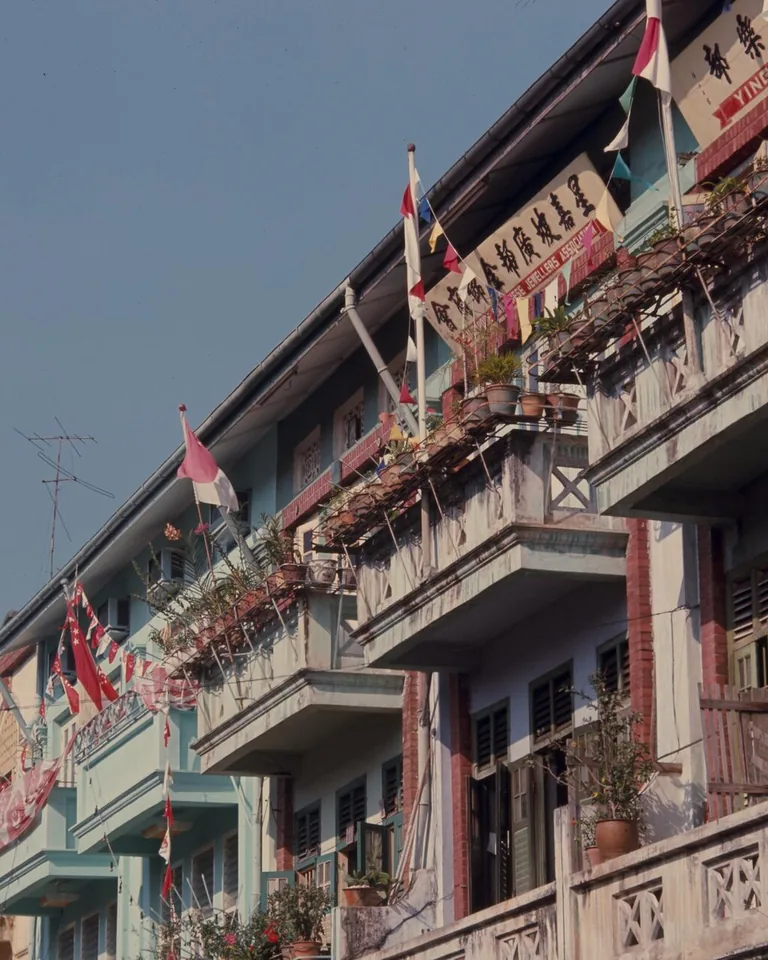
Before you commit to any palette, test it the way painters do: look at your swatches or fabric samples at noon and again at sunset, because balcony light changes dramatically through the day. A shade that looks soft in the morning can turn harsh or washed out by late afternoon. A one-week trial with cheap cushion covers or a single painted pot tells you more than an hour of scrolling ever will.
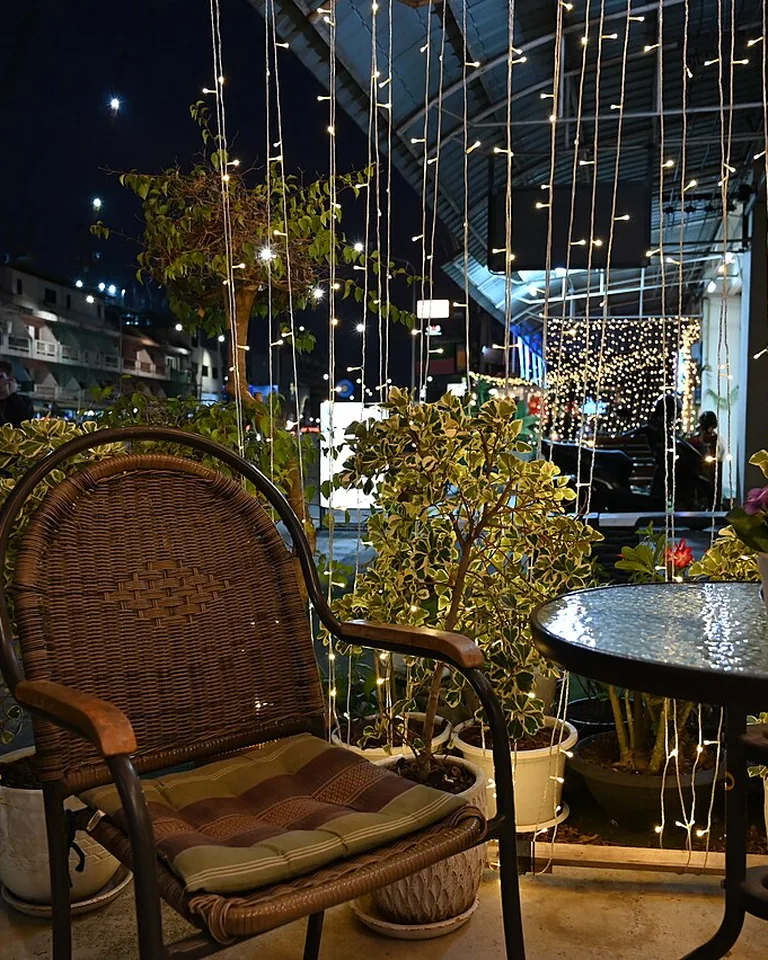
1. Terracotta, Olive, and Warm Cream
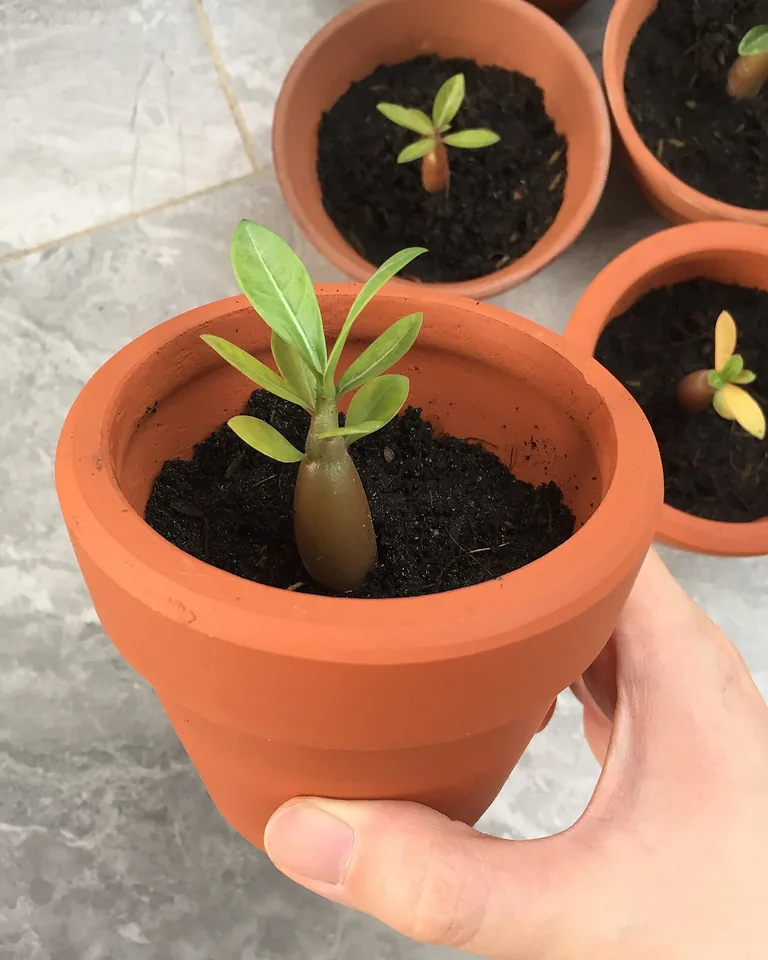
Terracotta pots, olive-green cushions, and warm cream walls give a small balcony a Mediterranean feel without any construction. The cream keeps the space bright, the terracotta grounds it, and the olive ties the furniture to the plants so the whole balcony reads as one garden rather than a collection of objects.
Tip: Keep the terracotta to pots and one floor tile or tray. When every item is clay-colored, the palette turns muddy instead of warm.
2. Soft Sage, Warm White, and Pale Wood
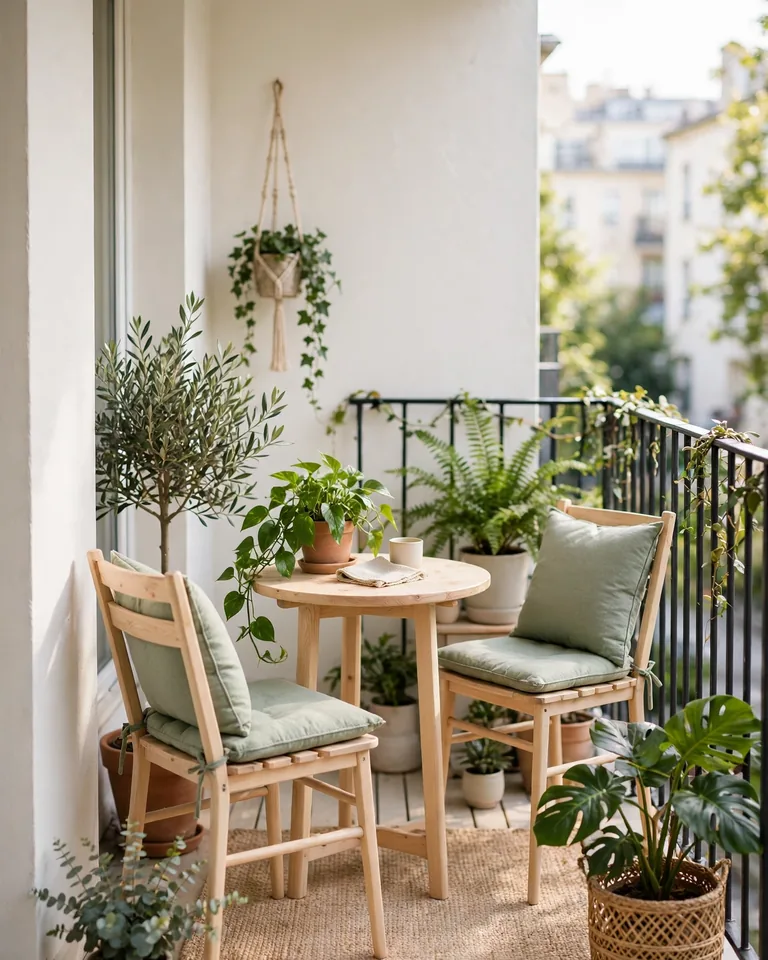
Sage is the easiest green to live with outdoors because it is muted enough to act almost like a neutral. Pair sage cushions or a painted railing with warm white walls and a pale wood bistro set, and the balcony feels calm and noticeably larger. The wood is doing real work here: without it, sage and white can look flat.
Tip: If your balcony gets little direct sun, this is a safe first palette — pale surfaces bounce what light you do get around the space, a trick that also helps when you brighten a dark room indoors.
3. Dusty Blue, Weathered White, and Natural Rope
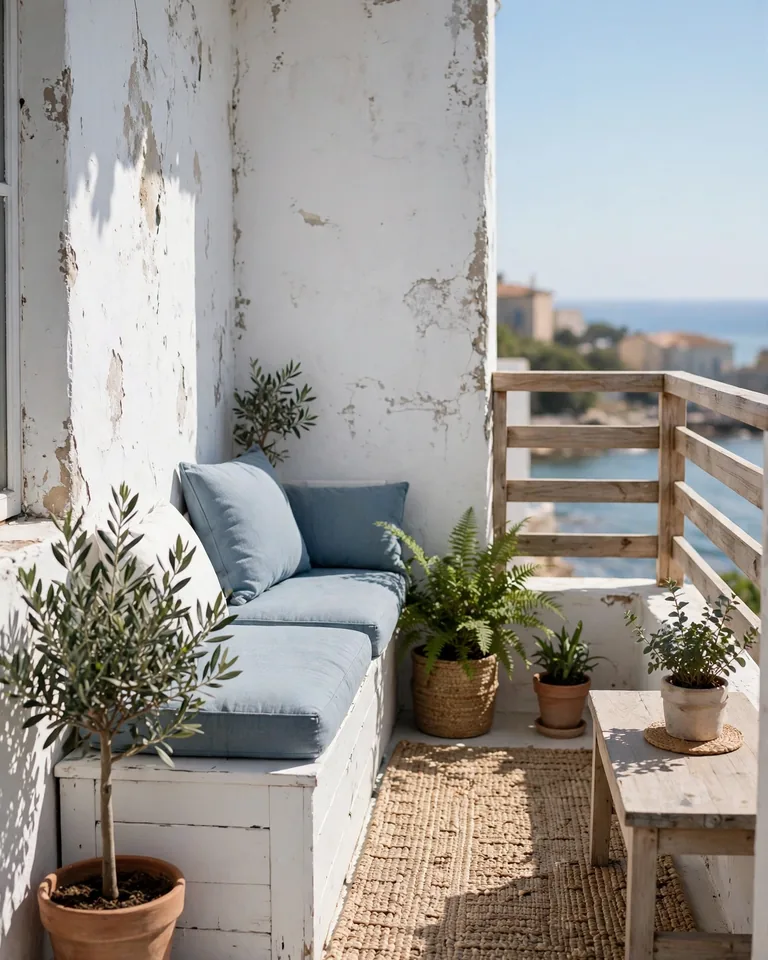
Dusty blue works on a small balcony precisely because it is faded, not bright. Blue cushions, a weathered white wall, and a woven rug or rope detail give a coastal feeling without a single anchor motif. The gray undertone in the blue keeps it sophisticated, while the white keeps the footprint feeling open.
Tip: Choose blue with a gray cast rather than a pure sky blue. Bright blue reads loud in a tight space; dusty blue reads intentional.
4. Charcoal Frames, Warm White Walls, and Cedar Accents
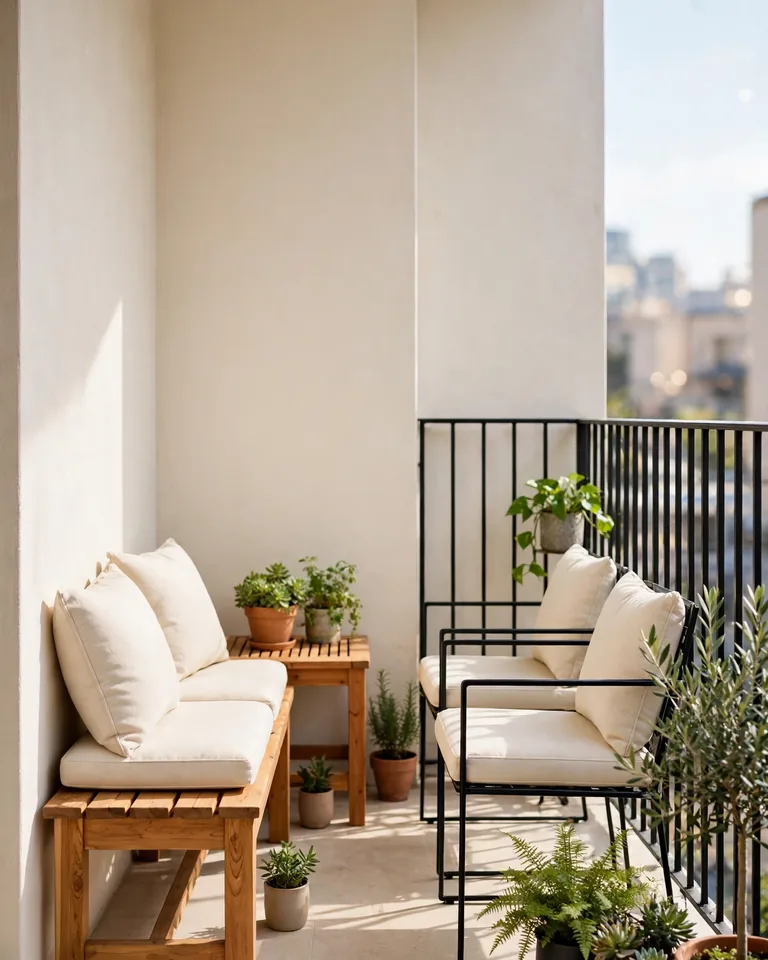
Dark colors are not banned on small balconies — they just need a limited job. Keep charcoal on the railing, the chair frames, or one slim planter, and let warm white walls and cedar-toned wood carry the rest. The contrast sharpens the whole space, and the cedar stops the dark metal from feeling cold.
Tip: Never paint all the walls charcoal on a sun-facing balcony. Dark surfaces absorb heat, so confine dark shades to frames and furniture you can touch without regretting it.
5. Blush Pink, Cream, and Pale Timber
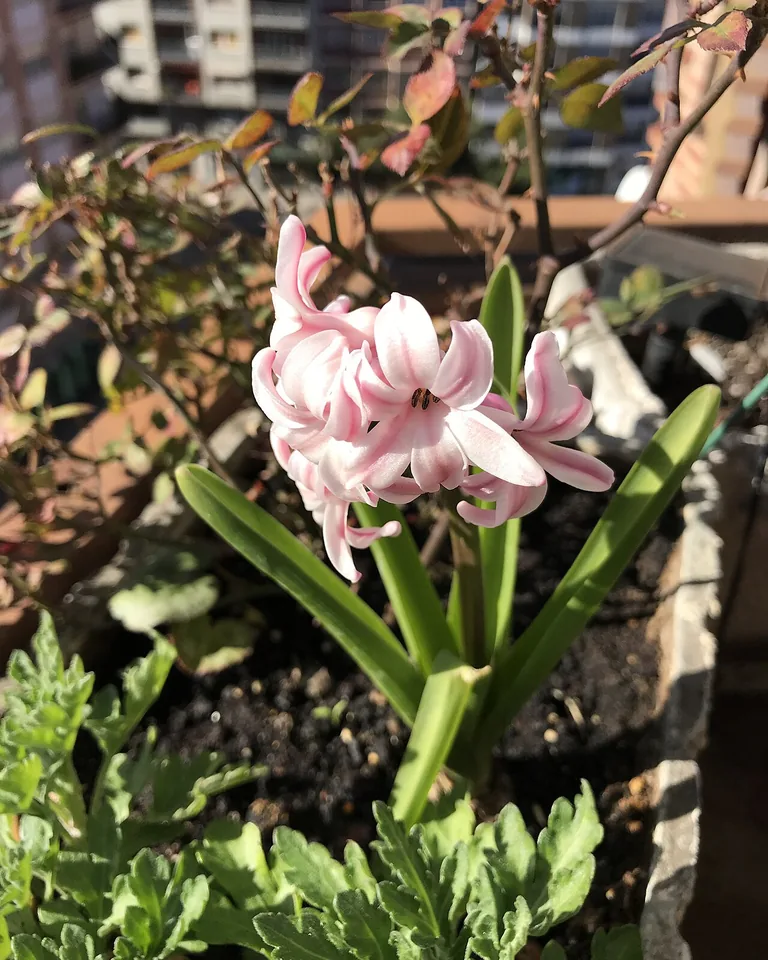
Blush works when it stays dusty and stays in the seating zone — a cushion, a throw, a couple of clay pots — while cream and pale timber handle the larger surfaces. Add real greenery and the pink reads romantic rather than sugary. The plants matter: green is the color that keeps blush grown-up.
Tip: Skip bubblegum or hot pink entirely. One shade too bright flips the whole palette from soft to loud.
6. Sunny Yellow Used Sparingly Against White and Green
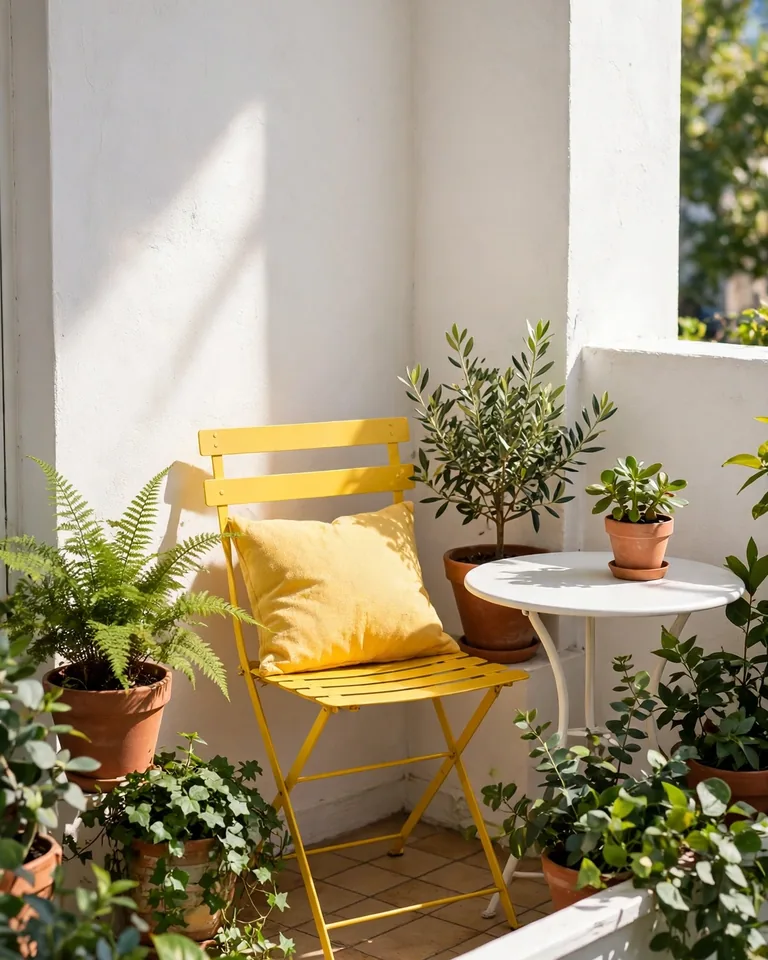
Yellow is the highest-energy color on this list, so treat it as the 10 percent, not the 60. A single yellow chair, a yellow watering can, or one striped cushion against white walls and leafy plants gives a small balcony a cheerful lift without visual noise. The green plants absorb the yellow’s intensity and make it feel like sunlight rather than paint.
Tip: If you love yellow but fear commitment, start with a cushion cover. It costs little, swaps in seconds, and tells you within a week whether the energy suits you.
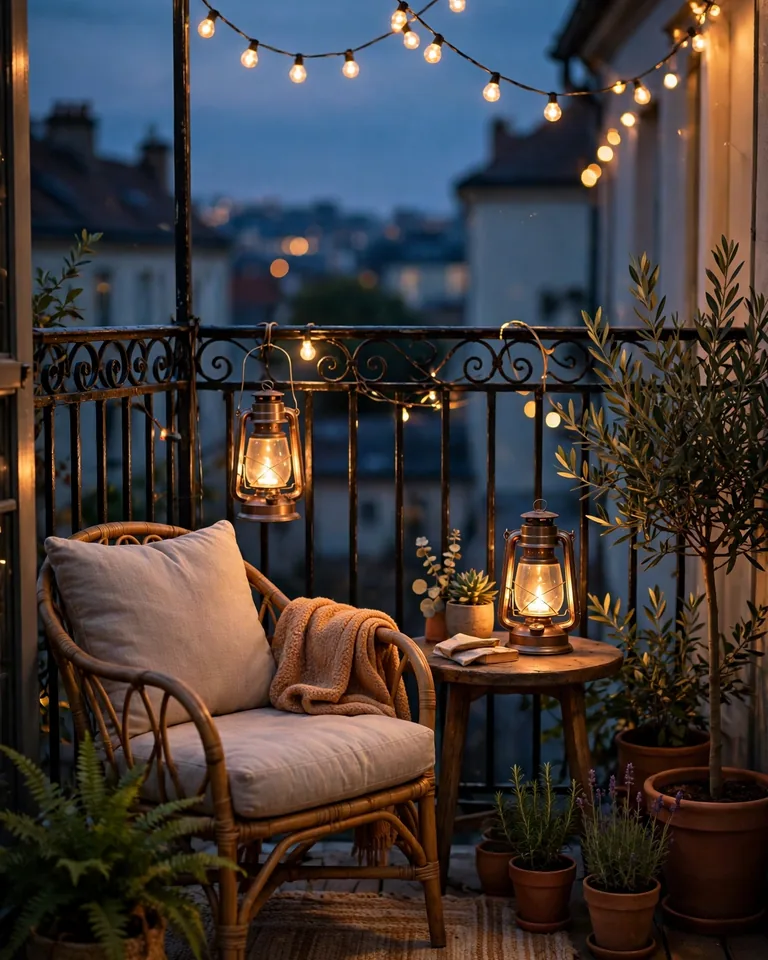
7. Deep Green Feature Wall, Cream, and Rattan
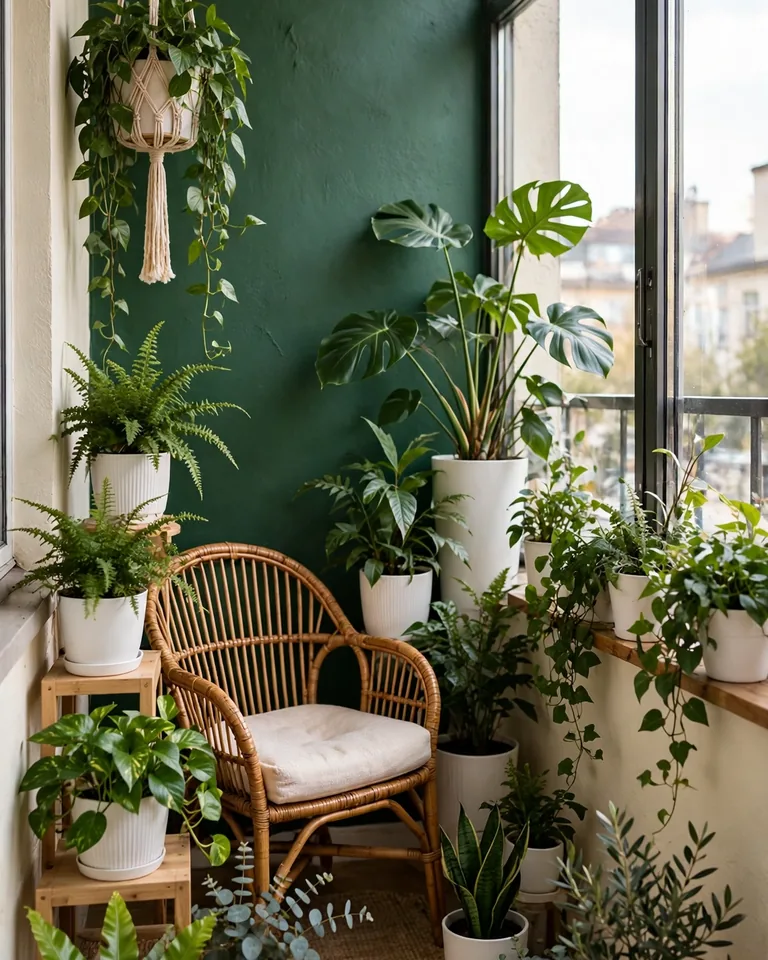
Painting one wall deep green turns a tiny balcony into a garden room, because the wall disappears behind the plants instead of competing with them. Cream on the remaining surfaces and a rattan chair keep the space from going dark, and white or cream planters pop beautifully against the green.
Tip: Paint only the back wall, never all four surfaces. One deep wall creates depth; four deep walls create a box.
8. Powder Blue, Pale Oak, and Soft White
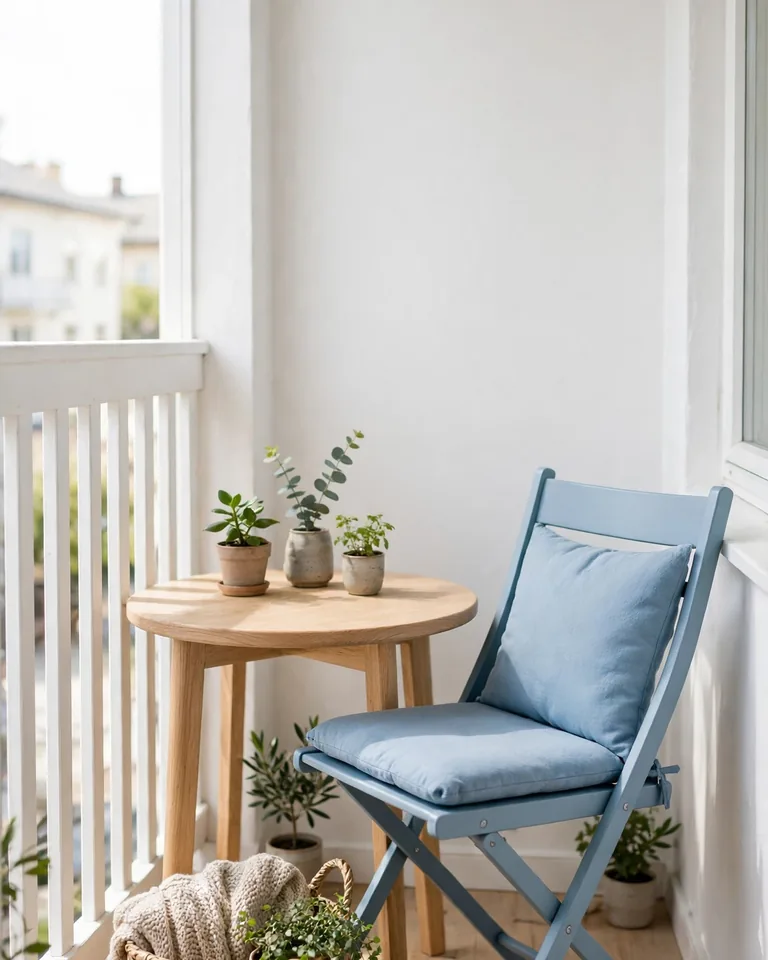
Powder blue with pale oak is the Scandinavian answer to a small balcony: airy, quiet, and hard to get wrong. Keep the floor visible, the furniture slim, and the textiles to one blue and one white, and the space feels bigger than it is. A single woven basket or linen throw adds the texture that stops the palette from feeling empty.
Tip: In a narrow balcony, run the pale wood along the length — a bench or deck tiles — so the eye travels outward instead of stopping at the railing. The same lengthwise thinking helps when you arrange furniture in a long, narrow living room.
9. Warm Gray, Mustard, and Black Metal
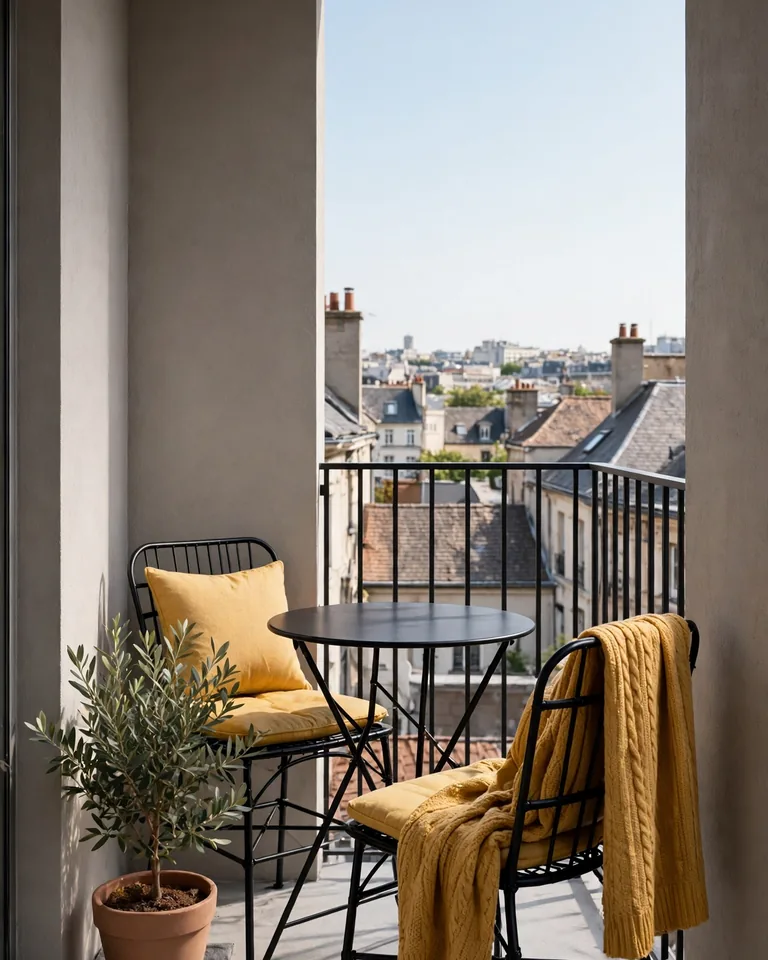
Warm gray walls, black metal furniture, and mustard cushions make a small balcony feel like a modern city terrace. Gray is the quiet dominant here, black gives structure, and mustard is the accent that earns its keep in just two or three spots. This palette suits balconies with a skyline or street view, because it frames the outlook instead of competing with it.
Tip: Warm gray, not cool gray. A cool gray outdoors can read as concrete; a warm gray reads as intentional.
10. Terracotta Underfoot, Cream Walls, and Olive Planting
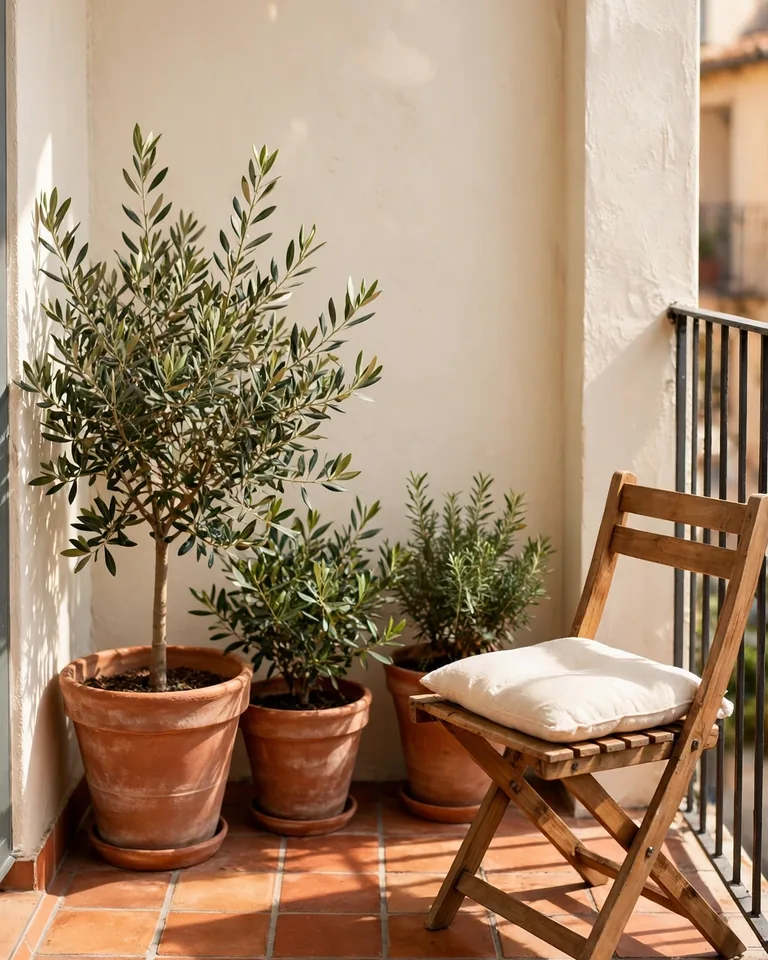
Most people color a balcony from the walls down, but starting from the floor up works just as well. Terracotta deck tiles or a large terracotta-toned outdoor rug, cream walls, and olive planting build the palette vertically: warm earth below, light surfaces above, green in between. It is an especially good route for renters, since deck tiles lift away when you move.
Tip: Match the rug or tiles to your pots rather than to your cushions. Floor and pots are the permanent layer; cushions are the layer you will swap.
11. Midnight Navy Textiles, Warm Wood, and Brass Light
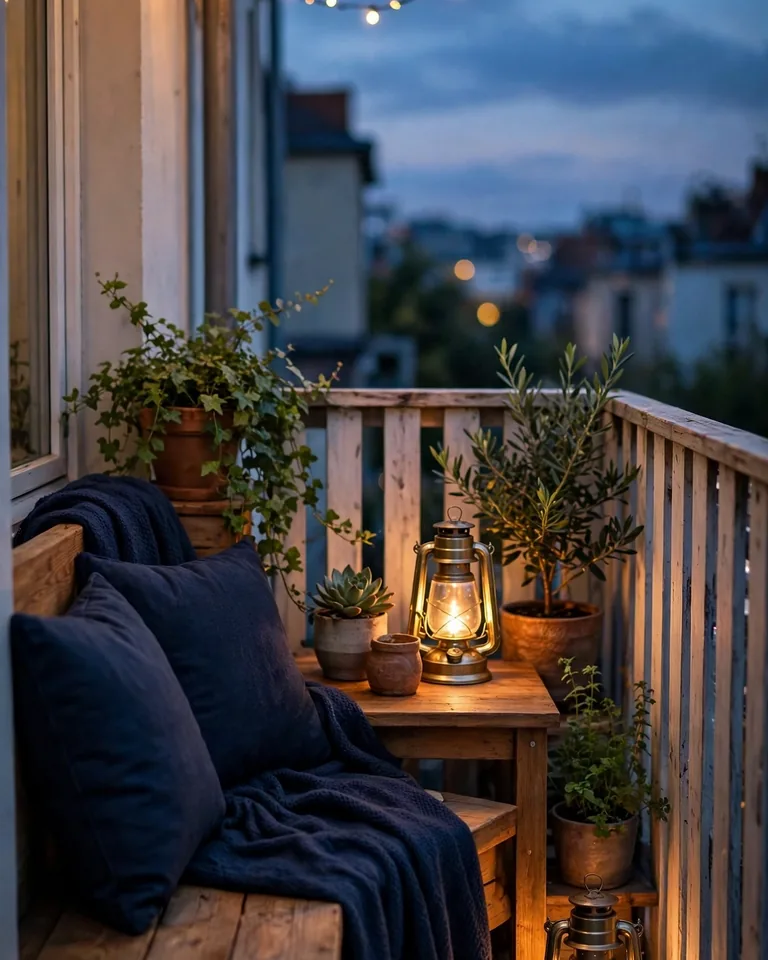
Navy belongs on textiles, not walls, in a small space. Navy cushions and a navy throw against warm wood furniture and brass or amber lantern light make an evening balcony feel cocoon-like and a little bit glamorous. During the day the navy reads as a deep neutral; after sunset, under warm light, it becomes the whole mood.
Tip: Pair navy with warm-toned bulbs (around 2700K) rather than cool white ones. Cool light makes navy look flat and cold; warm light makes it glow. Evening styling like this is also what makes a small-space setup feel inviting after dark.
12. All-White Base With One Swappable Bold Accent
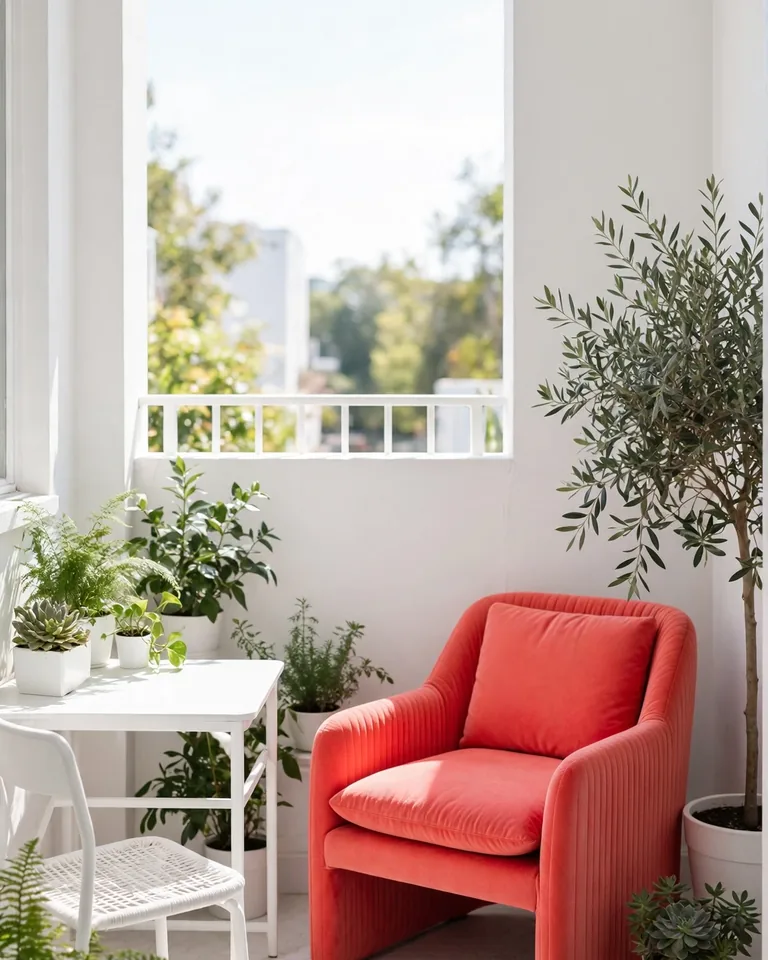
The most flexible palette of all is barely a palette: white walls, white or natural furniture, green plants, and exactly one bold accent color — coral, cobalt, or deep rust — carried by cushion covers and one pot. When you tire of it, or the season changes, you swap two cushion covers and the whole balcony has a new identity for the price of lunch.
Tip: This is the best starting palette if you are unsure. Live with white plus one accent for a month; the color you reach for next tells you what your real palette is.
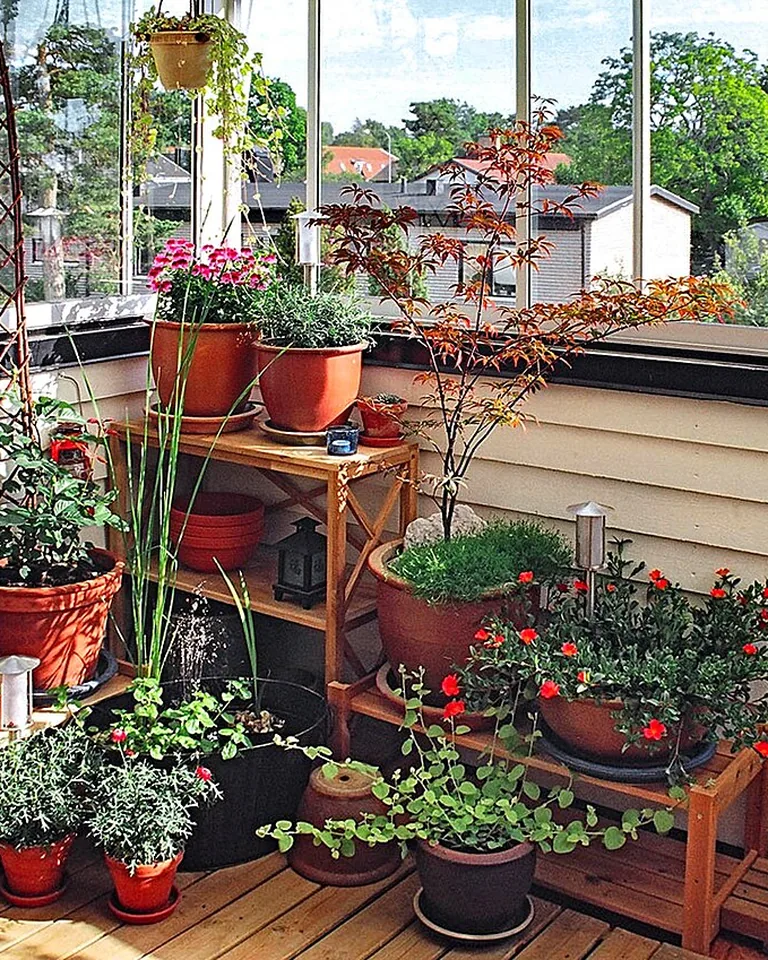
A final word on proportion: whatever palette you choose, count your colors before you buy anything new. If you can name more than three main colors on your balcony, one of them is probably an accident. Remove it, and the space will instantly look more designed — no new purchases required. And if your balcony opens off a room with a view worth framing, the same restraint applies to bay window styling next to it: one palette flowing through both spaces makes both feel larger.
Frequently Asked Questions
What is the best color for a small balcony?
Light, airy shades — warm white, soft gray, pale pastels — work best as the dominant color because they reflect light and make the space feel less cramped. Add personality through a darker or brighter accent in cushions, pots, or one piece of furniture rather than on every wall.
What color makes a small balcony look bigger?
Light, cool-toned colors such as white, pale gray, soft blue, and beige reflect more light and create an illusion of extra space. Pair light walls with light-colored, slim-profile furniture and keep the floor as visible as possible for the strongest effect.
Can dark colors make a balcony hotter?
Yes. Dark colors have a low light reflectance value, so they absorb more solar radiation and can make a sun-facing balcony — and the room behind it — noticeably warmer. If you love a moody look, keep dark shades on railings, frames, and furniture rather than on full walls.
What type of paint is best for balcony walls?
Use an exterior-grade paint, ideally a satin or semi-gloss finish, which resists moisture, dust, and stains better than matte and is easier to wipe clean. Balcony walls face sun and rain, so exterior formulations last far longer than interior paint outdoors.
Should my balcony color match my interior?
It does not need to match exactly, but it should belong to the same color family so the indoor-outdoor transition feels smooth. A neutral base similar to your interior walls, with bolder balcony accents in textiles and plants, gives you flow without forcing an identical scheme.