11 Beige and Gold Bathroom Ideas That Look Expensive (Not Boring)
Beige and gold gets a bad rap. Beige is dismissed as boring, and gold is accused of trying too hard. But the truth is that this is one of the most forgiving color combinations in bathroom design — warm, timeless, and hard to get wrong if you control three things: the beige tones stay warm and related, the gold is one consistent finish instead of three, and the lighting is warm enough to make it all glow. Get those right, and a beige and gold bathroom reads as quietly expensive instead of flat or flashy.
This guide walks through 11 beige and gold bathroom ideas that work in real homes — from full renovations to weekend hardware swaps — with the finish rules, paint guidance, and practical warnings most inspiration posts skip.

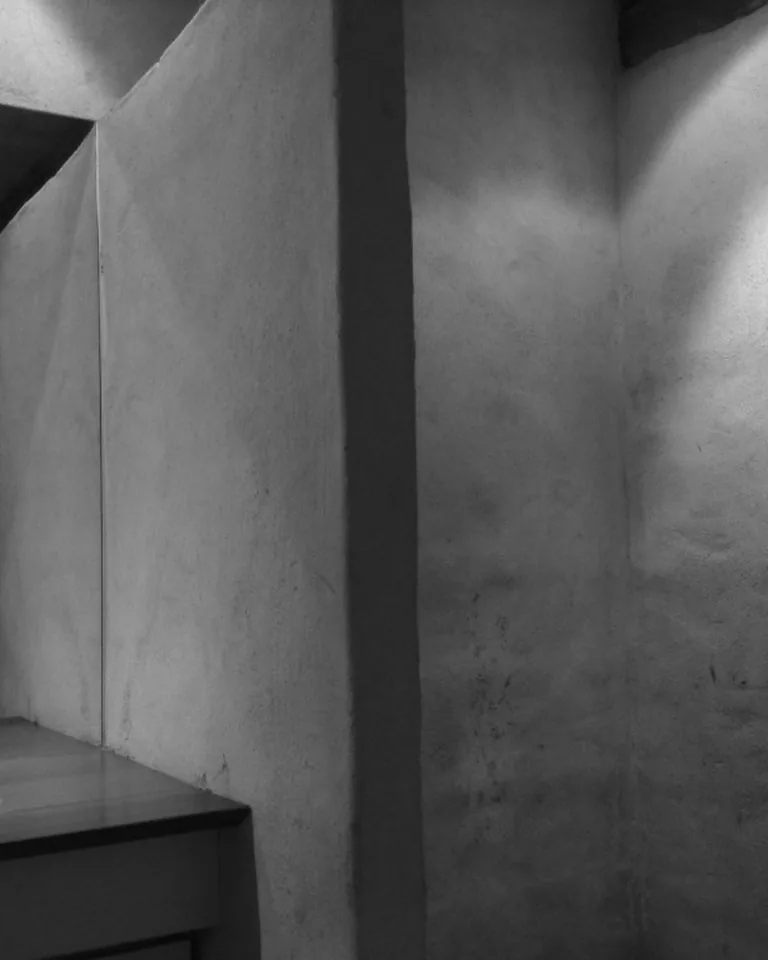
Warm Travertine Walls With Champagne Gold Fixtures
Travertine is the easiest stone to pair with gold. Its warm beige variation has natural movement, so the room never feels like one flat beige box. Champagne gold — softer and more muted than polished brass — sits beautifully against it because it echoes the stone’s honeyed undertones instead of shouting over them.
Keep the strongest stone pattern on one or two connected surfaces (a shower wall plus the floor, for instance) and let the rest of the room relax. A floating wood vanity in white oak adds warmth without competing, and soft ambient lighting brings out the variation in the stone. This combination suits anyone who wants spa-like calm rather than showroom sparkle.
Practical tip: Travertine is porous, so it must be sealed properly for wet areas — reseal it every few years and use a pH-neutral cleaner. Acidic products will etch the surface.
Beige Marble Vanity Topped With a Brushed Gold Faucet
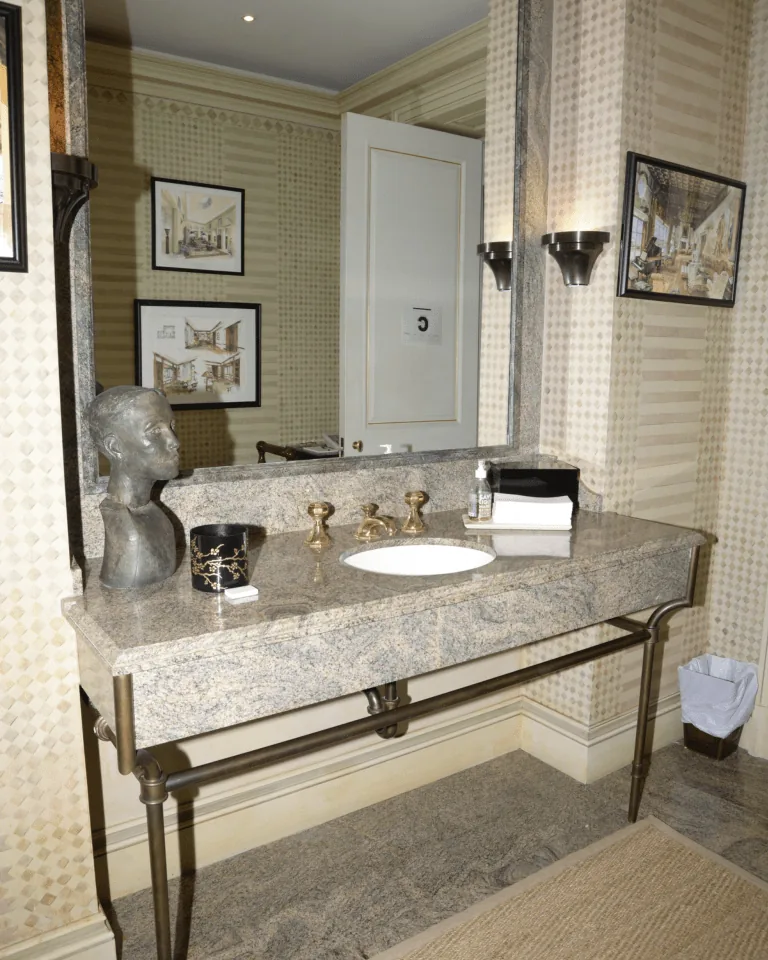
If travertine feels too rustic, beige marble is its more polished cousin. A creamy marble vanity top with soft veining makes an ideal landing pad for a brushed gold faucet — the matte texture of brushed gold keeps the pairing refined rather than blingy. This is the classic hotel-suite formula, and it works because each material gets one job: marble supplies the pattern, gold supplies the shine, and simple cabinetry stays out of the way.
Choose a faucet finish that matches the drawer pulls or knobs — mixed metallics in the same zone are the fastest way to make a beige bathroom look accidental. One finish, repeated three or four times, reads as intentional.
Practical tip: Before committing, check the faucet’s finish in your actual lighting. “Brushed gold” varies wildly between brands, from near-champagne to almost bronze.
Polished Brass and Paneled Cabinetry for a Timeless Look
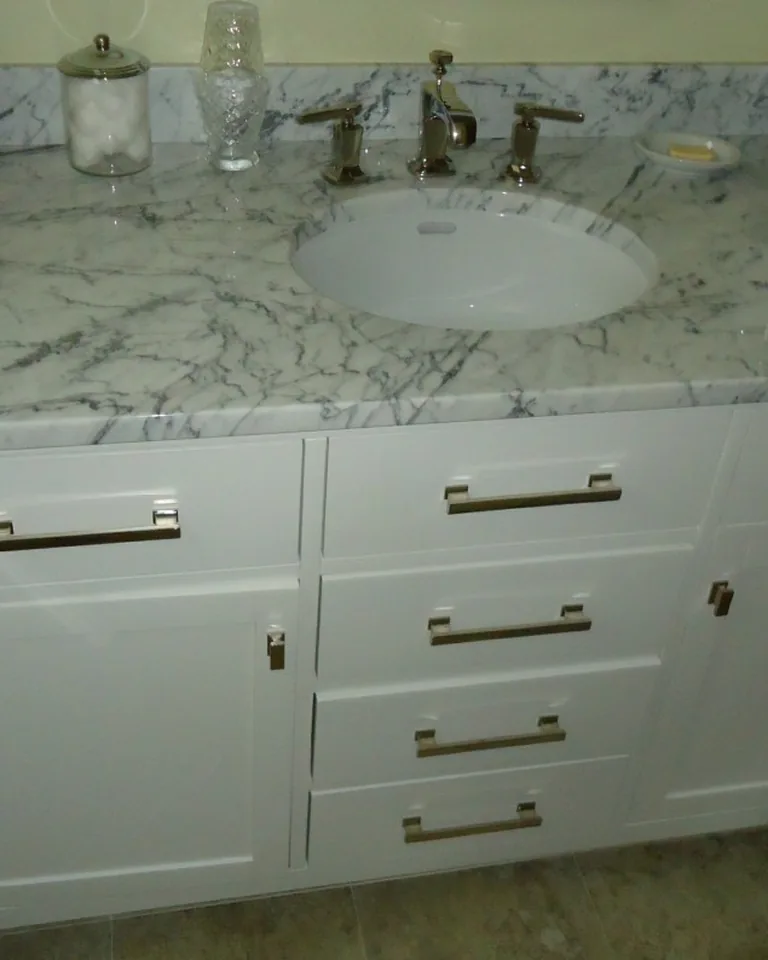
Polished brass is the brightest, most traditional of the gold finishes, and it sings against paneled cabinetry. Recessed panel doors add dimension through shape rather than decoration, so the shine of the brass has room to breathe. Pair with pale marble or quartz counters and keep the walls a warm, quiet beige.
The discipline rule here: polished brass is already a strong personality, so don’t pair it with ornate mirrors, patterned floors, and a crystal chandelier in the same small room. Let the cabinetry and metalwork carry the classic mood, then keep everything else restrained — the result feels established, not costumed.
Practical tip: Polished brass shows water spots faster than brushed finishes. Keep a microfiber cloth nearby and wipe the faucet after heavy use if your water is hard.
Freestanding Tub With a Gold Floor-Mounted Filler

A freestanding oval tub is the centerpiece of the classic beige-and-gold bathroom, and a floor-mounted gold filler gives it jewelry without cluttering the wall. The key detail most inspiration photos gloss over is clearance: leave enough room to walk around the tub, clean behind it, and reach the filler comfortably. A gorgeous tub squeezed into a tight corner looks luxurious in photos and exhausting in real life.
Surround it with creamy stone flooring and softly lit walls, and the tub does all the talking — keep accessories minimal. This layout works best in bathrooms with enough floor space; in tight rooms, ideas further down this list (like the gold-framed shower) deliver more luxury per square foot.
Practical tip: Floor-mounted fillers need plumbing rough-in under the floor, so this is a renovation-stage decision, not a weekend swap.
An Oversized Gold-Framed Mirror With Sculptural Sconces
The highest-impact, lowest-cost move on this list. A large gold-framed mirror does three jobs at once: it bounces light around the room, makes the bathroom feel bigger, and gives gold a starring role without touching the plumbing. Scale it to the wall and the basin — a mirror that’s generous for the space reads intentional; one that’s timid reads like an afterthought.
Flank it with simple sconces in a matching gold finish. The warm light on the beige walls is what makes the whole combination feel expensive. For more warm, livable bathroom inspiration, these modern farmhouse bathroom decor ideas show how lighting and texture carry a neutral palette.
Practical tip: Hang the mirror so its center sits roughly at eye level for the household’s primary users, and choose warm-white bulbs (2700K–3000K) — cool white bulbs flatten gold and make beige look gray.
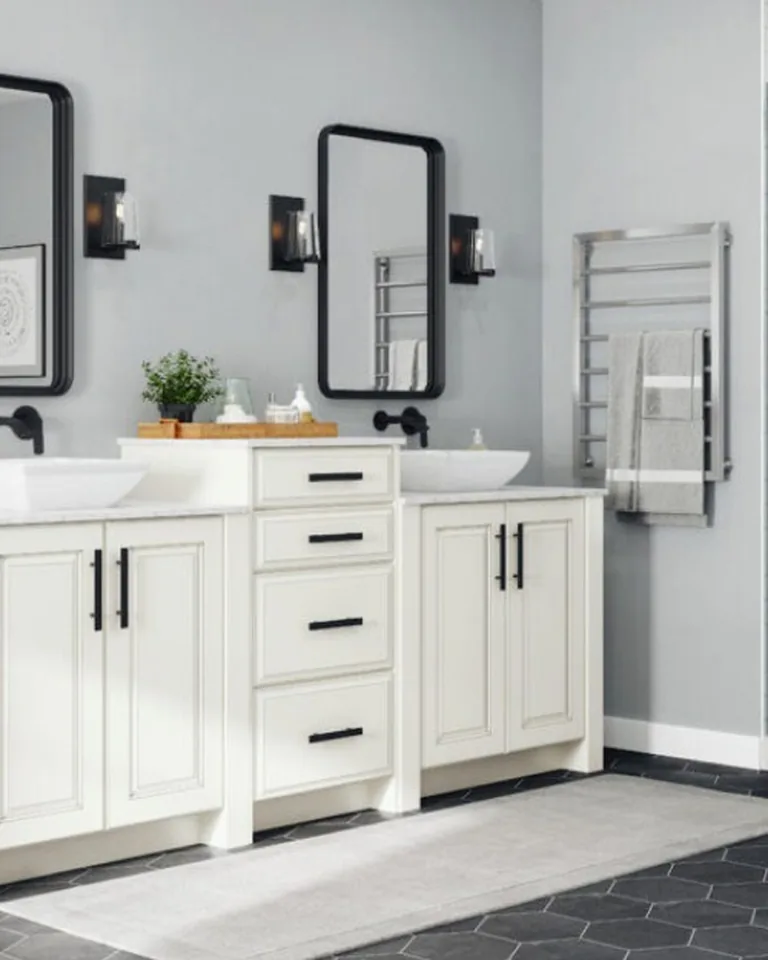
A Gold-Framed Walk-In Shower With a Tiled Niche
In a compact beige bathroom, a slim gold-framed glass shower enclosure gives the room a crisp outline without chopping it up visually. Large-format beige tiles keep the palette unified, a floating vanity exposes more floor, and a recessed shower niche in the same tile as the wall keeps storage from breaking the calm.
Matte gold shower hardware — controls, rain head, and the niche trim — adds warmth exactly where the eye rests. Before buying, check door swing, plumbing positions, and the walking route; a shower door that collides with the vanity is a daily reminder that measurements and aesthetics need to be friends.
Practical tip: Choose tile rated for wet areas with adequate slip resistance, and keep the shower niche close to the surrounding tile tone for the cleanest look.
Floating Vanity With a Gold Vessel Faucet

For a modern take, pair a floating vanity in a warm beige tone with a vessel sink and a tall gold faucet behind it. The floating cabinet exposes floor underneath, which makes the bathroom feel larger, while the elevated basin turns an ordinary hand-washing station into a sculptural moment.
This look depends on proportions: the vessel sink should sit comfortably on the vanity without dwarfing it, and the wall-mounted or tall-deck faucet must clear the bowl’s rim with room to spare. Keep the wall finish simple — large beige tiles or Venetian plaster — so the vanity ensemble is the focal point.
Practical tip: Vessel sinks splash more than undermounts, so leave generous counter space around them and wipe down the base regularly.
A Powder Room Gold Statement on a Budget

You don’t need a renovation to get the beige-and-gold look. In a small powder room, warm beige paint on the walls, a gold-framed mirror, and swapped hardware — faucet, towel ring, cabinet knobs — deliver about 80 percent of the effect for a fraction of a reno budget. Powder rooms are small enough that a few gold pieces go a long way.
Keep the remaining finishes quiet: one paint color, one metal finish, one simple light fixture. In a room this size, restraint reads as luxury. Warm beige paints worth testing: Sherwin-Williams Accessible Beige (SW 7036) for a greige-leaning warmth, or Benjamin Moore’s Shaker Beige for a more classic, honeyed tone. Always test paint in your actual lighting before committing.
Practical tip: This is also the cheapest way to test whether you actually like gold finishes day-to-day before spending on a full bathroom renovation.
Textured Beige Walls With Gold Sconces

Flat beige paint is where the “boring beige bathroom” reputation comes from. Texture fixes it: Venetian plaster, grasscloth or linen-weave wallpaper (in a well-ventilated bath), or three-dimensional beige tiles add shadow play that changes as the light shifts through the day. The walls become a feature without adding a single new color.
Gold sconces mounted on a textured wall do double duty — they light the room warmly and the fixture itself becomes part of the decor. Grazing light aimed at textured walls emphasizes their dimensionality, so position sconces to wash the wall rather than just spot-lighting the mirror.
Practical tip: In steamy bathrooms, choose textured treatments rated for humidity. Venetian plaster with a proper wax topcoat holds up; standard grasscloth doesn’t.
A Gold Mosaic Accent in the Shower Niche

Gold mosaic tile is the one place where gold gets to be the pattern, not just the hardware. A strip of gold or gold-veined mosaic inside the shower niche, as a backsplash behind the vanity, or as a border band adds shimmer exactly where water and light will catch it — while the rest of the bathroom stays calm.
Mix matte and glossy mosaic pieces for depth; all-gloss can look costume-like, all-matte can look flat. And give the mosaic room to star: keep the surrounding tile quiet and the palette limited, because too many competing patterns will make a small bathroom feel cramped.
Practical tip: Mosaic sheets mean more grout lines, which means more maintenance — use a quality grout and seal it in wet zones.
Layered Warm Lighting Over It All
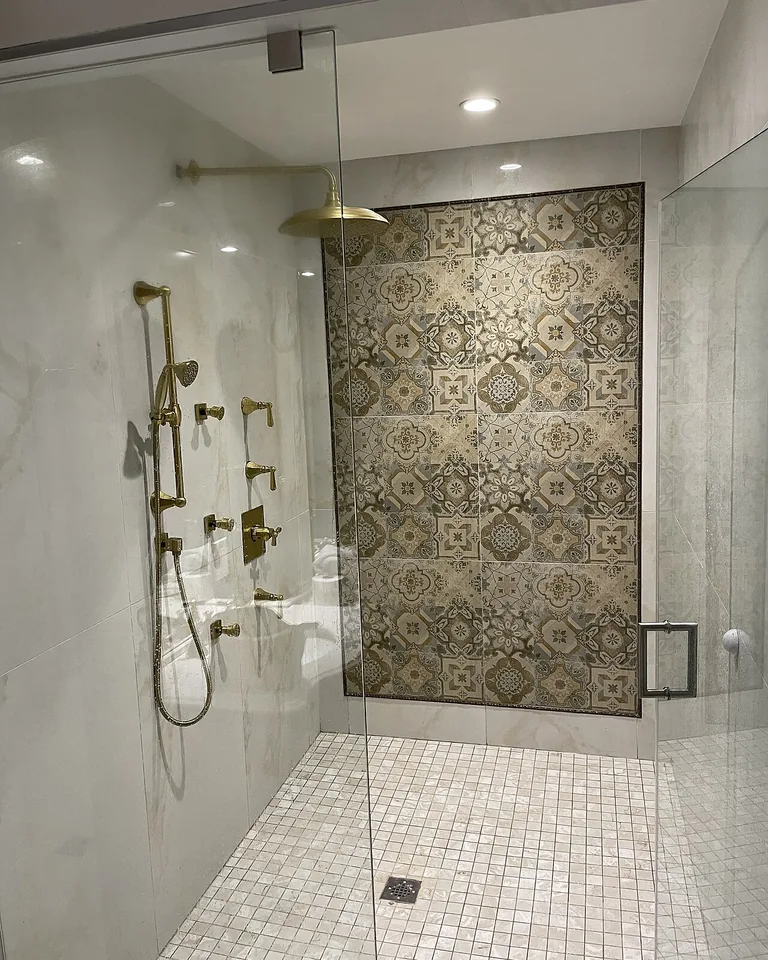
Lighting is the idea that makes every other idea on this list work. Beige and gold come alive under warm light and die under cool white fluorescents. Plan three layers: ambient (recessed ceiling lights or a flush mount, warm white 2700K–3000K), task (sconces or a well-placed light at the vanity for shadow-free grooming), and accent (LED strips behind a mirror, under a floating vanity, or inside a niche).
A backlit mirror’s glow shouldn’t be the only light at the vanity — without task lighting, the person standing in front of it ends up half in shadow. This is also where brass finishes earn their keep: warm light on gold reads as candlelit; cool light on gold reads as office. If you’re drawn to rustic warmth with a modern edge, these modern western bathroom ideas and southwestern bathroom ideas show how layered lighting and warm materials work in related neutral palettes.
Practical tip: Plan electrical work before tile and mirrors go up — retrofitting lighting after the fact is always more expensive.
Frequently Asked Questions
Is beige a good color for small bathrooms?
Yes. Beige reflects light well and creates an airy feel that helps small bathrooms seem larger — which is why it’s a safer small-bathroom choice than dark colors. In compact spaces, keep the beige palette light, use a floating vanity to expose floor, and let one gold statement piece (like a framed mirror) do the decorating.
What colors go well with beige and gold in a bathroom?
Warm neutrals are the safest companions: creamy white, soft taupe, warm wood tones like oak and walnut, and pale natural stone. For contrast, a single dark accent — matte black hardware or a deep walnut vanity — grounds the palette without fighting it. Avoid introducing a second bold color; the gold is already the accent.
How do I keep a beige bathroom from looking dull?
Layer texture and light instead of adding color. Mix matte and glossy finishes, vary beige tones (cream, sand, taupe) so surfaces don’t blur together, and use warm 2700K–3000K lighting. Textured walls, a patterned floor, or a gold mosaic accent all add visual interest without leaving the beige-and-gold scheme.
Are beige bathrooms outdated?
No — beige is a timeless neutral that cycles back regularly, and it’s currently strong in minimalist and warm-modern interiors. What dates a beige bathroom is flat paint, cool lighting, and dated fixtures, not the beige itself. Update the finishes (brushed gold or champagne hardware, warm layered lighting) and beige looks current immediately.
What materials go well with beige and gold bathroom tiles?
Travertine, limestone, and warm marble are the classic stone partners. Wood vanities in oak or walnut add organic warmth, and linen or grasscloth textures soften the hard surfaces. Keep gold to one finish across faucets, hardware, and mirrors for a cohesive look.
The Bottom Line
A beige and gold bathroom works when you treat it as a study in restraint: warm, related beige tones; one consistent gold finish repeated a few times; and warm, layered lighting that lets both materials glow. Start with the finish discipline — everything else is just choosing where the gold gets to show up.
If you’re planning the project, begin with paint and hardware (the weekend-friendly route), then graduate to tile and stone once you’ve lived with the finishes. Beige will do the calming; gold, kept on a short leash, will do the talking.