12 Green and Black Bathroom Ideas That Look Expensive, Not Dark
Green and black is one of the most striking bathroom color combinations you can choose — and one of the easiest to get wrong. The secret is proportion: let green set the mood, let black define the edges, and leave enough light surfaces in the room so the dark tones read as drama instead of gloom. Done right, the pairing works in everything from a tiny powder room to a full primary bathroom, and it suits modern, traditional, and farmhouse styles alike.
In this guide, you will find 12 green and black bathroom ideas that actually work in real homes, with practical notes on where to put each color, which shade of green to pick, and how to keep a dark palette from closing the room in. Whether you are planning a full remodel or just swapping fixtures and paint, start with the idea that fits your space and build from there.
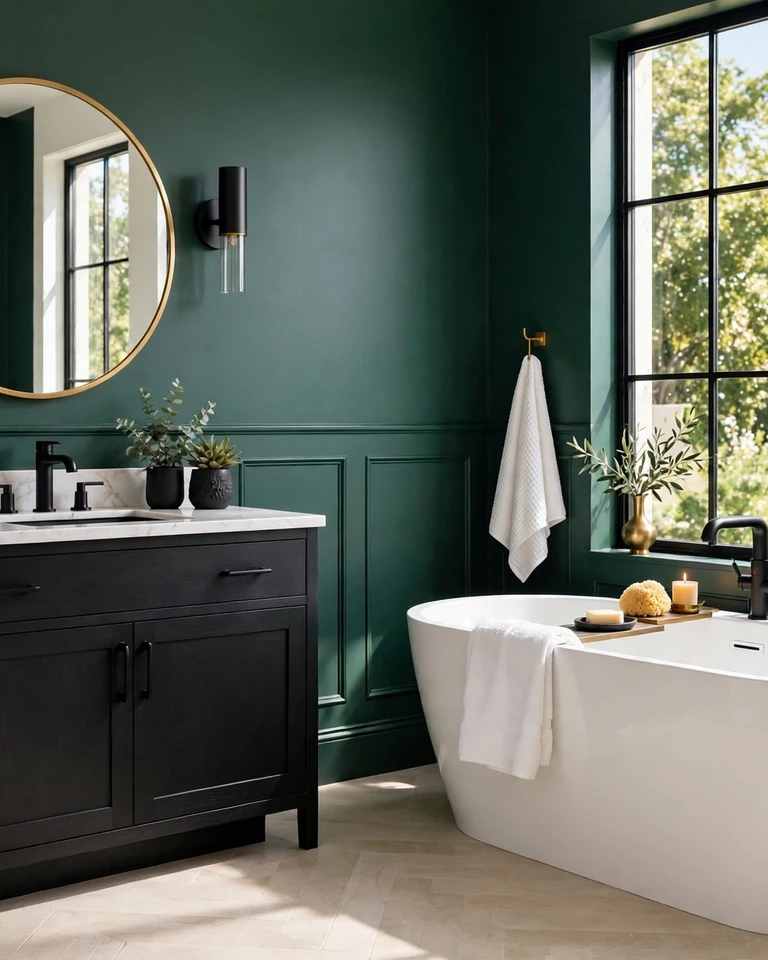
1. Deep Emerald Accent Wall With Black Trim
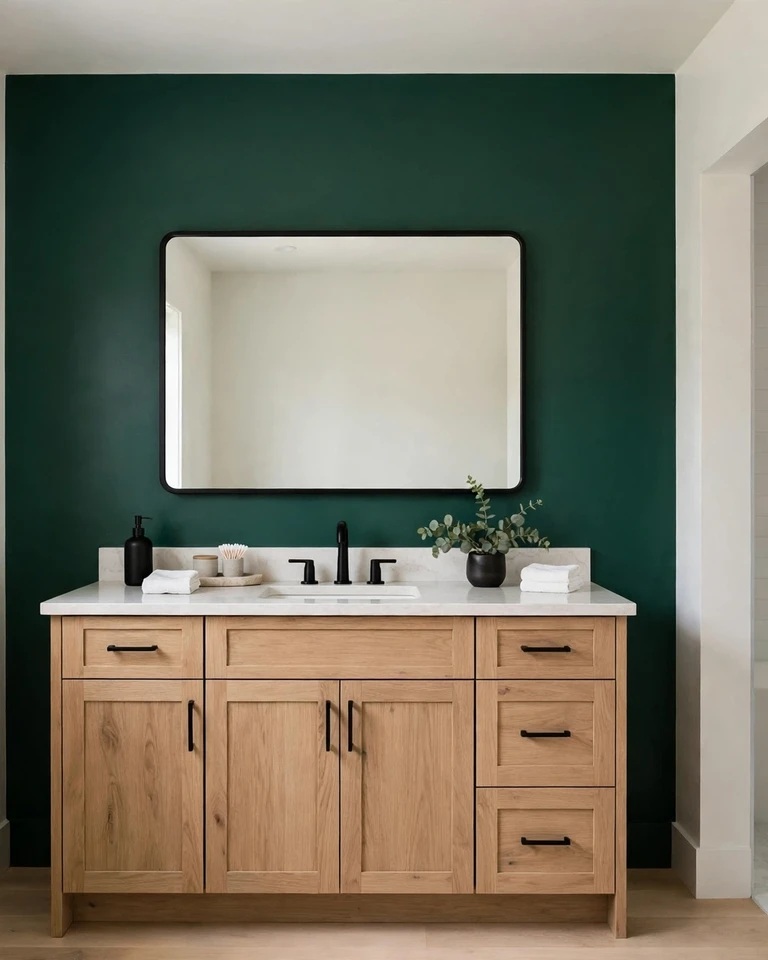
Painting a single wall in deep emerald gives you the full drama of a green bathroom without committing every surface to a dark color. Keep the other walls light, then echo the green with black trim around the mirror, black cabinet pulls, and a black-framed shower screen so the accent wall feels connected to the rest of the room rather than pasted on.
Tip: paint the wall behind the vanity or the tub, where you naturally look when you enter — an accent wall on a side wall you barely see wastes the effect.
2. Hunter Green Subway Tile Shower With Matte Black Fixtures
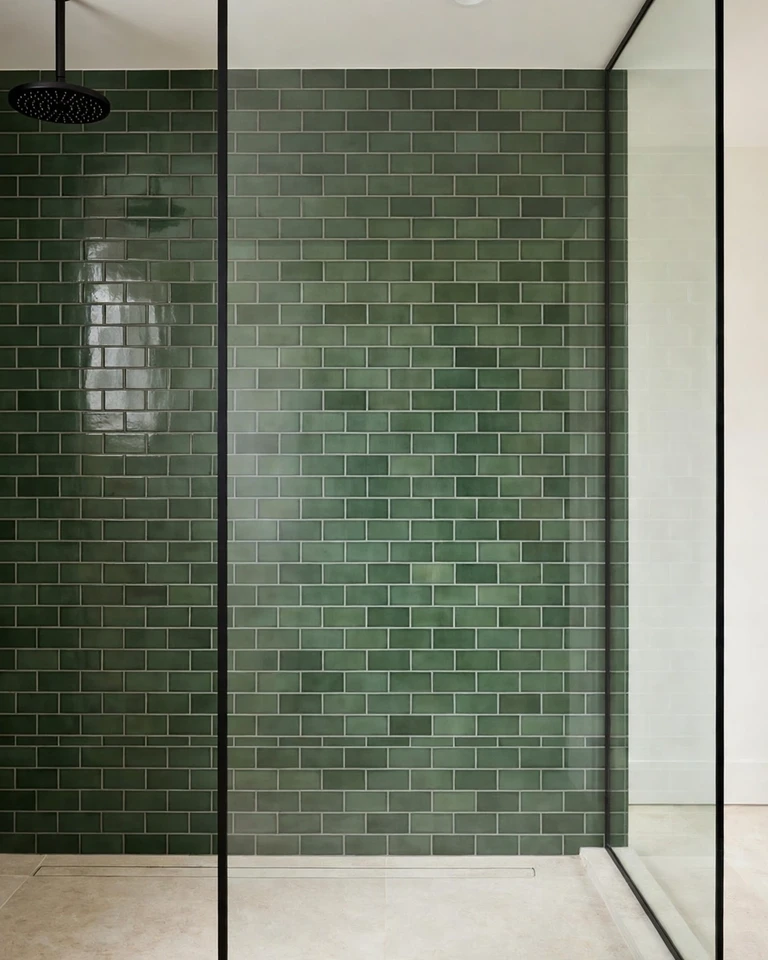
Hunter green subway tile in the shower is the workhorse of this palette: the color is deep enough to feel rich, and the classic tile shape keeps it from looking trendy. Pair it with matte black fixtures — showerhead, valve trim, and a matching drain cover — so the hardware reads as one intentional set instead of a mix of finishes.
Tip: choose a grout color deliberately. Dark grout makes the tile field look seamless and moody; light grout turns the same tile into a crisp, graphic pattern.
3. Black Floating Vanity Against Sage Green Walls
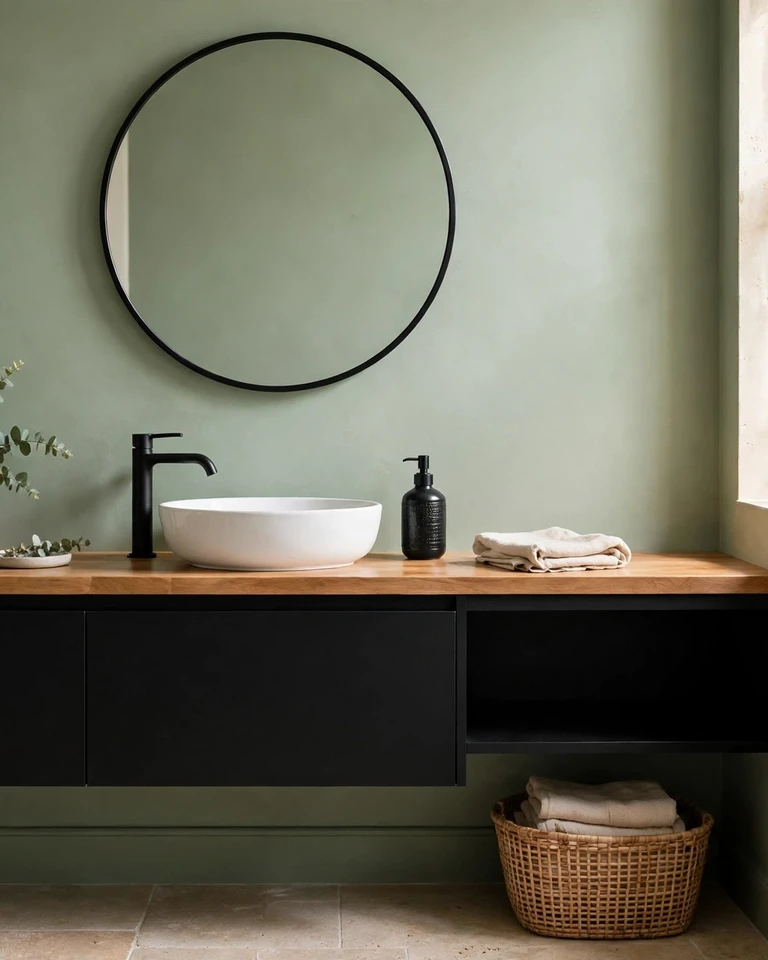
A wall-mounted black vanity floating above the floor is a smart move in a sage green bathroom, because the lighter green keeps the room feeling open while the black cabinetry adds weight exactly where you want it. The visible floor underneath also makes a small bathroom feel larger, which matters when the palette is already doing a lot of visual work.
Tip: run a warm wood or light stone countertop on the black vanity so the top surface does not disappear into the cabinet below it.
4. Green Marble Vanity Top on Black Cabinetry
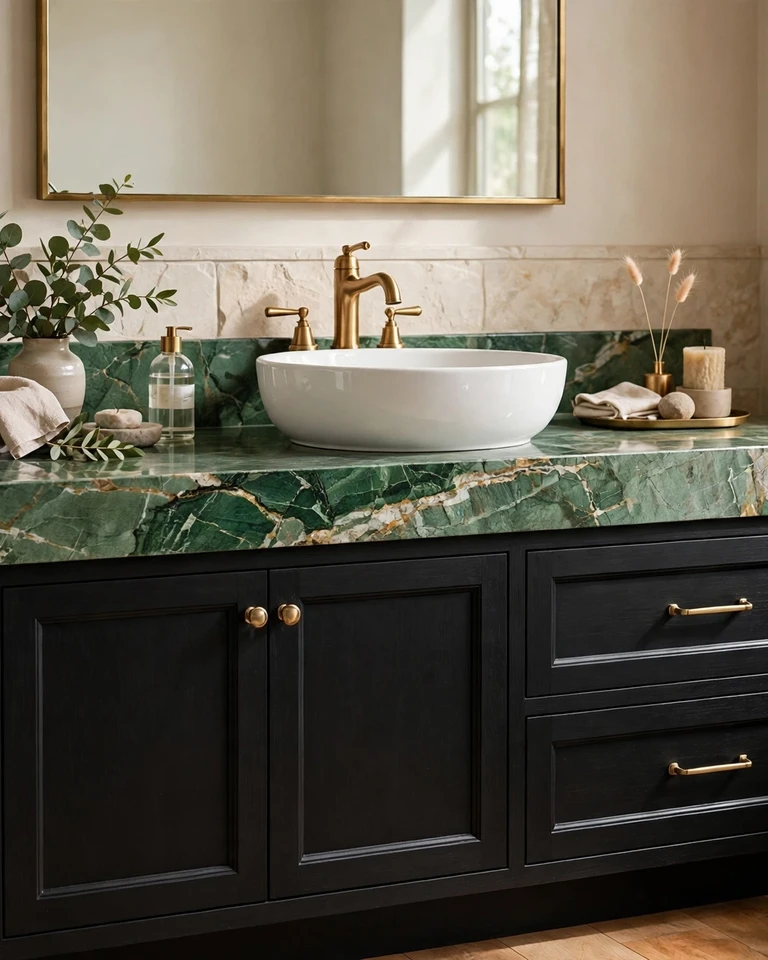
A green marble top — with its natural veining in lighter and darker greens — does the decorating for you, so the rest of the bathroom can stay quiet. Set it on simple black cabinets and keep the backsplash minimal, letting the stone be the one patterned surface in the room. White or cream vessel sinks keep the top from feeling too dark overall.
Tip: seal green marble properly and wipe up toothpaste and hair products promptly; natural stone stains more easily than quartz, and a dark green surface shows water marks clearly.
5. Botanical Wallpaper and a Black-Framed Mirror in the Powder Room
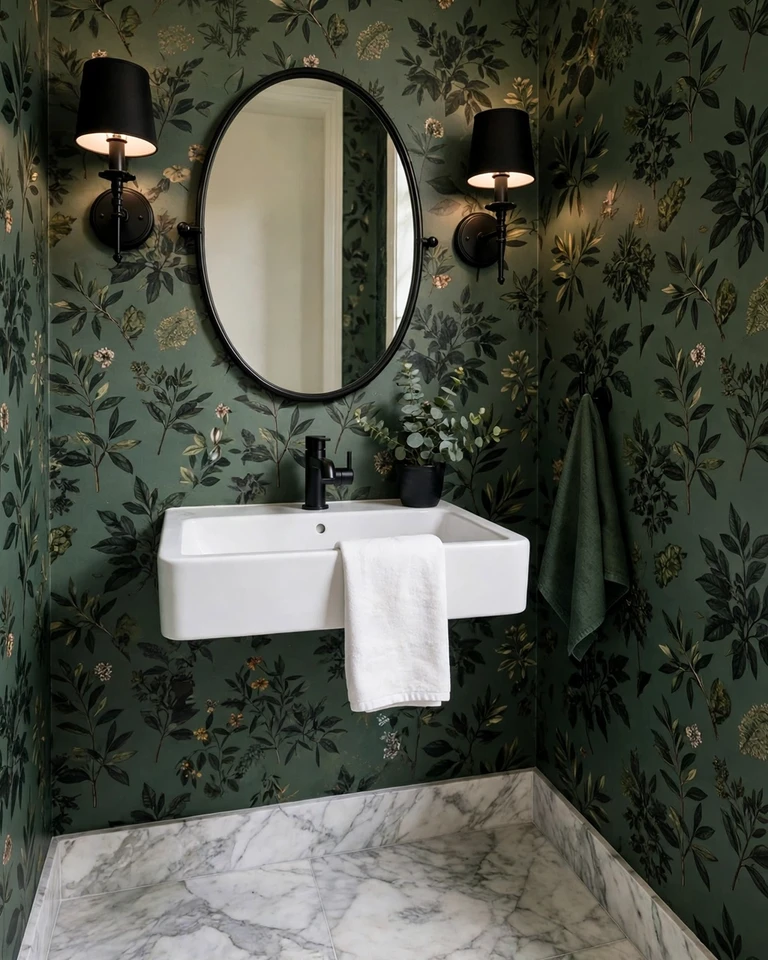
Powder rooms are the best place to go bold, because you only need a small amount of material and guests see the room briefly. A botanical wallpaper in deep greens, paired with a black-framed mirror and black sconces, turns a plain half-bath into a jewel box. Keep the floor light — pale marble or cream tile — so the patterned walls do not close the space in.
Tip: use a paste-the-wall, moisture-resistant wallpaper in a bathroom, and keep it out of the direct splash zone unless it is rated for wet areas.
6. Black Clawfoot Tub in a Deep Green Bathroom
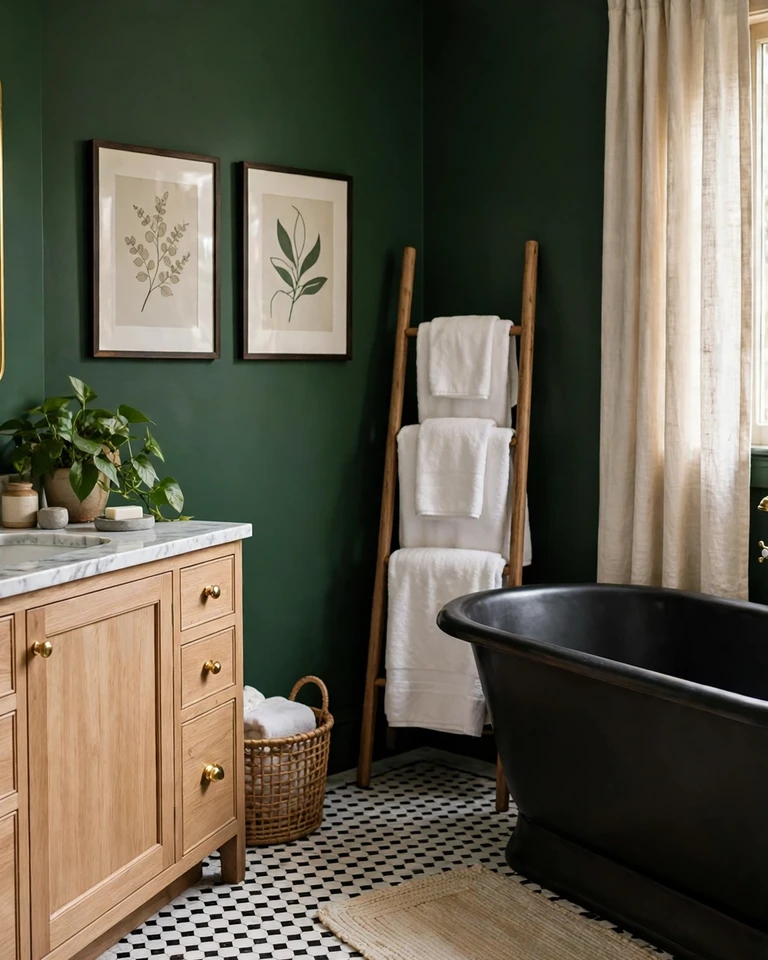
Few pieces make a statement like a black clawfoot tub, and deep green walls give it the backdrop it deserves. The tub becomes the room’s sculpture, so keep everything else restrained: simple black or brass fittings, plain linen towels, and one framed print rather than a shelf full of decor. The contrast between the curved tub and flat painted walls is what makes the room feel designed rather than decorated.
Tip: a black tub shows dust and water spots more than white, so plan on a quick wipe-down after baths to keep the finish looking sharp.
7. Checkerboard Floor Under Green Walls
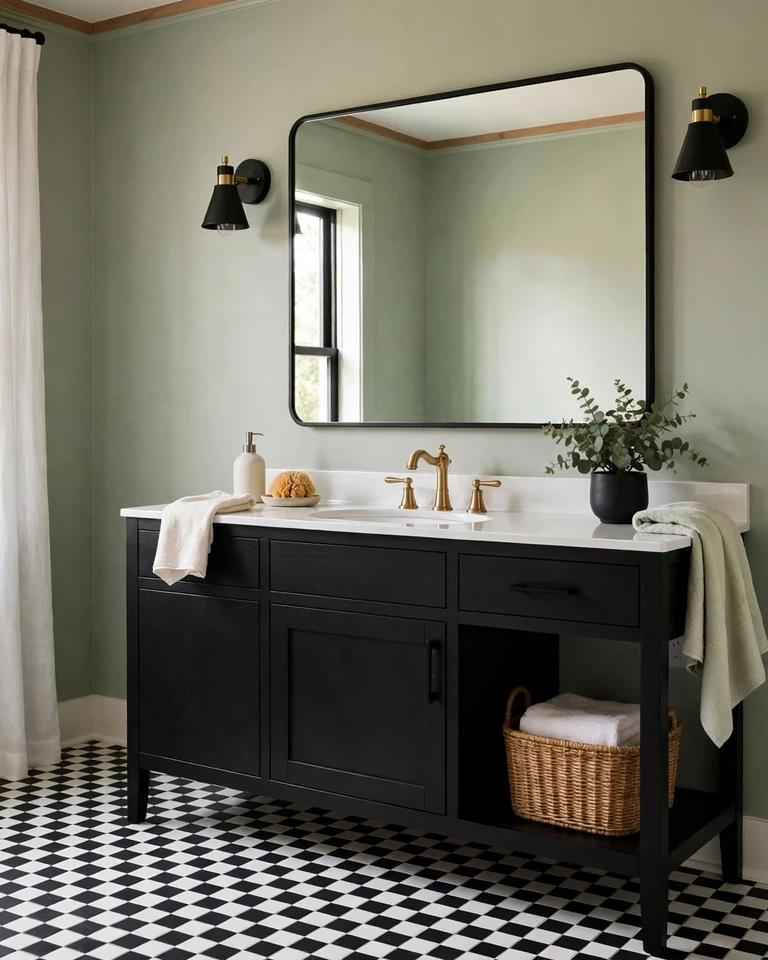
A black-and-white checkerboard floor is the classic partner for green walls because it adds graphic energy without introducing a third color. It works especially well with sage or olive walls, where the floor pattern keeps the soft green from feeling flat. Lay the tiles on the diagonal in a small bathroom — the angled grid makes the floor read larger than a straight grid.
Tip: match the black in the floor tiles to your fixtures’ finish as closely as you can; a warm charcoal floor next to true matte black hardware can look mismatched.
8. Sage Green Wainscoting With Black Hardware
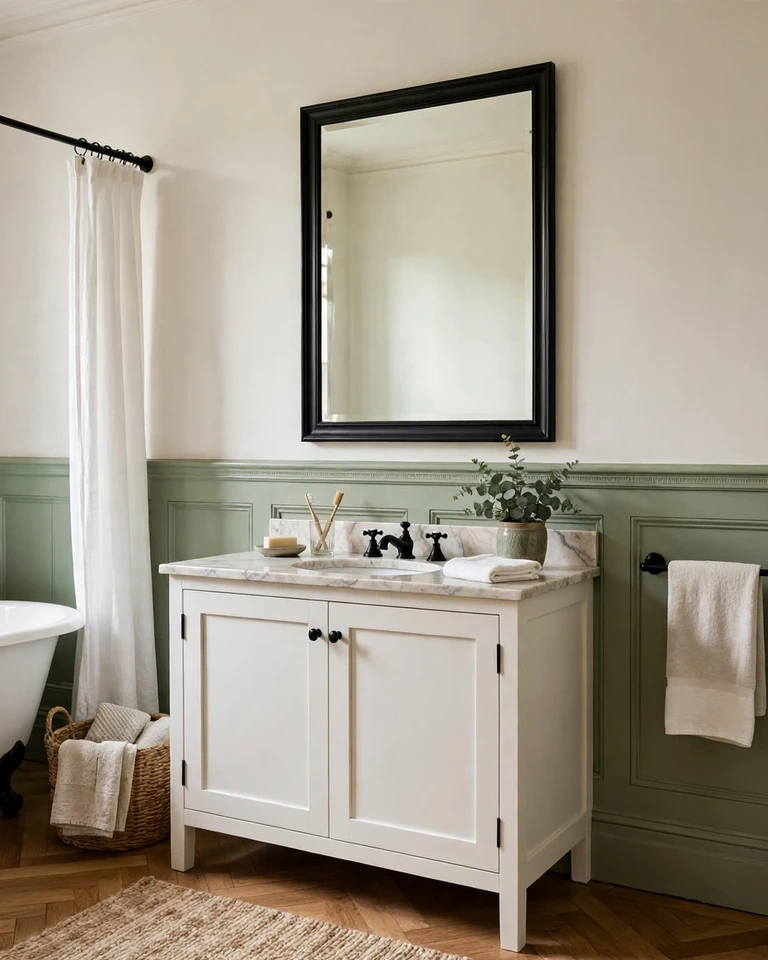
Painting wainscoting sage green and the upper walls a warm white splits the wall into two manageable zones: color below, light above. Black hardware — hinges, towel bars, and a black-framed mirror — ties the two zones together and stops the green from feeling like an isolated band. This is one of the most forgiving versions of the palette, and it suits traditional and farmhouse bathrooms especially well.
Tip: use a satin or semi-gloss paint on the wainscoting so it stands up to splashes and wipes clean easily.
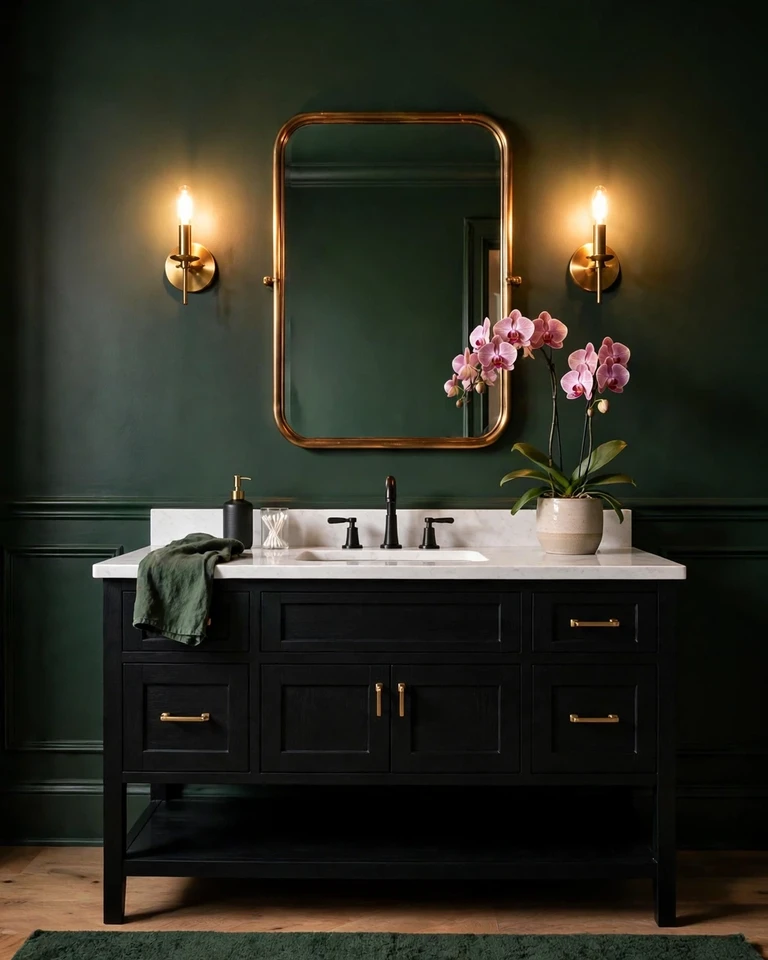
9. Olive Green Cabinets With a Black Countertop
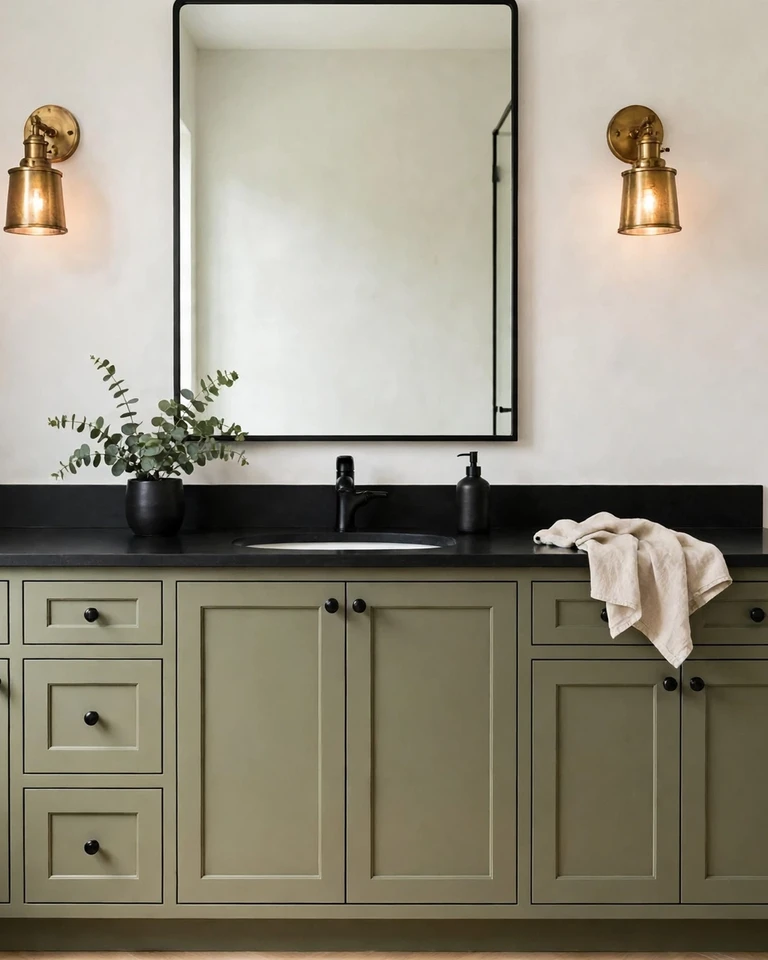
Olive green cabinets are softer than emerald or forest green, which makes them easier to live with every day, and a black countertop gives them the definition they need. Add matte black knobs and a black-framed mirror, then keep the walls and floor light so the cabinets read as furniture rather than a dark block. Warm brass lighting over the mirror keeps the olive from going cold.
Tip: test your olive paint in the bathroom’s actual light before committing — olive shifts dramatically between warm and cool lighting, and it can read muddy under the wrong bulbs.
10. Black Steel-Framed Glass Shower in a Green Tile Bathroom
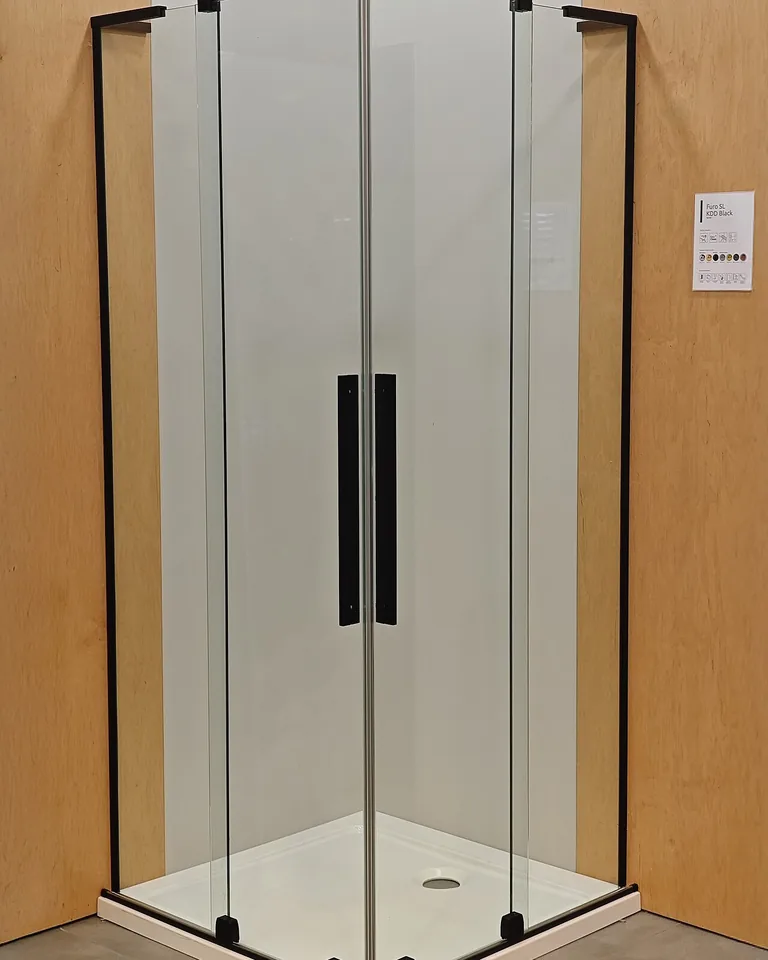
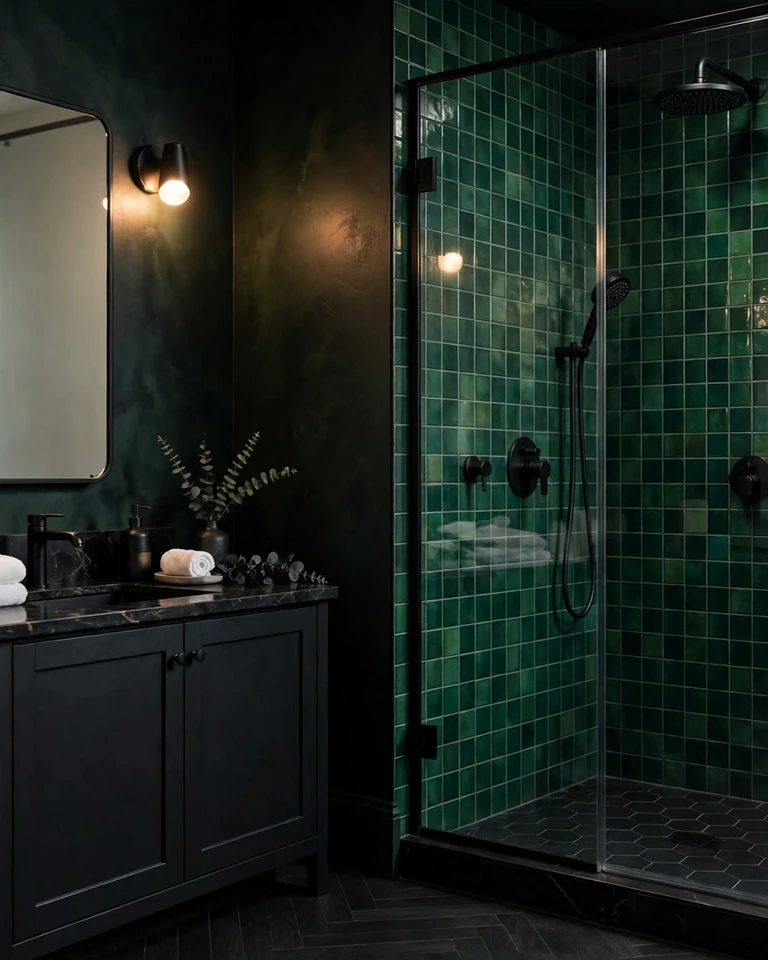
A black steel-framed glass shower enclosure is the cleanest way to bring black into a green tile bathroom, because the black appears as thin lines rather than heavy surfaces. The frames outline the shower, the green tile fills the field, and the glass keeps sight lines open so the room still feels spacious. It is a particularly good solution for walk-in showers, where a framed panel reads as architecture instead of decoration.
Tip: squeegee the glass after showers — hard water shows up fast on dark frames and clear glass, and a 30-second habit keeps the whole enclosure looking new.
11. Brass Accents to Warm Up the Green and Black Palette
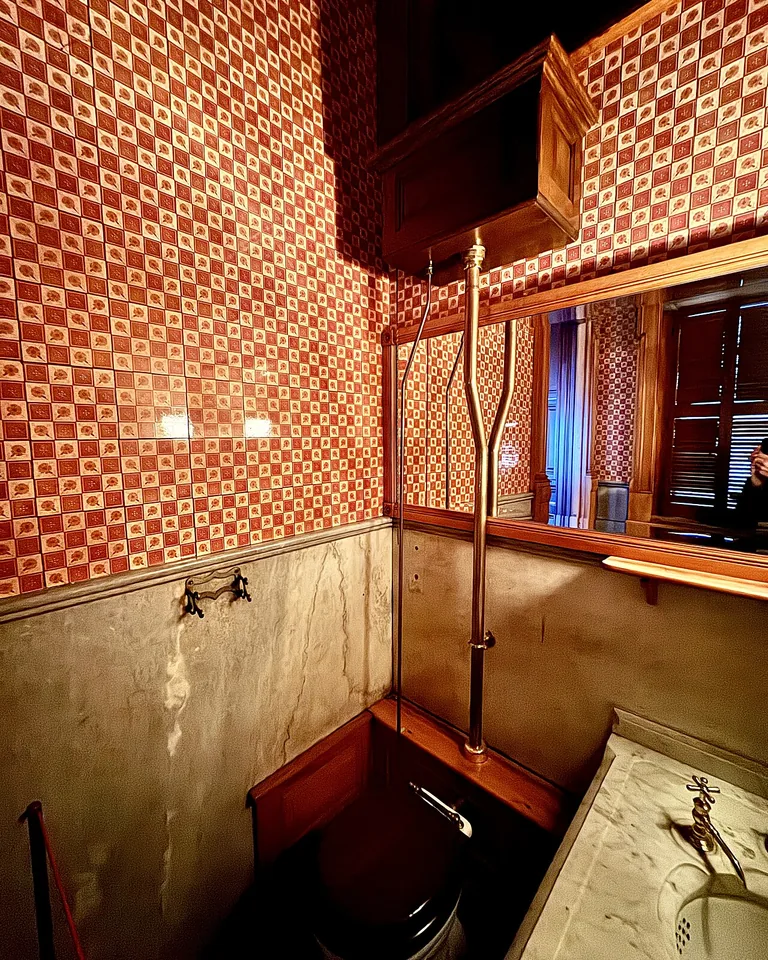
Green and black can run cool, and brass is the simplest way to warm it back up. A brass-framed mirror, brass sconces, or brass drawer pulls add a warm metallic layer that stops the room from feeling stark, and brass sits comfortably next to both matte black and deep green. Use it in two or three spots — mirror, lighting, and one accessory — rather than scattering it everywhere, so it reads as a deliberate accent.
Tip: pick one brass tone and stick with it; mixing brushed gold, polished brass, and aged bronze in one small room looks accidental. For more ideas on using warm metallics, see our beige and gold bathroom ideas.
12. Small Green and Black Bathroom With White Relief and Plants
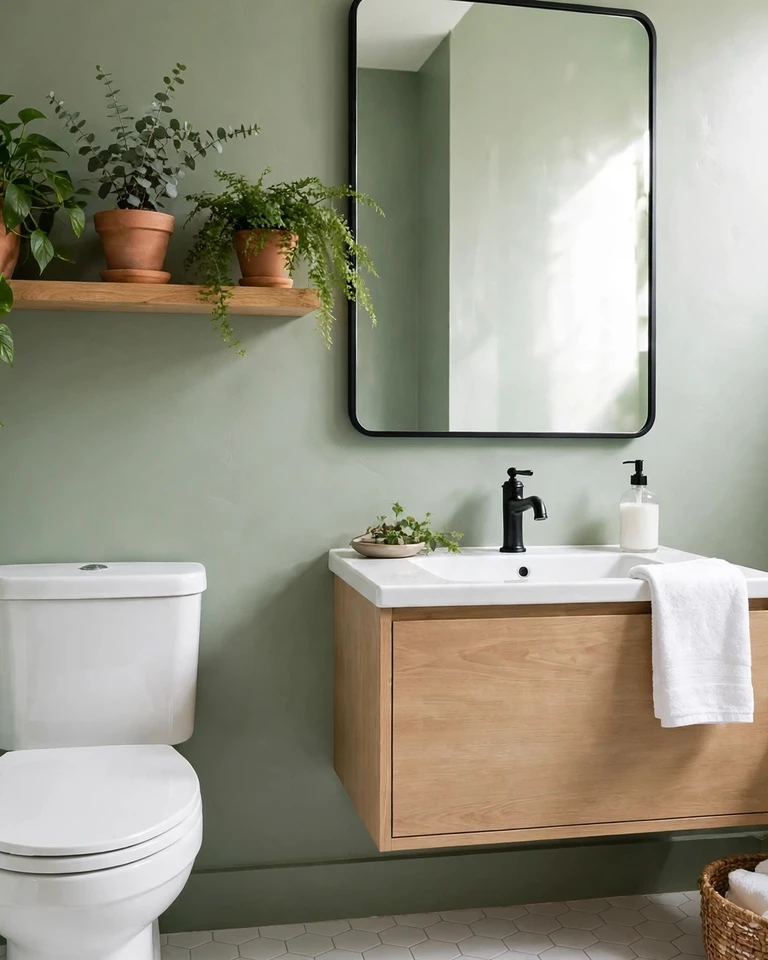
Small bathrooms can absolutely handle this palette, as long as white does some of the work. Keep the ceiling, the sink, and the towels white, use green on one or two surfaces only, and let black appear in fixtures and small accessories. Then add plants — a pothos on a shelf, a fern on the vanity — because living green softens the painted green and makes the room feel fresh rather than enclosed.
Tip: if your small bathroom has little natural light, lean toward sage or olive rather than forest green, and use a large mirror to bounce what light you have around the room. Our guide on how to brighten a dark room has more tricks that work well in windowless bathrooms.
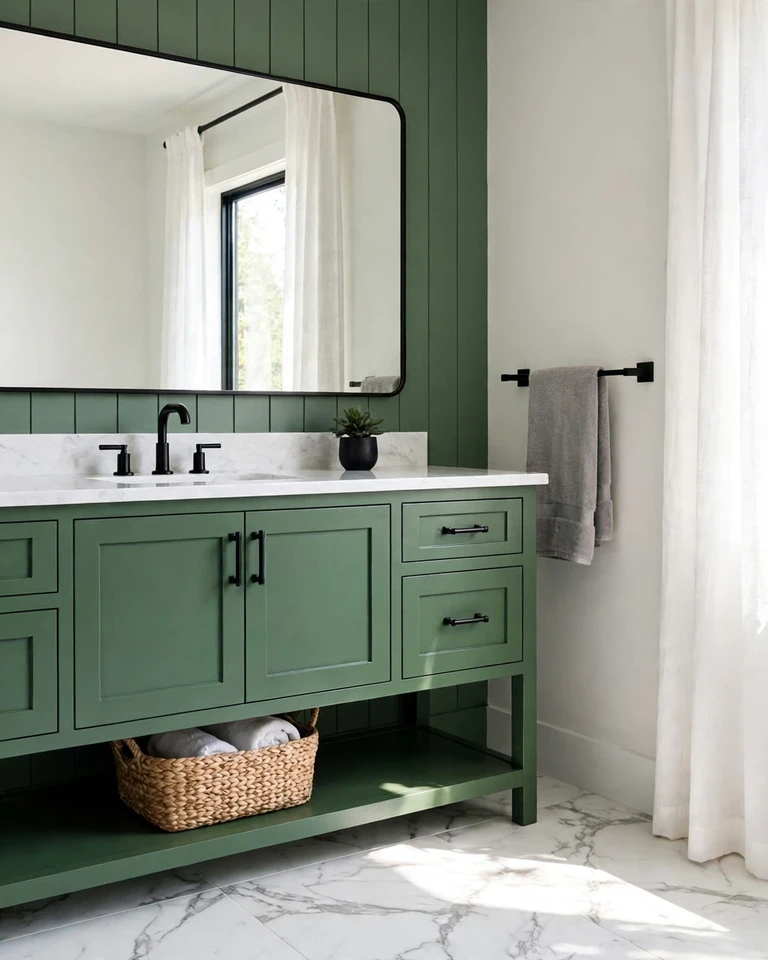
Whichever idea you start with, the same rule applies: decide where the green goes, where the black goes, and where the light comes from before you buy anything. Green for atmosphere, black for structure, and a pale surface or two for breathing room — that balance is what separates a bathroom that feels like a boutique hotel from one that just feels dark. If a rustic version of this palette appeals to you, our modern farmhouse bathroom decor ideas and modern western bathroom ideas show how the same dark-and-natural pairing works with wood and leather tones.
Frequently Asked Questions
What shades of green work well with black in a bathroom?
Deep emerald and forest green give the most dramatic, luxurious result, while sage and olive are softer and easier to live with daily. Mint and pistachio work best as accents — towels, cabinets, or accessories — rather than wall colors, because pale greens can look washed out next to strong black fixtures.
How can I incorporate green and black tiles into a bathroom?
Use one tile as the star and the other as support: green subway or zellige tile in the shower with a black-and-white patterned floor, or black floor tile with a green mosaic accent wall. Avoid covering every surface in dark tile, since two competing dark patterns make the room feel busy and small.
What type of lighting complements a green and black bathroom?
Warm light is essential — dark green and black absorb light, so cool white bulbs can make the room feel cold. Use warm LED sconces or pendant lights in matte black or brass finishes, and add a dimmer so the room can shift from bright morning light to a softer evening mood.
How do I keep a green and black bathroom from feeling too dark?
Build in light surfaces on purpose: a white ceiling, a light floor, pale towels, and a large mirror. Limit the darkest tones to one or two feature areas — an accent wall, the vanity, or the shower — and let the rest of the room breathe. Good layered lighting matters as much as the paint colors.
Can a green and black bathroom work in a small space?
Yes, if you keep the black to lines and fixtures rather than large surfaces, use a lighter green like sage, and reserve white for the ceiling, sink, and towels. A black steel-framed shower screen, a floating black vanity, and a checkerboard floor all add the look without closing the room in.