12 Stacked Laundry Room Ideas for Small Spaces That Make Every Inch Count
Can a closet-sized laundry area actually work as well as a full-size laundry room? Yes — if you stack the washer and dryer. Stacking is the single biggest space-saver in a tight laundry space: it frees the entire footprint of one machine, roughly 27 inches of floor space, for storage, a hamper, or a folding station. The ideas below build on that one move to make every inch of a stacked setup count, from vertical storage and fold-down surfaces to drying solutions and leak protection.

Most of these upgrades cost under $100 and need nothing more than a drill and a free afternoon. Pick the two or three that fit your space and start there. For more tiny-laundry layouts, see 12 apartment laundry room ideas for small spaces.
1. Start With a Brand-Approved Stacking Kit

A safe stack starts with the right hardware. A stacking kit from your appliance brand locks the dryer onto the washer so the pair acts as one stable unit — generic or DIY stacking is not worth the risk during a heavy spin cycle. Only front-loaders can stack, so this is also the deciding factor if you are shopping for new machines.
Cost/difficulty: $20–$50 for the kit; a 30-minute DIY job. Pro tip: measure your ceiling before you buy — most stacked pairs need about 75 inches of clearance for hoses and ventilation, and you want the dryer controls comfortably within reach.
2. Build Shelves Above the Stack for Everyday Supplies

The wall above a stacked pair is prime real estate. Two or three floating shelves spaced 12 to 15 inches apart hold detergent, dryer sheets, stain removers, and a small plant or framed print that keeps the corner from feeling like a utility closet. Mount shelves into studs — laundry supplies get heavy fast.
Cost/difficulty: $40–$90; a half-day install. Pro tip: keep daily items on the lowest shelf and bulk refills up high, and corral small bottles in matching baskets so open shelves read as tidy, not cluttered.
3. Slide a Slim Pull-Out Tower Into the Gap

When floor space is gone and wall space is full, build up inside a gap. A tall, narrow pull-out tower fits in openings as slim as six inches, with five or six shelves that glide out for full access to detergent refills, bulk paper goods, and cleaning supplies. Anchor tall pieces to the wall, especially in homes with kids.
Cost/difficulty: $60–$150; easy assembly, or $450+ for custom cabinetry. Pro tip: choose full-extension soft-close slides rated for at least 100 pounds — detergent weight adds up and cheap slides wobble.
4. Roll a Narrow Cart Into the Dead Space
That awkward five-to-eight-inch gap beside the stacked machines is not wasted space — it is a rolling cart waiting to happen. Slim carts on casters hold detergent, dryer sheets, and stain removers on tiered shelves; pull it out when you need something, roll it back when you are done, and the gap disappears.
Cost/difficulty: $25–$50; zero installation. Pro tip: measure the gap first (carts come in roughly 5–8 inch widths) and pick one with locking wheels so it stays put during spin cycles. It is fully renter-friendly and moves with you.
5. Add a Fold-Down Folding Counter
A stacked setup has no machine top to fold on, so you need a surface that appears on demand. A wall-mounted drop-leaf table gives you a full-size folding surface at counter height (about 36 inches) and folds flat when you are done. Pair it with a slim hamper that tucks underneath.
Cost/difficulty: $50–$120; mount into studs for sturdiness. Pro tip: put a small basket on the station for items that need ironing — that gives your tiny laundry room a defined end to the cycle, so clean clothes stop landing on the nearest chair.
6. Mount a Wall Drying Rod for Hang-Dry Clothes
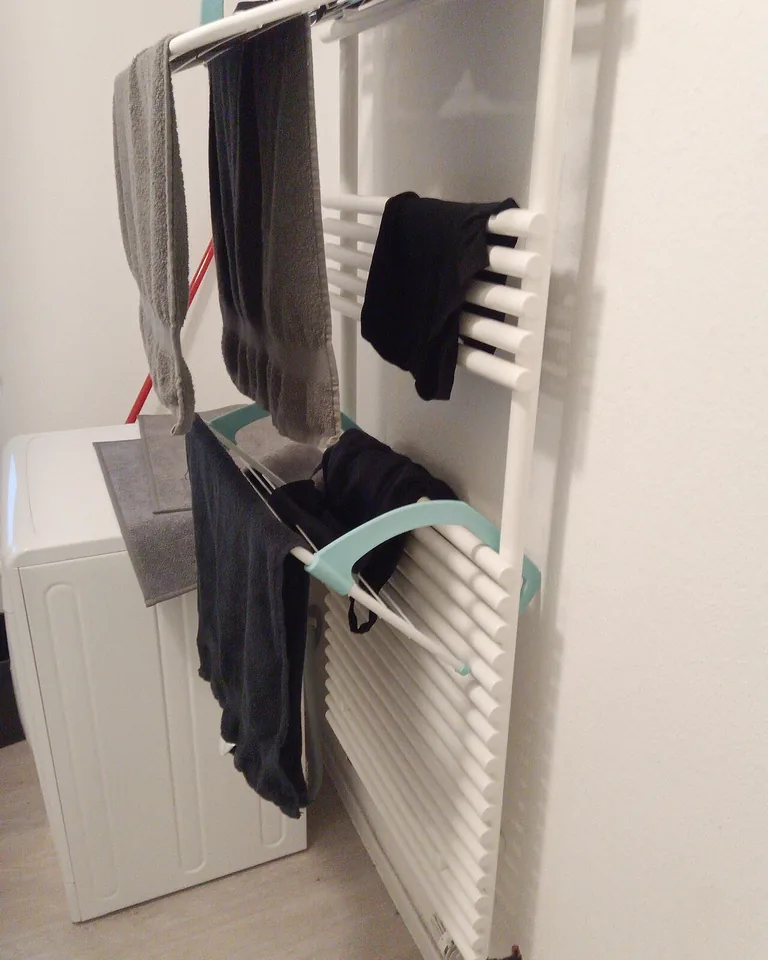
Move shirts and blouses straight from the washer onto hangers with a single sturdy rod mounted between two walls — or a pull-out valet rod under a shelf for just a few items. A closet rod with flanges costs little and holds surprising weight when anchored into studs, and unlike a freestanding rack it never eats floor space.
Cost/difficulty: $15–$40; an hour with a drill. Pro tip: mount it 60 to 66 inches from the floor so clothes clear the machines below, and place it near the washer so wet clothes travel the shortest distance.
7. Install a Fold-Down Wall Drying Rack

For delicates that should not hang, a wall-mounted fold-down rack opens when you need it and folds flat when you do not. Accordion-style wooden racks or metal models with multiple bars both hold a full load of delicates; mount 48 to 60 inches from the floor near the washer, somewhere with good airflow.
Cost/difficulty: $30–$70; moderate DIY. Pro tip: if wall space is truly gone, a ceiling-mounted pulley rack keeps the floor completely clear — just confirm it is anchored into joists before loading it.
8. Hide the Stack Behind Vented Doors

A stacked pair inside a closet or hallway nook looks instantly intentional behind the right doors. Louvered doors are the classic choice because they promote the airflow dryers need; pocket or sliding doors save swing space in tight hallways and also dampen noise. Either way, leave service access — a removable panel or inspection hatch keeps future repairs from becoming demolition.
Cost/difficulty: $80–$300 for doors; budget a bit more for custom cabinetry fronts. Pro tip: if you use a ventless (heat-pump) dryer, door ventilation matters less, and you skip the duct run entirely — a smart swap for closets with no exterior vent path.
9. Brighten the Space With LED Task Lighting
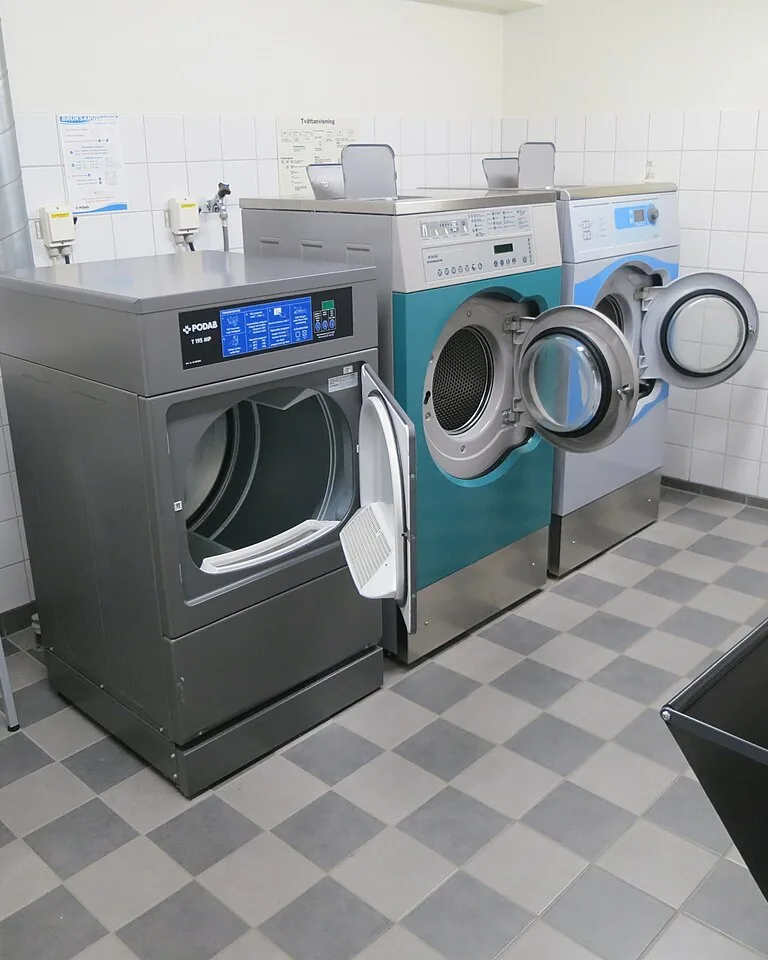
Stacked laundry corners are often windowless, and dim light makes them feel tighter and makes stain-spotting guesswork. Swap a bare bulb for a flush-mount fixture with daylight-temperature bulbs (4000–5000K) so you can sort colors accurately, then add peel-and-stick LED strips under shelves to light the workspace exactly where you need it.
Cost/difficulty: $20–$60; minutes to install. Pro tip: hang a small mirror opposite the light source to bounce brightness around the room — it is a designer trick that makes a closet-size laundry feel twice its size, and motion-sensor switches are perfect when your hands are full.
10. Use the Back of the Door for Storage

The inside of the laundry room or closet door is free storage hiding in plain sight. A slim over-the-door organizer with clear pockets holds stain removers, dryer sheets, and lint rollers where you can see them; an ironing board holder or slim rack for spray bottles uses the same surface without blocking the doorway.
Cost/difficulty: $15–$35; no tools needed. Pro tip: keep the organizer slim enough that the door still closes and latches, and if you have bifold doors, adhesive hooks on the inside panels can hold a lint roller or a mesh bag for delicates.
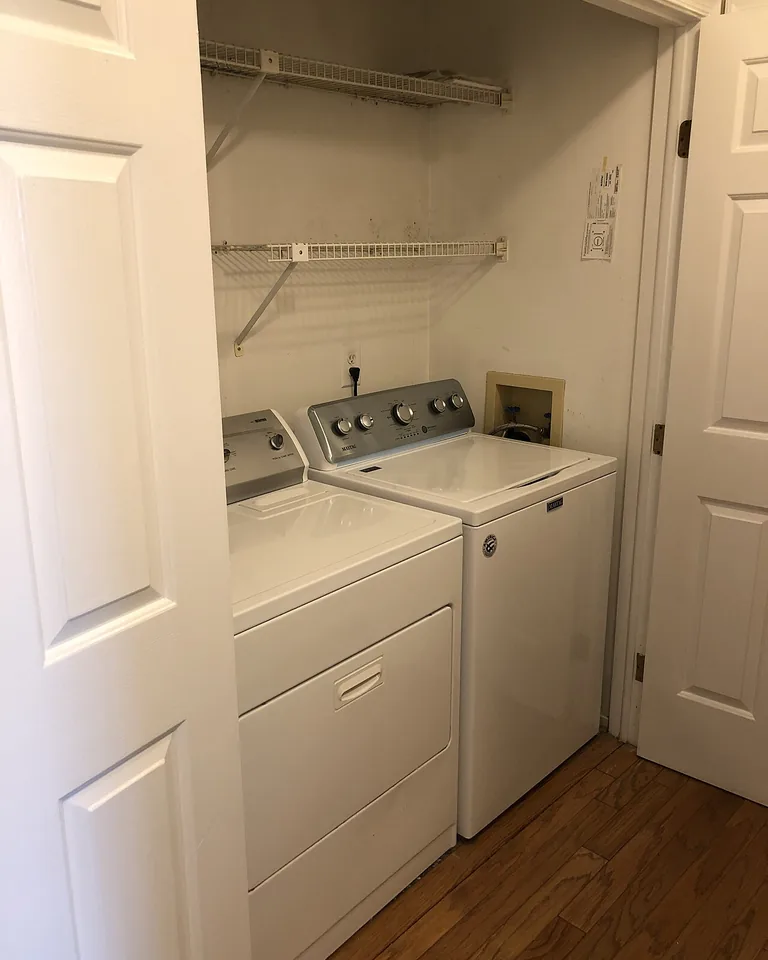
11. Wall-Mount a Fold-Down Ironing Board
A full-size ironing board leaning in the corner is a space hog a small laundry room cannot afford. Wall-mounted fold-down boards live inside a slim cabinet — some even have a mirror or artwork on the front — and fold down only when needed. Mount one near an outlet at a height that suits your posture.
Cost/difficulty: $70–$180; moderate install. Pro tip: if a cabinet model feels like too much, an over-the-door ironing board holder keeps a standard board tucked behind the door instead of against the wall — same reclaimed corner, a fraction of the price.
12. Plan for Leaks and Vibration From Day One

A stacked washer sits above your floor — or worse, above another room — so a leak causes more damage here than anywhere else. Slip a drain pan under the washer, add a cheap water-leak alarm, and put anti-vibration pads under the feet to cut noise and walking during spin cycles. It is the least glamorous idea on this list and the one you will be most glad you did.
Cost/difficulty: $30–$60 total; a 15-minute setup. Pro tip: compact 24-inch stacked models work for the tightest closets and vibrate less — and if your dryer is vented, confirm the duct has a clear exterior path before you box everything in.
Frequently Asked Questions
How much space do you need for a stacked washer and dryer?
A standard stacked pair needs about 27 inches of width and 75 inches of ceiling height for hoses and ventilation. Compact 24-inch models fit tighter closets but hold smaller loads. Measure your space — including door swing and hose clearance at the back — before you buy.
Can a laundry room fit in a closet?
Yes. With stacked appliances, a closet as narrow as 30 inches can become a fully functional laundry area when you add shelves above the stack and a slim pull-out tower or rolling cart beside it. Louvered or sliding doors keep the machines ventilated and out of sight.
Do stacked washer dryers need special ventilation?
Only vented dryers need a duct run to the exterior — the same requirement as any dryer. If your closet has no vent path, choose a ventless heat-pump dryer, which condenses moisture internally and needs only an electrical outlet. Either way, leave a small air gap or louvered doors so the machines do not overheat.
What is the best layout for a very small laundry room?
Stack the washer and dryer along one wall, add a folding surface (a countertop or drop-leaf table) beside or opposite them, and store supplies on floating shelves or in a slim cart. Keep the floor clear — in tight rooms, everything on the floor makes the space feel smaller than it is.
How do shorter people reach the controls on a stacked dryer?
Measure your comfortable reach before committing to a stack — dryer controls on top of a 75-inch tower are a stretch for some. Integrated towers like the LG WashTower put both sets of controls at a reachable middle panel, or simply keep a slim folding step stool on a hook nearby.
A stacked washer and dryer turns a closet, hallway nook, or garage corner into a real laundry room — the rest is planning. Start with the stacking kit and shelving, add the fold-down surfaces and drying spots that match how you actually do laundry, and finish with lighting and leak protection. A little intention turns the smallest corner into a space that works as hard as you do.